
For nearly three months, my first snake plant lived in a living room corner, completely neglected and barely receiving a drop of water before I finally noticed.
Most plants would have complained. Some would have dropped leaves. A few might have died.
That snake plant looked exactly the same.
It was healthy. Upright. Happy.
That’s when I understood why so many people recommend snake plants to beginners. They’re tough, forgiving, and surprisingly easy to keep alive. But there’s something most care guides don’t tell you.
Snake plants aren’t difficult because they need special treatment.
They’re difficult because people often love them too much.
Too much water. Too much fertilizer. Too much attention.
If you can avoid those mistakes, you’re already ahead of many plant owners.
This comprehensive guide outlines everything I have discovered about snake plant care throughout my years of growing them.
Whether you’ve just bought your first one or you’re trying to rescue a struggling plant, you’ll find practical advice you can actually use.
Quick Answer Box
How to Keep a Snake Plant Thriving ?
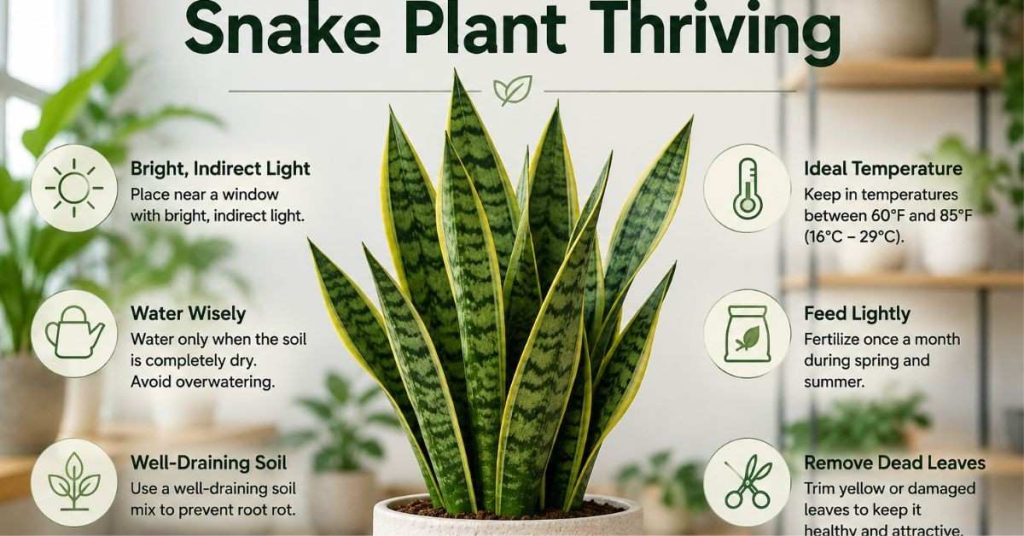
Snake plants grow best in bright indirect light but can tolerate lower-light rooms. Allow the soil to dry completely before watering, use a fast-draining soil mix, and keep temperatures between 60°F and 85°F. Avoid overwatering, choose a pot with drainage holes, and fertilize lightly during spring and summer.
Difficulty Level: Easy
Growth Rate: Slow to Moderate
Watering Frequency: Only when soil is completely dry
Light Requirement: Low to Bright Indirect Light
Pet Safety: Toxic if chewed or eaten
Repotting: Every 2–4 years
Meet the Snake Plant
It’s no wonder snake plants are absolutely everywhere, brightening up everything from home living rooms and hectic offices to hotel lobbies and front desks around the globe.
Few houseplants are as adaptable.
They won’t mind if you miss a watering or two. They don’t demand tropical humidity. They don’t throw dramatic tantrums because you moved them a few feet away from a window.
For busy people, that’s a huge advantage.
What Is a Snake Plant
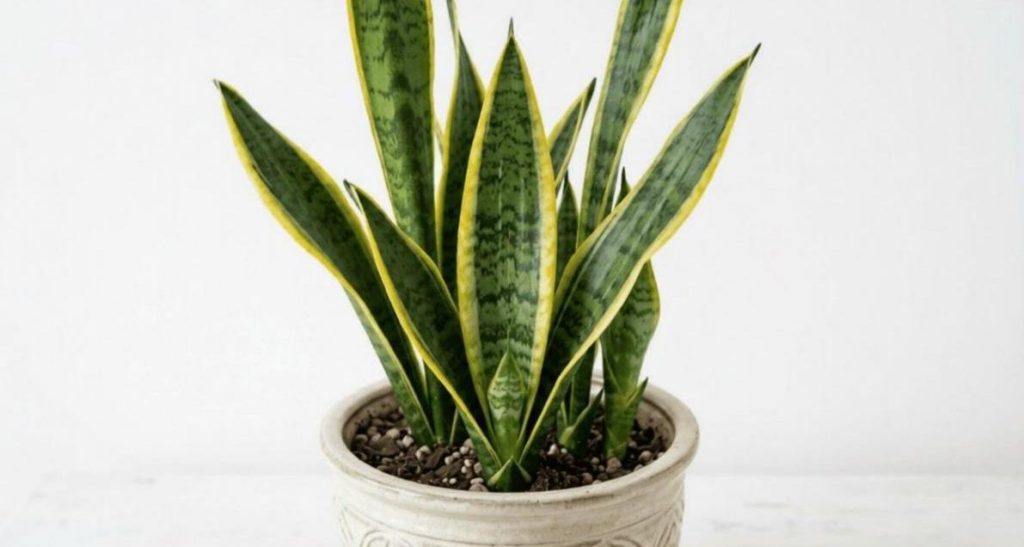
A snake plant is a hardy evergreen houseplant known for its stiff, upright leaves that resemble swords. The leaves grow directly from underground rhizomes and often feature beautiful green patterns or yellow edges.
Although many gardeners still call them Sansevieria, they are now classified within the Dracaena family.
Native to parts of Africa, these plants evolved in regions where rainfall wasn’t always reliable. That’s why they’re naturally equipped to handle drought better than many common houseplants.
Why So Many People Love Snake Plants
The appeal goes beyond looks.
Snake plants fit into almost any lifestyle.
If you’re a beginner, they’re forgiving.
If you’re busy, they don’t require constant attention.
If you’re decorating a room, their vertical shape adds structure without taking up much space.
That’s a rare combination.
Common Names You May Hear
Depending on where you live, snake plants may be sold under different names.
Some of the most common include:
- Snake Plant
- Mother-in-Law’s Tongue
- Saint George’s Sword
- Bowstring Hemp
- Viper’s Bowstring Hemp
You can safely ignore whatever name happens to be printed on the plant label.
Their maintenance needs are virtually identical.
Do Snake Plants Really Clean the Air?
You’ve probably seen posts on your timeline claiming that just one snake plant can purify all the air in your home.
Reality is a little less exciting.
Plants can help improve indoor environments, but they’re not a substitute for proper ventilation or air filtration.
That said, snake plants still make rooms feel fresher, more inviting, and more connected to nature. For many people, that’s reason enough to grow them.
Snake Plant Care at a Glance
If I could give you just one golden rule for keeping your snake plant happy, it would be this:
Give it light, avoid drowning it, and leave it alone.
Seriously.
Many struggling snake plants are suffering from kindness rather than neglect.
Light Requirements
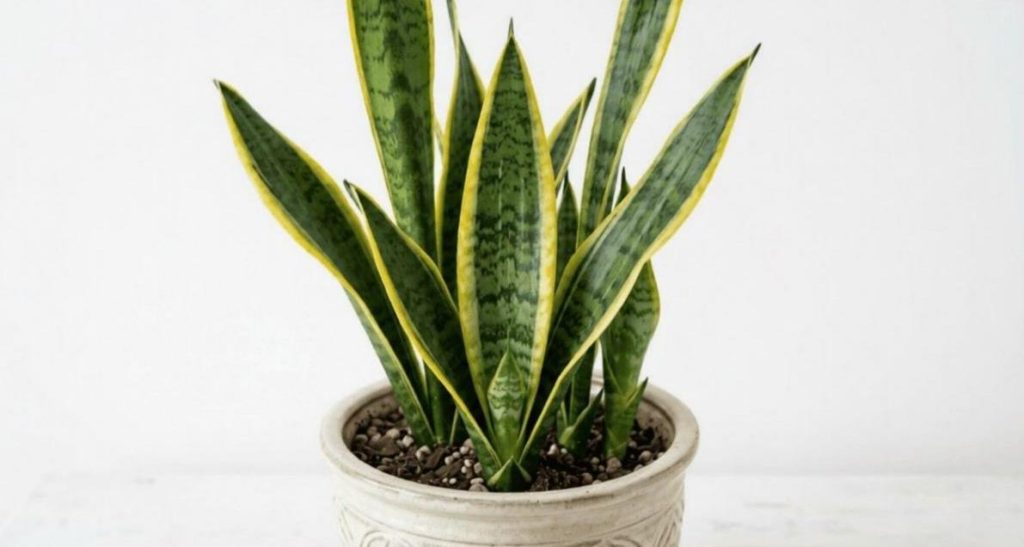
Bright indirect light produces the strongest growth.
Place your snake plant near a bright window where it receives plenty of natural light without sitting in the intense afternoon sun.
East-facing windows are often ideal.
Another great spot is a couple of feet back from a south-facing window.
Can Snake Plants Survive in Low Light?

Absolutely.
That’s one of their biggest strengths.
However, low light affects growth speed.
A plant living in a dim hallway may survive for years but produce very little new growth. A plant receiving brighter light will usually grow faster and develop stronger foliage.
Choosing the Best Location
Good locations include:
- Living rooms
- Home offices
- Bedrooms
- Bright hallways
- Entryways with indirect light
Try to avoid placing the plant directly beside heating vents or cold winter drafts.
Consistency matters more than perfection.
Watering Snake Plants the Right Way
Watering causes more problems than pests, diseases, and poor lighting combined.
Most beginners assume plants need frequent watering.
Snake plants disagree.
Their leaves store moisture, allowing them to survive long dry periods.
That’s why overwatering remains the number one killer.
How Often Should You Water?
There isn’t a perfect schedule.
Naturally, the evaporation rate changes with the weather: a snake plant exposed to summer heat and bright light will require watering much quicker than one resting in a cold room during winter dormancy.
Instead of watching the calendar, watch the soil.
When the soil is completely dry from top to bottom, it’s time to water.
Not before.
The Finger Test
This simple method works surprisingly well.
Insert your finger several inches into the soil.
If you feel moisture, wait.
If everything feels dry, water thoroughly until excess water drains from the bottom of the pot.
That’s it.
No complicated formulas required.
Signs Your Plant Needs Water
A thirsty snake plant may show:
- Slight wrinkling
- Reduced firmness
- Slower growth
- Dry soil throughout the container
These symptoms are usually easy to correct.
Signs of Overwatering
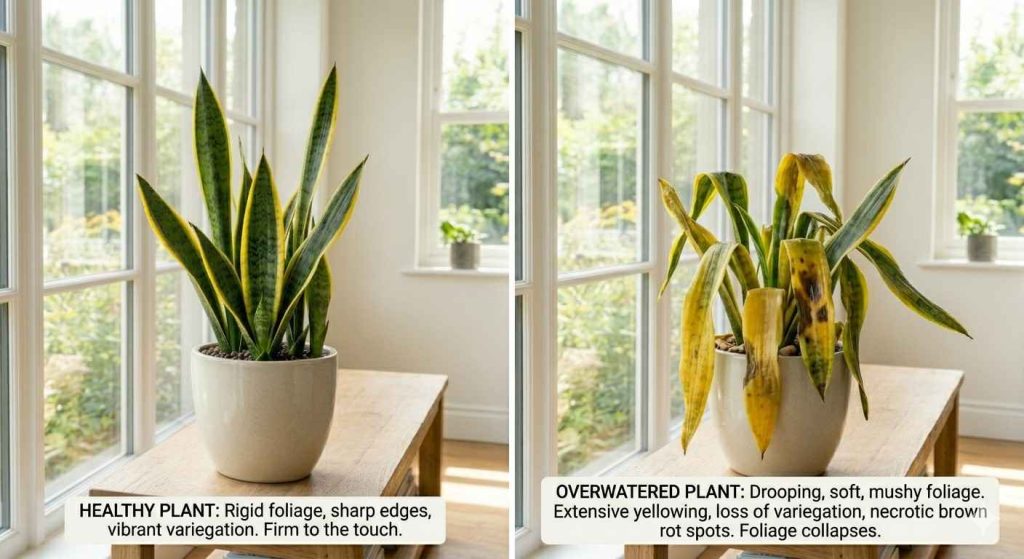
Watch for:
- Yellow leaves
- Mushy tissue
- Soft leaf bases
- Persistent wet soil
- Unpleasant smells
- Collapsing foliage
These signs often indicate root damage and should never be ignored.
Choosing the Best Soil for Snake Plants
One mistake I see again and again is planting a snake plant in regular garden soil.
It seems harmless.
Then a few weeks later the leaves start turning yellow, the soil stays wet forever, and the plant slowly declines.
The problem usually isn’t the plant.
It’s the soil.
Why Drainage Matters More Than Nutrients
Snake plants are far more tolerant of lean soil than soggy soil.
It helps to remember that the roots actually need to breathe; access to oxygen is just as critical for them as getting a drink of water.
When soil stays wet for too long, oxygen disappears and root rot starts to develop.
That’s why drainage should always be your first priority.
The Best Soil Mix for Snake Plants

The simplest solution is usually to just grab a bag of pre-mixed cactus and succulent dirt.
The beauty of these soils is that they let water pass right through them, but still keep back enough dampness to keep the plant perfectly happy and growing.
Look for ingredients such as:
- Perlite
- Pumice
- Coarse sand
- Pine bark
- Coconut coir
These materials help create air pockets around the roots.
My Simple DIY Soil Recipe
If you prefer making your own mix, try this:
- 2 parts succulent soil
- 1 part perlite
- 1 part coarse sand
The result is light, airy, and fast draining.
Exactly what a snake plant likes.
Soil Types to Avoid
Stay away from:
- Heavy clay soils
- Dense garden soil
- Water-retaining potting mixes
- Soil that becomes compacted easily
If water sits in the pot for days, the roots won’t stay healthy for long.
Choosing the Right Pot
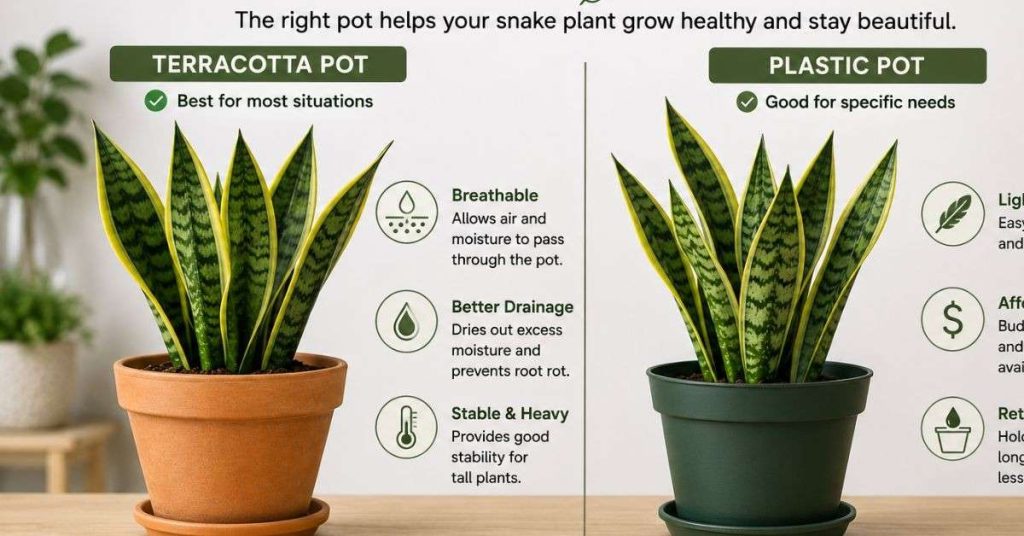
Most people don’t think twice about the pot, but the container actually makes a massive difference.
You can have a perfectly fine snake plant on your hands, but if the container isn’t right, the plant will likely start to decline.
A healthy snake plant in the right pot often thrives with very little effort.
Terracotta vs Plastic Pots
Both options work, but they behave differently.
Terracotta
Terracotta is naturally porous.
Moisture evaporates through the sides of the pot, helping the soil dry faster.
Benefits include:
- Better airflow
- Faster drying
- Reduced risk of overwatering
- Added stability for tall plants
Plastic
Plastic containers retain moisture longer.
This can be useful in very dry climates but increases the risk of overwatering.
Benefits include:
- Lightweight
- Affordable
- Easy to move
- Holds moisture longer
For most beginners, I usually recommend terracotta.
It provides a little extra protection against watering mistakes.
Why Drainage Holes Matter
Never underestimate drainage holes.
Even the perfect soil mix can fail if excess water has nowhere to escape.
If you fall in love with a planter that lacks a drainage hole, just use the double-potting trick: keep your plant in its basic nursery tub and nestle it inside the prettier container.
Pot Size Mistakes to Avoid
Many people assume bigger pots encourage faster growth.
Unfortunately, that’s often what leads to problems.
A large container retains an excess amount of moisture that the plant’s root system cannot absorb.
The result?
Long drying times and increased risk of root rot.
When upgrading, pick out a new pot that is only a tiny bit bigger than the plant’s actual root mass.
Temperature and Humidity Requirements
One reason snake plants are so popular is because they adapt well to normal indoor conditions.
Most homes already provide what they need.
Ideal Temperature Range
Snake plants grow best between:
60°F to 85°F (16°C to 29°C)
This range supports healthy root development and steady growth.
Cold Weather Risks
Cold temperatures are where problems begin.
Exposure to temperatures below 50°F (10°C) can damage leaves and roots.
Common symptoms include:
- Soft spots
- Leaf discoloration
- Slow growth
- Permanent tissue damage
Over the winter months, make sure to move your plants out of the path of chilly drafts near outer doors and windows.
Humidity Requirements
Here’s some good news.
You don’t need a humidifier.
You don’t need daily misting.
You don’t need pebble trays.
Average household humidity is usually perfect for snake plants.
Winter Care Tips
Winter care is surprisingly simple.
Provide:
- Bright light
- Less water
- Stable temperatures
- Protection from cold drafts
That’s usually enough to keep a snake plant healthy until spring returns.
Fertilizing for Faster Growth
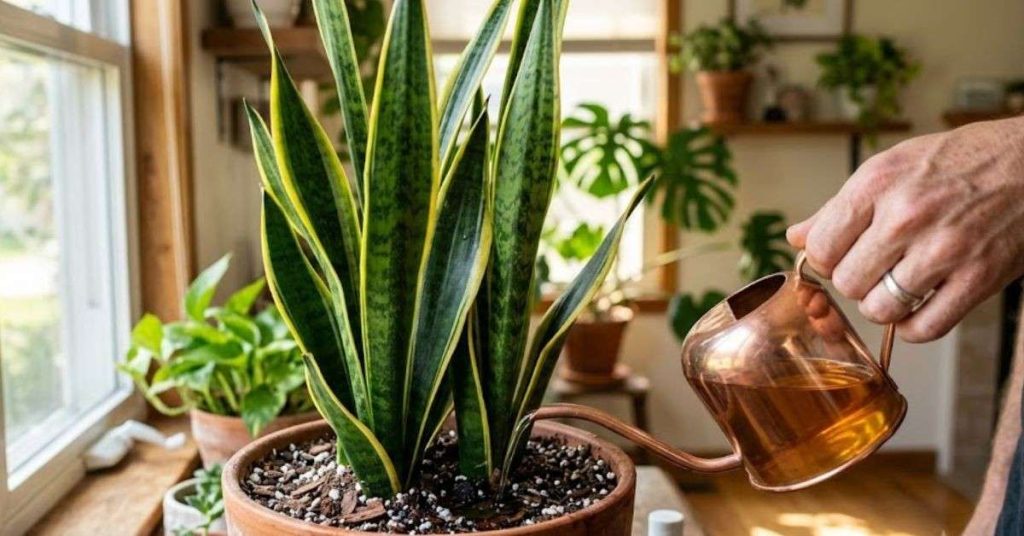
Snake plants aren’t heavy feeders.
In fact, over-fertilizing causes far more problems than under-fertilizing.
Do Snake Plants Need Fertilizer?
Technically yes.
But not much.
A healthy snake plant can survive for quite some time without regular feeding.
Fertilizer simply supports stronger growth when used correctly.
Best Fertilizer Options
Look for a balanced houseplant fertilizer.
Liquid fertilizers often work best because they’re easy to dilute.
Many growers use:
- 10-10-10
- 20-20-20
- Balanced organic houseplant fertilizers
How Often Should You Fertilize?
During spring and summer:
Feed once every 4 to 6 weeks.
During fall and winter:
Skip fertilizing altogether.
The plant isn’t actively growing enough to use those extra nutrients.
Signs of Over-Fertilization
Too much fertilizer can cause:
- Brown leaf tips
- Salt buildup on soil
- Weak growth
- Root damage
When in doubt, use less.
Snake plants rarely complain about receiving too little fertilizer.
Growth Rate and What to Expect
One question new owners often ask is:
“Why isn’t my snake plant growing?”
The answer is usually simple.
Snake plants aren’t fast growers.
How Fast Do Snake Plants Grow?
Under ideal conditions, you may see several new leaves each year.
Growth tends to be faster when plants receive:
- Bright indirect light
- Proper watering
- Warm temperatures
- Occasional feeding
In lower light conditions, growth slows significantly.
How Tall Can Snake Plants Get?
Depending on the specific type you choose, fully grown versions can top out at:
- 1 to 4 feet indoors
- Sometimes even taller in ideal conditions
Some varieties stay compact while others become impressive statement plants.
What Affects Growth Speed?
Several factors influence growth:
- Light intensity
- Pot size
- Root health
- Watering habits
- Temperature
Healthy roots almost always equal healthier growth.
Encouraging New Pups
Snake plants spread through underground rhizomes.
These rhizomes produce small offsets called pups.
To encourage pup production:
- Provide bright indirect light
- Avoid oversized pots
- Keep roots healthy
- Fertilize lightly during active growth
Patience helps too.
Sometimes a snake plant spends months building roots before producing visible growth above the soil.
Welcoming Your New Snake Plant Home: What to Do in the First 30 Days
The first month after purchase is important.
It is incredibly common for first-time plant parents to accidentally cause their new additions a bit of strain while they are trying to settle in.
Where Should You Place It First?
Choose a location with bright indirect light.
Then leave it there.
Relocating your plant from one room to another all the time just stresses it out for no good reason.
Should You Repot Immediately?
Usually not.
Unless the plant is severely rootbound or growing in poor-quality soil, allow it time to adjust before repotting.
A few weeks of stability often helps.
When Should You Water After Purchase?
Check the soil first.
Many nursery plants are watered shortly before being sold.
If the soil still feels damp, wait.
Never water simply because the plant arrived home.
What Changes Are Normal?
During the adjustment period, you may notice:
- Slower growth
- Minor cosmetic damage
- Slight drooping
These small changes are often temporary and resolve naturally.
How to Repot a Snake Plant
Eventually every snake plant outgrows its container.
Fortunately, repotting is straightforward.
Signs It’s Time to Repot
Look for:
- Roots circling the pot
- Cracked containers
- Roots emerging from drainage holes
- Reduced growth
These are common indicators that the plant needs more space.
Best Time to Repot
Spring is ideal.
The plant is entering its active growth period and recovers more quickly.
Simple Repotting Process
- Remove the plant carefully.
- Inspect the roots.
- Trim any damaged roots.
- Place the plant in fresh soil.
- Choose a pot only slightly larger.
- Water lightly after repotting.
Aftercare
Avoid heavy watering immediately after repotting.
Allow the roots time to settle into their new environment.
How to Propagate Snake Plants
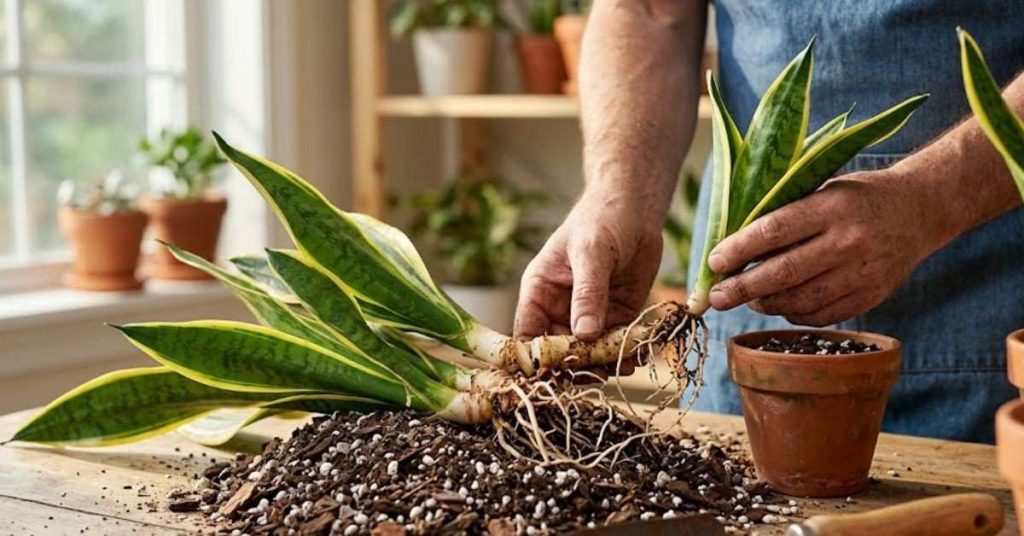
Honestly, one of the best parts of keeping a snake plant is just how effortless it is to multiply your collection using the one sitting on your windowsill.
I’ve turned a single plant into several healthy pots over the years without spending a single dollar.
Propagation by Division
If you want results quickly and with zero fuss, this is absolutely your best bet.
Simply remove the plant from its pot and separate sections of the root system that already have leaves attached.
Each division becomes a new plant immediately.
Pros
- Fastest results
- Highest success rate
- Produces mature-looking plants quickly
Cons
- Requires an established plant
- Not ideal for very small plants
Propagation by Leaf Cuttings in Water
This method is popular because it’s easy to watch the roots develop.
Cut a healthy leaf into sections and place the bottom end in water.
After several weeks, roots begin to form.
Pros
- Fun to observe
- Beginner-friendly
- Minimal materials required
Cons
- Slower than division
- Leaving stagnant water around for too long is a recipe for disaster, as those stalks will quickly become waterlogged and decay.
Propagation by Leaf Cuttings in Soil
Another great option is to skip the water entirely and pot your leaf cuttings right into the dirt to root.
Simply allow the cut end to dry for a day or two before inserting it into a well-draining mix.
Pros
- Less maintenance
- No transplant shock from water to soil
Cons
- Roots are hidden from view
- Requires patience
Which Propagation Method Is Best?
For most people, division wins.
It’s faster, more reliable, and produces larger plants sooner.
Leaf cuttings work well when you want to create multiple plants from a single leaf.
Common Snake Plant Problems and Solutions
Even tough plants experience problems occasionally.
On the bright side, as soon as you figure out what’s actually going wrong, getting your plant back on track is usually a breeze.
Snake Plant Leaves Falling Over
This usually happens because of:
- Overwatering
- Root rot
- Physical damage
- Extremely low light
Check the roots first.
Soft roots often point to excess moisture.
Wrinkled Leaves
Wrinkling usually means the plant has used much of its stored water.
Possible causes include:
- Underwatering
- Damaged roots
- Severe heat stress
Check soil moisture before taking action.
Mushy Leaves
Mushy leaves almost always indicate excessive moisture.
Remove affected leaves and inspect the root system immediately.
The sooner you act, the better the chance of saving the plant.
Yellow Leaves
Yellowing can occur for several reasons:
- Overwatering
- Poor drainage
- Aging leaves
- Temperature stress
One yellow leaf isn’t always a crisis.
Several yellow leaves appearing at once deserve investigation.
Brown Tips
Brown tips are often linked to:
- Underwatering
- Fertilizer buildup
- Physical damage
- Environmental stress
The problem is usually cosmetic rather than serious.
Curling Leaves
Curling may occur when the plant experiences:
- Drought stress
- Root issues
- Sudden environmental changes
Evaluate recent care changes first.
Slow or No Growth
Many owners think something is wrong when growth slows.
Often nothing is wrong at all.
Snake plants naturally grow slowly, especially during winter and in low-light rooms.
Faded Variegation
Loss of variegation typically results from insufficient light.
Moving the plant to a brighter location often improves future growth.
Root Rot
Root rot remains the most common serious problem.
Signs include:
- Soft roots
- Bad odors
- Mushy leaves
- Yellow foliage
Treatment involves:
- Removing affected roots
- Replacing old soil
- Improving drainage
- Reducing watering frequency
Snake Plant Pests and Diseases
Snake plants are relatively pest resistant.
Still, problems occasionally appear.
Mealybugs
These small white insects hide in leaf crevices and feed on plant sap.
Remove them using cotton swabs dipped in rubbing alcohol.
Spider Mites
Spider mites are tiny but destructive.
Common signs include:
- Fine webbing
- Speckled leaves
- Reduced vigor
Regular inspections help catch infestations early.
Fungal Problems
Most fungal issues are caused by excessive moisture.
Better airflow and improved watering habits usually solve the problem.
Prevention Tips
Healthy plants are naturally more resistant.
Focus on:
- Proper drainage
- Good airflow
- Correct watering practices
- Regular inspections
Seasonal Snake Plant Care Calendar
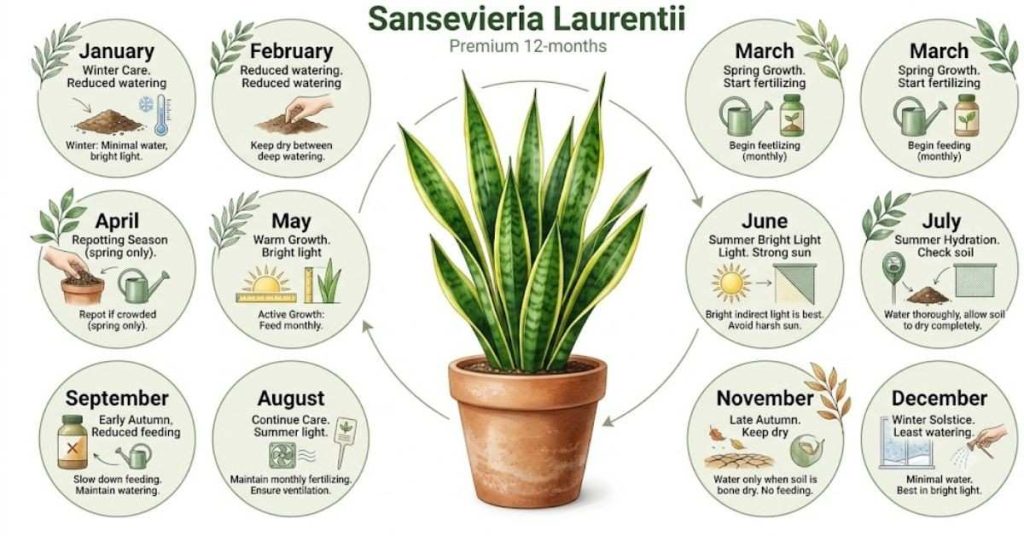
Spring Care Checklist
- Resume fertilizing
- Check for new growth
- Repot if necessary
- Increase watering gradually
Summer Care Checklist
- Monitor soil more frequently
- Protect from harsh afternoon sun
- Fertilize monthly
- Watch for rapid growth
Fall Care Checklist
- Reduce fertilizing
- Slow watering frequency
- Inspect roots and foliage
Winter Care Checklist
- Water sparingly
- Maximize available light
- Protect from cold drafts
- Skip fertilizer
Mistakes New Snake Plant Owners Make
Watering Too Often
This remains the biggest mistake.
Most snake plants die from excess water rather than lack of it.
Using Heavy Soil
Dense soil traps moisture and suffocates roots.
Choosing Oversized Pots
Large pots stay wet longer than necessary.
Ignoring Seasonal Changes
Winter watering schedules shouldn’t match summer schedules.
Fertilizing Too Much
More fertilizer does not equal faster growth.
In many cases, it creates new problems.
Best Snake Plant Varieties for Indoor Growing
Laurentii
The classic variety with yellow-edged leaves.
Moonshine
Known for its silvery-green foliage.
Whale Fin
Produces enormous paddle-shaped leaves.
Cylindrica
Features round, spear-like leaves.
Black Gold
Dark green leaves with striking golden margins.
Bird’s Nest Snake Plant
A compact variety perfect for desks and shelves.
Frequently Asked Questions
Q:How Long Do Snake Plants Live?
Ans:With proper care, many snake plants live for decades.
Q:Can Snake Plants Survive Without Sunlight?
Ans:They tolerate low light well but still need some light to survive long term.
Q:Why Is My Snake Plant Not Growing?
Ans:Low light, cold temperatures, root issues, or natural dormancy may be responsible.
Q:Should I Mist My Snake Plant?
Ans:No.Snake plants do not require misting.
Q:Why It’s Perfect for Your Bedroom
Ans:Absolutely.They adapt very well to bedroom environments.
Q:How Often Should I Report a Snake Plant?
Ans:Most plants need repotting every two to four years.
Final Thoughts
Snake plants have earned their reputation as one of the easiest houseplants for a reason.
They don’t demand constant attention. They don’t need complicated routines. They simply need the basics done well.
Give them bright indirect light.
Let the soil dry before watering.
Use a well-draining potting mix.
Avoid the urge to overcare for them.
Do those few things consistently and your snake plant can remain healthy for many years, rewarding you with strong growth, new pups, and beautiful foliage season after season.
Quick Takeaway
If you end up forgetting everything else I’ve mentioned, just commit this one golden rule to memory:
When you’re unsure whether your snake plant needs water, wait a little longer.
That single habit prevents more snake plant problems than anything else.
Pingback: When Can You Plant Potatoes? Complete Planting Guide