
When do magnolias bloom? Deciduous magnolias typically bloom in late winter to early spring before leafy growth starts, whereas evergreen Southern magnolias flower from late spring through the summer months.The exact date depends on the species or cultivar, your climate, winter temperatures, and how quickly spring warmth arrives.
I use a simple rule when judging when magnolias bloom: never trust the calendar alone. I look at the magnolia type first, then the buds, then the weather forecast; that combination tells me much more than saying “magnolias bloom in spring.” A Star Magnolia showing swollen buds after a warm spell is a very different situation from a Southern Magnolia sitting leafy and quiet in early April.
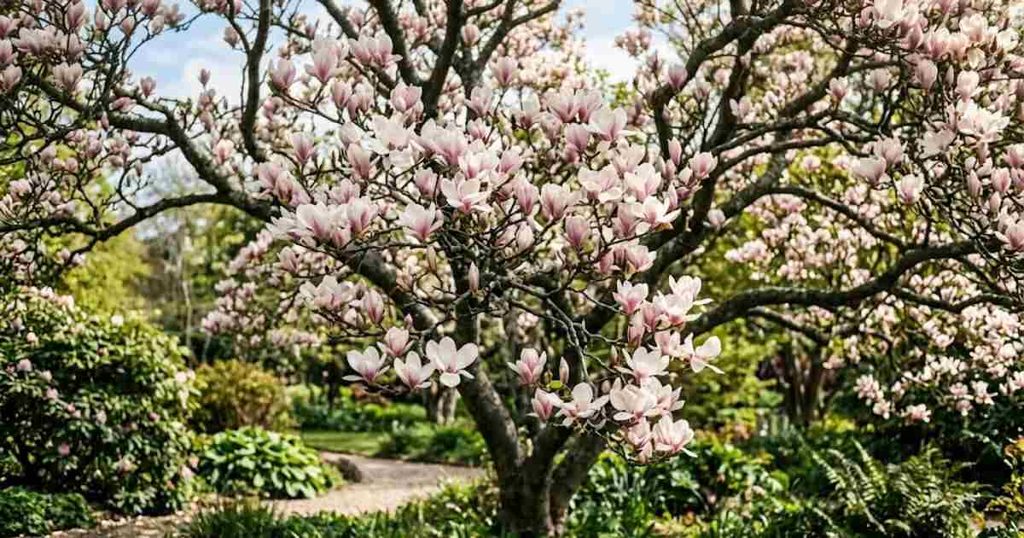
Magnolia Blooming at a Glance
| Growing factor | Practical guidance |
| Light | Full sun is best for strong flowering; light shade can work for selected types |
| Water | Keep newly planted trees evenly supplied with moisture; established trees mainly need help during prolonged dry weather |
| Soil | Moist, well-drained soil; many magnolias perform well in slightly acidic to neutral conditions |
| Temperature | Match the species to your hardiness zone and protect early flowers from late freezes |
| Humidity | Normal outdoor humidity is usually sufficient; root-zone moisture matters more than trying to increase air humidity |
| Toxicity | ASPCA lists Star Magnolia (Magnolia stellata) as non-toxic to dogs, cats and horses |
| Difficulty | Easy once established; site selection and early establishment are the most important stages |
The toxicity entry above applies specifically to Star Magnolia, which is the magnolia listed by the ASPCA in its plant database. The organization also notes that eating plant material can still cause gastrointestinal upset even when a plant is classified as non-toxic.
The Magnolia Bloom Season Is Longer Than One Month
A magnolia “season” is really a relay race between different kinds of plants.
In cooler climates, some early deciduous magnolias can begin opening in March or early April, depending on the year. Later species can take over in May and June, while evergreen Southern Magnolia can continue flowering into summer. Penn State’s 2026 arboretum observations likewise describe early flowering magnolias appearing in March and April and later types beginning in May and June.
That explains why two gardens can have magnolias flowering at very different times while both trees are perfectly healthy. When do magnolias bloom is therefore a species-and-climate question, not simply a spring question.
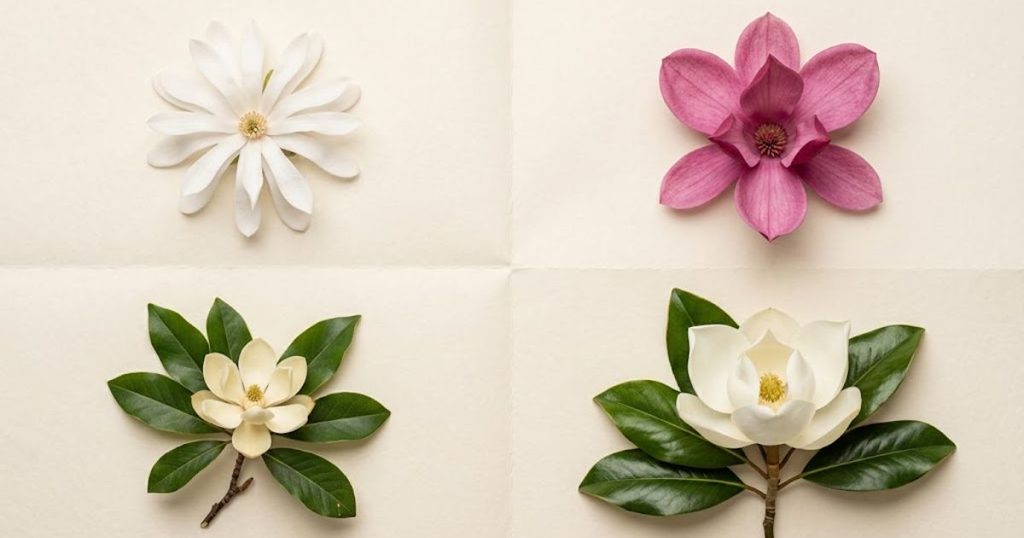
Bloom Times by Magnolia Type
| Magnolia | Typical flowering period* | Flower character | Foliage during bloom |
| Star Magnolia (Magnolia stellata) | Late winter to early spring | White or pale pink, star-like flowers | Usually bare |
| Saucer Magnolia (Magnolia × soulangeana) | Early to mid/late spring | Large pink, purple or white cups | Usually bare or just emerging |
| Jane Magnolia | Mid-spring | Reddish-purple cup-shaped flowers | Usually limited foliage at flowering |
| Loebner Magnolia (M. × loebneri) | Early to mid-spring | White to pink, strap-like flowers | Usually bare |
| Sweetbay Magnolia (M. virginiana) | Late spring into summer | White, fragrant flowers | Leafy |
| Southern Magnolia (M. grandiflora) | Late spring through summer | Large creamy-white fragrant flowers | Evergreen |
*These are practical seasonal windows, not guaranteed dates. Local temperatures can shift flowering considerably.
The Star Magnolia is often among the earliest, while Southern and sweetbay magnolias occupy a later portion of the flowering calendar. Morton Arboretum records, for example, place cultivars such as ‘Ann’ around mid-April and ‘Jane’ around mid-May in its regional conditions, demonstrating how cultivar choice can move bloom time even within one general magnolia group.
Bloom Timing by Hardiness Zone
A hardiness zone cannot give you an exact flowering date, but it helps establish the likely seasonal pattern.
USDA Zones 4–5: Early deciduous magnolias may flower from late March into April, with colder sites tending toward the later end.
USDA Zones 6–7: Star, saucer and related hybrids commonly move through their flowering cycle from March into April or May, depending on cultivar and spring temperatures.
USDA Zones 8–9: Early magnolias can start significantly sooner, while Southern Magnolia becomes a major late-spring and summer flowerer.
Zones 10 and warmer: Suitable evergreen magnolias may have longer, less sharply defined flowering periods, but species selection matters because not every magnolia is adapted to warm winters.
These are planning ranges rather than promises. Even within the same zone, a sheltered courtyard can warm earlier than an exposed garden, and a late freeze can interrupt an otherwise early season.
Deciduous and Evergreen Magnolias Follow Different Clocks
The fastest way to narrow down when magnolias bloom is to identify whether your tree is deciduous or evergreen.
Deciduous magnolias lose their leaves and often flower while the branches are still nearly bare. That gives flowers an enormous visual impact, but it also exposes the buds to sudden cold. Star and saucer magnolias are classic examples.
Evergreen magnolias maintain their thick, leathery leaves throughout all seasons when grown in suitable conditions. Their flowers typically arrive later, after spring has become more established. Southern Magnolia (Magnolia grandiflora) is the familiar example, producing large white flowers against dark, glossy leaves.
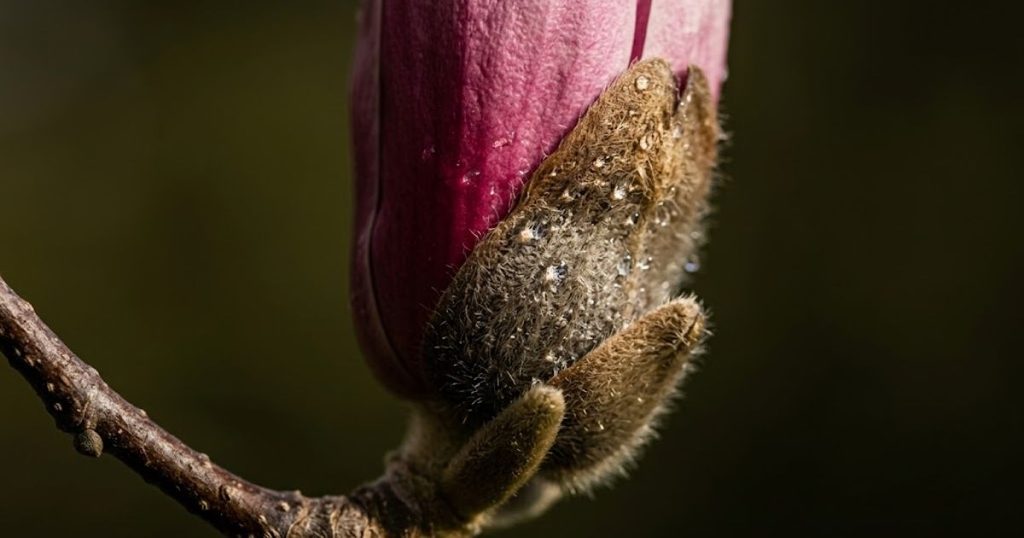
The distinction is useful beyond identification. Early spring frosts pose a much greater immediate threat to bare deciduous magnolias with exposed furry buds than to leafy Southern magnolias. that has not started flowering yet.
How to Read Magnolia Buds Before They Open
This is the most useful way to estimate when magnolias bloom without guessing from the calendar.
Stage 1: Dormant, tight buds
Winter buds remain compact and firm. The tree may look completely inactive, but flower development is already being carried within those protected structures.
At this point, a sudden warm week does not automatically mean flowers are days away. The tree still has to move through its biological transition into active growth.
Stage 2: Buds swell and become obvious
As winter gives way to spring, flower buds become plumper and more noticeable. On many deciduous magnolias, the buds have a soft, fuzzy appearance.
This is the stage when I start paying much closer attention to the local forecast. A warm spell followed by a freeze can create a disappointing season even when the tree itself remains healthy.
Stage 3: Petal color begins showing
Once a bud starts revealing its flower color, the display is much closer. Pink, purple or white may become visible between the bud scales or along the opening flower.
At this stage, a freeze can damage the actual floral tissues rather than merely delaying the show. Gardeners in frost-prone areas should manage early-blooming magnolias as delicate, weather-sensitive specimens.
Stage 4: Flowers expand
The familiar cups or stars are now opening. Flowers may appear over several days rather than all at once, which is why a tree can remain visually impressive even while individual flowers are already aging.
NYBG’s magnolia collection tracks stages including breaking dormancy, flowering, full bloom and post-peak bloom, an excellent reminder that bloom is a process, not a single event.
What Actually Changes Magnolia Bloom Dates?
Winter chill
Many deciduous woody plants use winter cold as part of their dormancy cycle. The exact chilling requirement varies with the species and cultivar, so it is not useful to assign one universal chill-hour number to every magnolia.
After the tree has experienced suitable winter conditions, rising temperatures help push it toward flowering. Consequently, both cold accumulation and spring warmth matter.
Spring warmth
A long, mild stretch can speed development. Conversely, a prolonged cool spring can hold buds back even when the calendar says it should already be the magnolia season.
This is one reason regional bloom reports are more useful when they include actual weather context rather than simply saying “late March.”
Microclimate
A tree beside a warm masonry wall may wake earlier than the same cultivar sitting in an open lawn. Similarly, a low spot where cold air settles may remain colder overnight.
Determining when a magnolia flowers depends entirely on when a specific tree in a given location receives enough warmth to mature its buds.
Frost Damage Can End the Flower Show Overnight
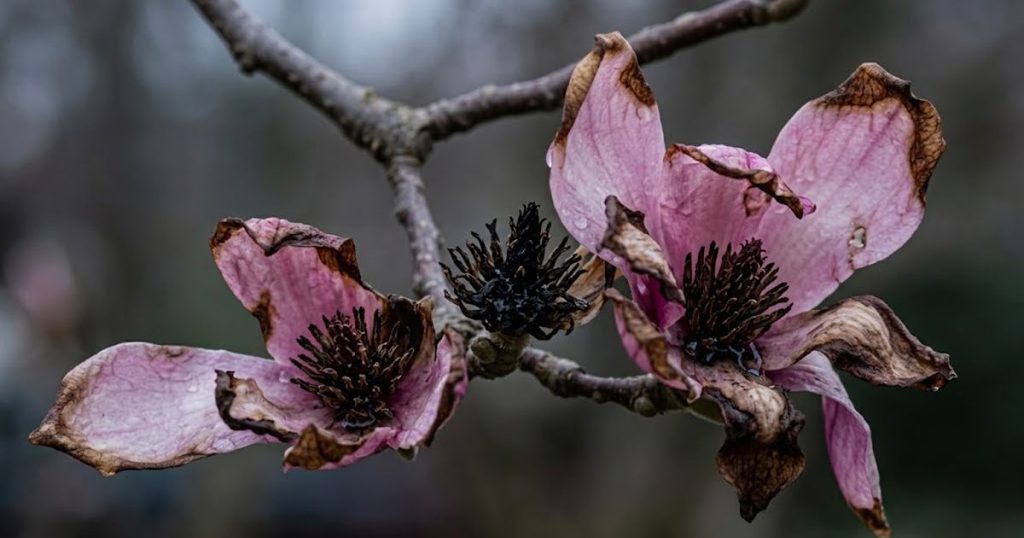
Magnolia flowers can be surprisingly fragile once they open.
A late freeze may turn petals brown, limp or almost black, particularly on early flowering deciduous varieties. The visual damage can be dramatic because the affected flowers are suddenly contrasted against otherwise healthy branches.
However, frost-damaged blossoms do not necessarily mean the entire tree is dying. In many cases, the main loss is that season’s flower display.
The best protection is usually preventive rather than heroic. Choose a suitable cultivar, avoid obvious frost pockets, and pay attention to local freeze warnings during the vulnerable opening period. Later-flowering cultivars such as some ‘Little Girl’ magnolias can be useful where early spring freezes are a recurring problem.
Choosing Between Early and Late Magnolia Bloomers
For the earliest possible spring blooms, choose Star Magnolia, Loebner Magnolia, or select early-flowering saucer magnolia varieties.
If your garden regularly suffers from a late freeze, an excessively early cultivar may be a poor fit. In that situation, a later-flowering cultivar can trade a few weeks of earliness for a better chance of preserving its flower buds.
For a long seasonal display, Sweetbay and Southern Magnolia are more useful because their flowering occurs later and can continue over a longer period rather than arriving as one concentrated burst.
Getting More Reliable Magnolia Flowers
Flowering starts with choosing an appropriate tree, but care still matters.
Give the canopy enough light
Most magnolias flower best in full sun to light shade, although selected species tolerate more shade. Dense shade can produce a tree that grows leaves successfully but lacks the energy balance needed for impressive flowering.
A simple way to check your tree’s health is by inspecting its canopy while it is actively growing. If branches are consistently shaded for most of the daylight period by buildings or mature trees, flowering may be weaker than it would be in a brighter site.
Keep roots evenly supplied with moisture
Young magnolias should not swing repeatedly from dry soil to saturated soil. Consistent root-zone moisture is particularly important while a newly planted tree is establishing.
Established trees are more tolerant, but prolonged drought during active growth can still reduce overall vigor.
Use soil testing instead of fertilizer guesswork
Many magnolias prefer fertile, well-drained soil that is slightly acidic to near neutral. Clemson Extension lists a pH range around 5.5–6.5 for most of the magnolias discussed in its regional guide.
Do not automatically buy a high-phosphorus fertilizer simply because the tree is not flowering. Excess fertilizer can create a nutritional imbalance without fixing the actual problem. A better sequence is check light → check moisture → inspect pruning history → test soil if needed → fertilize only when there is a reason.
Protect the root zone
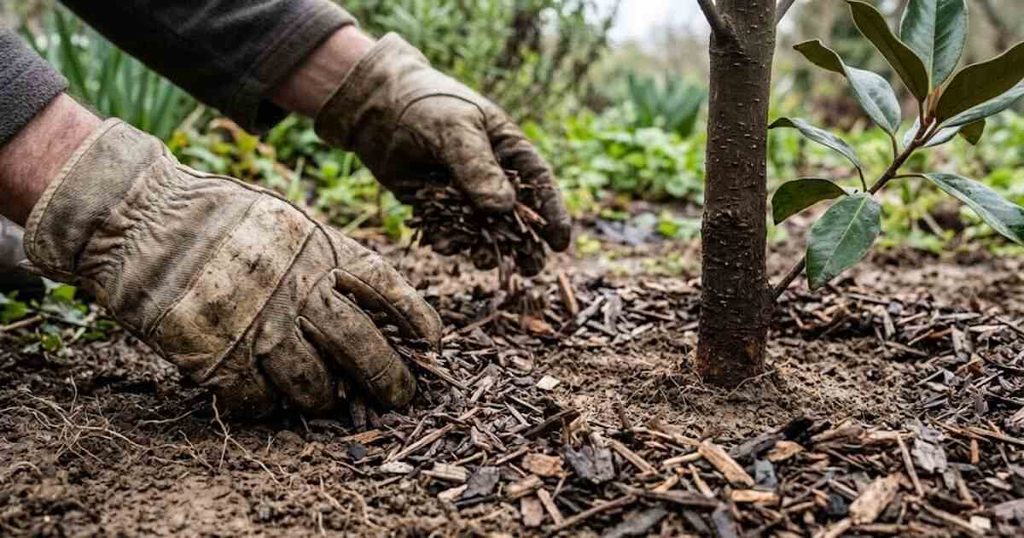
Magnolias have relatively shallow root systems. An organic mulch layer helps keep soil moisture and temperature more stable, but keep mulch away from direct contact with the trunk.
This matters especially for young trees because their roots are still exploring the surrounding soil.
Pruning Magnolias After Flowering
Pruning can directly affect future flowering because a magnolia may already have next season’s flower potential developing while you are deciding where to make a cut.
Once magnolias are mature and established, they rarely require heavy pruning. Cut away dead, diseased, or poorly placed limbs, and make major structural adjustments over several seasons rather than drastically reshaping the tree at once.
For deciduous magnolias, pruning after the flowering display is generally the safer approach when shaping is necessary.Clemson Extension similarly recommends delaying pruning until after the tree has finished flowering.
Do not prune an early-blooming magnolia in winter simply because winter is traditionally considered the standard season for pruning trees.
Important Naming Distinction: Tulip Magnolia vs. Tulip Tree
The name “tulip magnolia” is commonly associated with saucer magnolia, whose flowers have a tulip-like shape.
A true tulip tree, however, is Liriodendron tulipifera. It belongs to the magnolia family, Magnoliaceae, but it is not a Magnolia species. The two plants have different growth habits and flowering characteristics.
Remembering this key difference is critical when shopping for a tree at the nursery. Search the botanical name before purchasing so you know whether the nursery is offering a Magnolia or a Liriodendron.
Common Problems & Fixes
Lots of leaves but few flowers: First inspect sunlight.Next, check if the tree is still too young to bloom, if high-nitrogen fertilizer has boosted leafy growth at the expense of flowers, or if recent pruning accidentally cut away floral wood.
Buds turned brown after a cold night: Late frost is a strong possibility, especially on early deciduous magnolias. The tree may recover normally even though that year’s flowers are lost.
If magnolia blooms appear much later than anticipated, first check the variety’s standard flowering window, then evaluate whether your planting site gets less sun or heat than surrounding gardens.
When a thriving tree fails to bloom unexpectedly, look back at previous seasonal conditions rather than immediate factors. Changes in light from a growing neighboring tree, root disturbance, drought, hard pruning or soil problems can all affect flowering.
When leaves begin turning yellow, evaluate watering routines and soil drainage before testing soil pH and nutrient levels.High-pH soil can contribute to chlorosis in some magnolias.
The tree is growing slowly after planting: Magnolias can take time to establish. Avoid repeatedly disturbing their roots in an effort to force faster growth.
Flowers open beautifully and then collapse overnight: Check the overnight temperature. A freeze can damage tender flowers very quickly.
The tree flowers only lightly each year: Compare its location with its ideal light level, confirm that it receives adequate moisture during drought, and review when it was last pruned.
FAQs
Q1: When do magnolias bloom?
Ans:Most deciduous species bloom early between late winter and spring, while evergreen magnolias produce flowers during late spring and summer. The exact timing changes with species, cultivar and local weather.
Q2: When do magnolias bloom in the spring?
Ans: Star and Saucer magnolias serve as classic early bloomers, opening their flowers between March and April across temperate zones. However, a cold spring can delay that window, while an unusually warm spell can move it earlier.
Q3: When do magnolias bloom in warmer climates?
Ans: Early deciduous species can flower earlier than they would in colder regions, while evergreen Southern Magnolia remains a later spring and summer bloomer. Local microclimate can shift the season further.
Q4: Do magnolia flowers emerge before the leaf canopy develops?
Ans: Most deciduous magnolias bloom on bare branches before leafing out, which gives their flowers such a striking visual impact. Evergreen magnolias such as Magnolia grandiflora flower among mature foliage.
Q5: Why is my magnolia not blooming?
Ans: Weak or absent flowering is usually caused by inadequate sunlight, tree immaturity, drought stress, poor soil, frost damage to buds, or improper pruning timing. Examine those factors before adding fertilizer.
Q6: Can late frost stop magnolia flowers?
Ans: Yes. Once flower buds or blossoms are exposed, a freeze can brown or blacken tender floral tissues. The damage usually affects the season’s display more than the long-term survival of an established tree.
Q7: Should I use high-phosphorus fertilizer to make magnolias bloom?
Ans: Not automatically. Before applying a bloom-boosting fertilizer, perform a soil test and review the tree’s lighting, moisture levels, and pruning history to identify the true cause of weak flowering.
Q8: When should I prune a magnolia?
Ans: Keep pruning light and remove dead or damaged wood when needed. For deciduous types, shaping after flowering helps reduce the chance of removing tissues that would contribute to the next flowering cycle.
Final Takeaway
There is no single month that answers when magnolias bloom, as timing varies widely by species and climate.
Think of magnolia flowering as a moving window controlled by species, cultivar, winter conditions, spring warmth, bud development and frost risk. Star and saucer magnolias can create an early spring spectacle, Jane and related later cultivars can shift the display farther into spring, and Southern Magnolia can carry the show into summer.
When you stand beside your tree, look at the buds instead of the calendar. A swollen bud on a warm-weather forecast tells a far more useful story than a generic statement that “magnolias bloom in spring.”
To ensure consistent flowering, select a climate-appropriate cultivar, maintain proper lighting and soil moisture, minimize harsh pruning, and safeguard early blooms against late frosts. This strategy removes the guesswork from magnolia flowering, turning bloom timing into a predictable annual event.
Pingback: Japa Plant Care: Growing Tips & Flowering Guide