
Few houseplants look as elegant indoors as the China doll plant. Its glossy, deep green leaves and naturally tree-like shape can instantly brighten a living room, office, or bedroom.This plant gives off the impression that it’s a breeze to care for when you first see it. Then the leaves start dropping, and many people assume they’ve done something terribly wrong.
I’ve learned that this plant isn’t difficult because it needs constant attention. It’s difficult because I dislike sudden changes. Moving the plant to a new location, overwatering it, or placing it in a cold draft can quickly cause it to drop its leaves. The good news? Once you understand what it wants, caring for a China doll plant becomes much easier.
In this guide, I’ll show you everything you need to know from choosing the right location and watering correctly to fixing common problems like leaf drop, yellow leaves, and slow growth. You’ll also learn practical tips that many care guides overlook, helping you keep your plant healthy, bushy, and thriving for years.
Quick Answer Box
China doll plant (Radermachera sinica) is a tropical evergreen houseplant that grows best in bright indirect light, well-draining soil, consistent moisture, temperatures between 65–80°F (18–27°C), and moderate to high humidity. Avoid moving it frequently because sudden environmental changes are the most common cause of leaf drop. Regular pruning encourages fuller, bushier growth.
China Doll Plant at a Glance
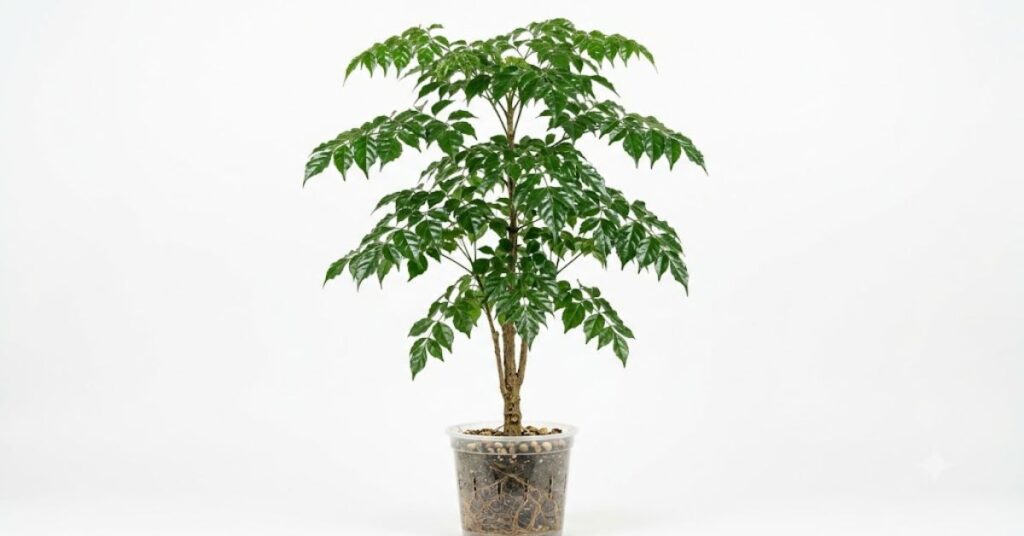
Before diving into plant care, it’s helpful to understand what makes the China doll plant unique. Far from your average houseplant, this species is naturally a small evergreen tree that can tower to impressive heights when grown outsideAs an indoor houseplant, it will remain small and neat as long as you prune it regularly.
Native to the warm, humid regions of southern China and Taiwan, the China doll plant thrives in stable tropical conditions. That’s why it performs best when your home’s environment stays consistent throughout the year.
Scientific Classification
- Common Name: China Doll Plant
- Botanical Name: Radermachera sinica
- Family: Bignoniaceae
- Plant Type: Evergreen tropical shrub/tree
- Native Area: Southern China and Taiwan
- Mature Indoor Size: 4–6 feet tall (can reach 8 feet with excellent care)
- Growth Rate: Moderate to fast during spring and summer
- Toxicity: Generally considered non-toxic to cats and dogs, though chewing any houseplant may cause mild stomach upset.
Plant Characteristics
People love the China doll plant for its shiny, deeply cut green leaves, which give the whole plant a wonderfully light and breezy look. As it matures, its woody stems develop into a graceful indoor tree with a naturally upright growth habit.
One of the biggest reasons people love this plant is its lush foliage. Unlike flowering houseplants, its beauty comes almost entirely from healthy leaves. Healthy maintenance triggers frequent new growth, ensuring the plant keeps a lush, bushy appearance all year long.
Why Is It Called the China Doll Plant?
The name “China doll plant” comes from its origin in China and its delicate, elegant appearance. Its finely textured foliage gives it a graceful look that resembles a carefully shaped ornamental tree.
Even though people everywhere keep it indoors nowadays, this species is native to warm subtropical forests, where it prospers in indirect light, stable heat, and moist air. Recreating those conditions inside your home is the secret to long-term success.
China Doll Plant Care Requirements
| Care Factor | Ideal Conditions |
| Light | Bright, indirect sunlight for 6–8 hours daily |
| Water | Keep soil evenly moist but never soggy |
| Soil | Well-draining potting mix with perlite or coarse sand |
| Temperature | 65–80°F (18–27°C) |
| Humidity | 50–70% preferred |
| Fertilizer | Apply a balanced liquid food every 3 to 4 weeks during the warmer months of spring and summer. |
| Growth Rate | Moderate to fast in the growing season |
| Difficulty Level | Moderate |
| Best Location | Position the plant in a spot that receives filtered sun, ideally near a luminous south- or east-facing window. |
How to Care for a China Doll Plant
Growing a healthy China doll plant isn’t about following a long list of complicated rules. Success comes down to offering a reliable home base for your plant while making subtle tweaks to match the turn of the seasons..Once you get the basics right, you’ll spend less time fixing problems and more time enjoying its lush green foliage.
Light Requirements for China Doll Plant Care
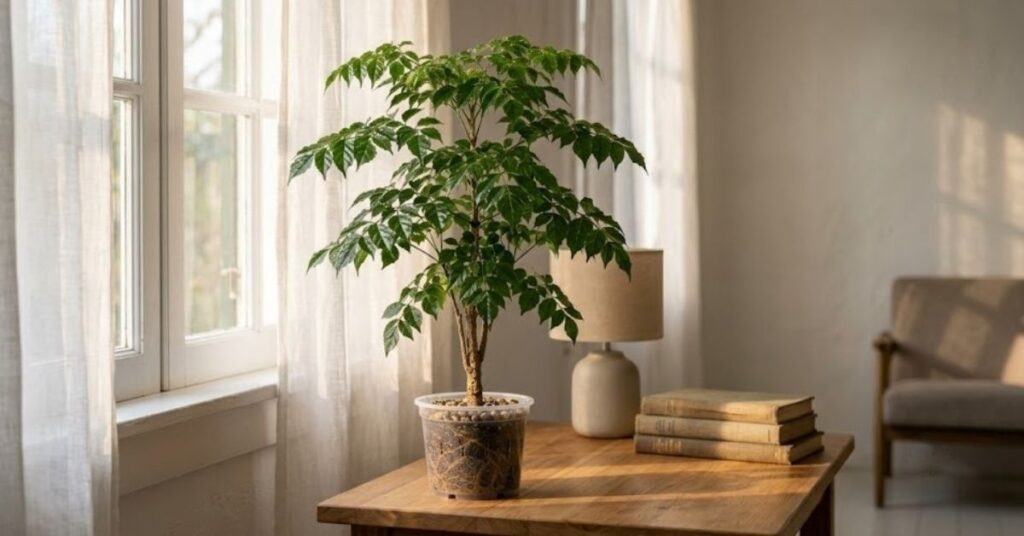
In its natural habitat, Radermachera sinica grows beneath taller trees, where it receives plenty of bright but filtered sunlight.
Place your plant where it gets 6 to 8 hours of bright, indirect light each day. An east-facing window is usually the best choice because it provides gentle morning sun without the intense afternoon heat.You can also set it by a southern window just by hanging a light curtain to filter out harsh rays.
If your home doesn’t receive enough natural light, a full-spectrum LED grow light can keep the plant healthy. Position the light about 12 to 18 inches above the foliage and run it for 10 to 12 hours daily.
Signs Your Plant Needs More Light
Your plant may not be getting enough light if you notice:
- Long, weak, leggy stems
- Slow or no new growth
- Small, pale green leaves
- Wide gaps between leaves
- Leaning toward the window
If you’re shifting your plant to a sunnier spot, take it slow. Moving it abruptly can stress the plant out, causing a sudden wave of fallen leaves.
Signs of Too Much Light
While the China doll plant loves bright conditions, harsh afternoon sun can damage its delicate leaves.
Watch for these symptoms:
- Brown or crispy leaf edges
- Bleached or faded leaves
- Dry patches on foliage
- Leaves curling inward
If you notice these signs, move the plant slightly farther from the window or use a sheer curtain to filter the sunlight.
How to Water Your China Doll Plant
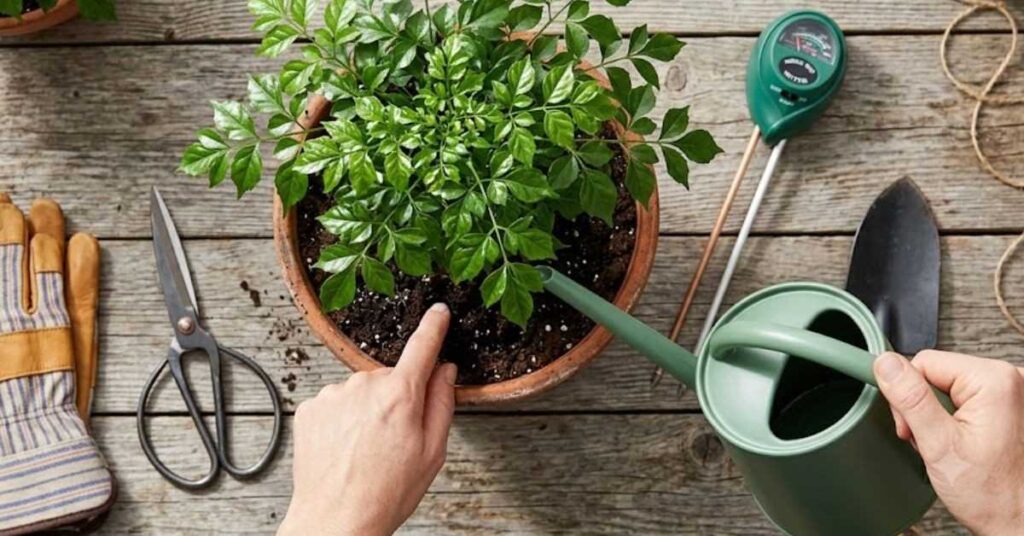
If there’s one mistake I see most often, it’s overwatering. A lot of plant parents mistakenly think that tropical foliage automatically craves drenched root zones.
That’s not true.The trick with a China doll plant is keeping the dirt evenly moist without letting the roots drown in soggy soil.
A simple finger test works surprisingly well. Test the moisture level by pressing your finger one or two inches into the potting mix. If the surface is dry, proceed with watering; if it remains moist, give it another day or two before rechecking.
A moisture meter can also help if you’re unsure, especially during winter when the soil dries more slowly.
Seasonal Watering Guide
Shake up your hydration routine with the changing months your plant’s water needs naturally shift as the weather does.
- Spring: Water when the top inch of soil becomes dry.
- Summer:Summer calls for frequent soil checks every few days, as warm weather spurs rapid growth and higher water needs.
- Autumn: Reduce watering slightly as growth slows.
- Winter: Water less often, allowing the top layer of soil to dry before watering again.
Always adjust your schedule based on your home’s temperature, humidity, and light levels rather than following a fixed weekly routine.
How to Water Correctly
Water slowly until excess water flows from the drainage holes. This approach keeps the lower roots properly hydrated instead of just dampening the top inch or two.
After watering, empty the saucer beneath the pot within a few minutes. Standing water keeps the roots constantly wet and increases the risk of root rot.
Overwatering vs. Underwatering
What trips up new plant owners is that dropping leaves can signal either issue, making it tricky to diagnose off the bat.
Signs of Overwatering
- Yellow leaves
- Soft stems
- Wet, heavy soil
- Mushy roots
- Musty smell from the pot
Signs of Underwatering
- Dry, crispy leaves
- Drooping stems
- Dirt pulls away from the sides of the pot, leaving a visible gap around the edges.
- Slow growth
- Dry potting mix several inches deep
Spotting the difference saves you from adding extra water to a plant whose roots are already suffocating.
Best Soil, Temperature, and Humidity
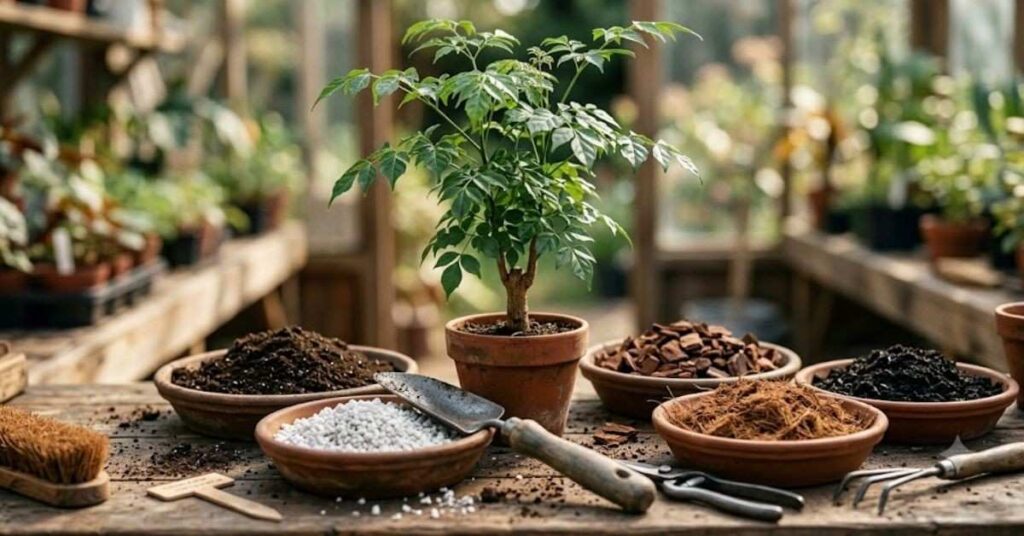
Healthy roots start with the right growing medium. China doll plants dislike compacted soil because it traps excess moisture around the roots.
Use a lightweight, well-draining potting mix
that allows water to drain freely while still holding enough moisture for healthy growth.
A simple mix works well:
- 2 parts quality indoor potting soil
- 1 part perlite
- 1 part coco coir or peat moss
This combination improves drainage, increases airflow around the roots, and helps prevent root rot.
Aim for a lightly acidic substrate reading 6.0 to 6.5 on the pH scale to ensure your plant easily absorbs all its essential nutrients.
Temperature Requirements
Keep your China doll plant comfortable by maintaining a room temperature between 65°F and 80°F (18°C to 27°C).
Avoid exposing your plant to temperatures below 55°F (13°C). Cold drafts from doors, open windows, or air conditioners can cause sudden leaf drop.
Keep the plant away from:
- Air conditioning vents
- Heating vents
- Frequently opened exterior doors
- Cold windows during winter
A stable indoor temperature is far more important than occasional spikes in warmth.
Humidity Needs
Although the China doll plant adapts to average household humidity, it grows best when humidity stays between 50% and 70%.
If your home is dry, especially during winter, you can increase humidity by:
- Using a humidifier nearby
- Placing the pot on a pebble tray filled with water
- Grouping several houseplants together
Avoid excessive misting as a primary humidity solution. It raises humidity only briefly and may encourage fungal problems if the leaves stay wet for too long.
When your plant receives bright indirect light, proper watering, well-draining soil, and consistent humidity, it rewards you with dense, glossy foliage and steady new growth throughout the growing season.
Fertilizer, Pruning, Repotting, and Propagation
Once your China doll plant has the right light, water, and soil, the next step is keeping it healthy as it grows. Proper feeding, occasional pruning, timely repotting, and successful propagation all play a role in maintaining a full, attractive plant.
Fertilizing Your China Doll Plant
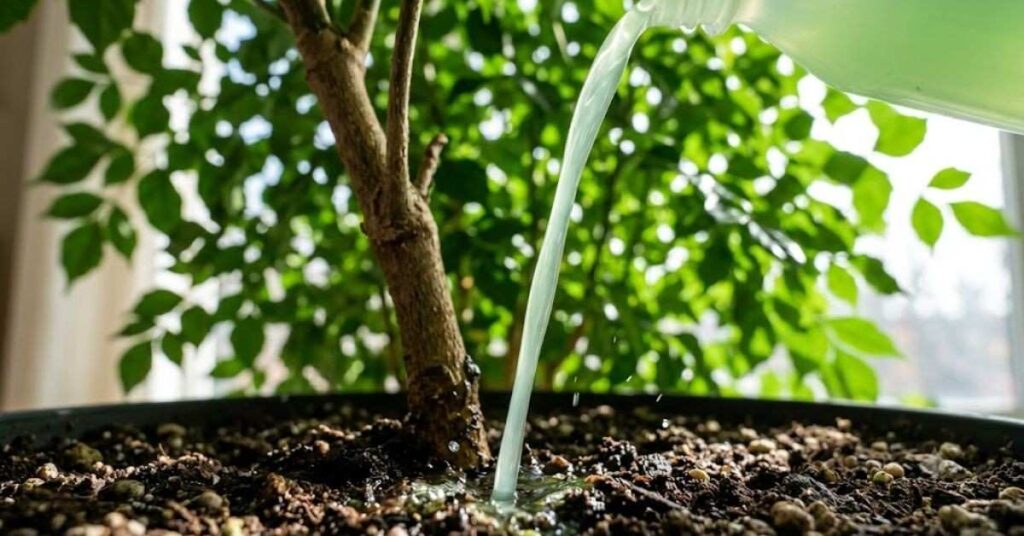
A China doll plant uses the most nutrients during spring and summer when it’s actively producing new leaves and stems. During this period, regular feeding encourages faster, healthier growth and keeps the foliage rich green.
I prefer using a balanced liquid houseplant fertilizer with an equal nutrient ratio, such as 10-10-10 or 20-20-20. Diluting it to half the recommended strength is usually enough because overfeeding can damage the roots and cause leaf burn.
Fertilizing Schedule
- Spring: Feed every 3–4 weeks.
- Summer: Continue feeding every 3–4 weeks while the plant is actively growing.
- Autumn: Reduce feeding as growth slows.
- Winter: Stop fertilizing or feeding only if the plant is producing healthy new growth under bright light.
Never feed your plant while it’s dry; always give it a good watering first to protect the roots from liquid fertilizer burn.Feeding dry roots can lead to fertilizer burn.
Signs Your Plant Needs Nutrients
A healthy China doll plant grows steadily during the growing season. If growth slows despite good light and watering, it may be time to feed.
Common signs include:
- Small new leaves
- Pale green foliage
- Slower growth than usual
- Thin, weak stems
Fertilizer Mistakes to Avoid
Many plant problems begin with too much fertilizer rather than too little.
Avoid these common mistakes:
- Fertilizing immediately after repotting
- Feeding a stressed or unhealthy plant
- Applying fertilizer to completely dry soil
- Using more than the recommended amount
- Fertilizing during winter dormancy
When in doubt, it’s better to underfeed than overfeed.
How to Prune a China Doll Plant
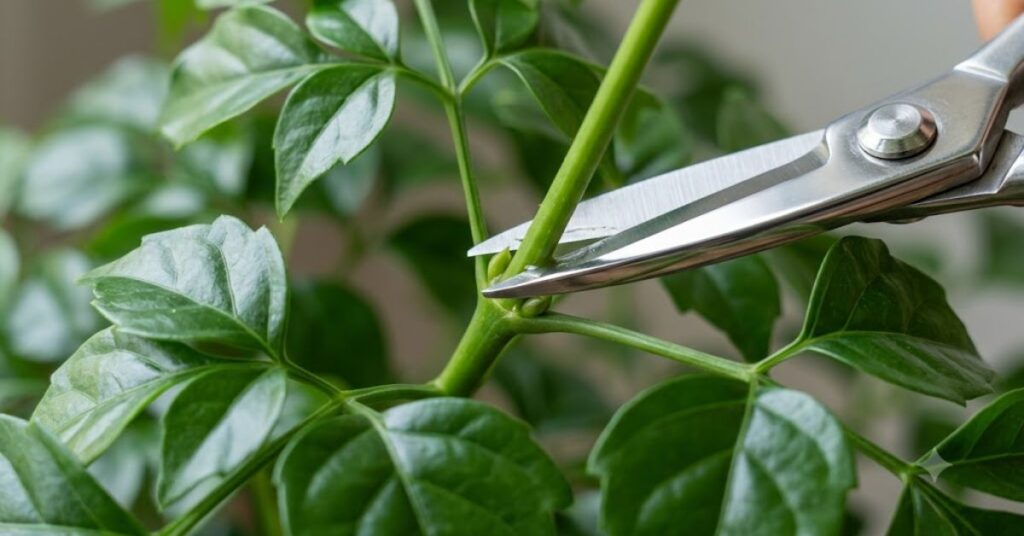
Pruning is one of the easiest ways to keep your China doll plant compact, dense, and attractive. Without occasional trimming, stems can become long and sparse, making the plant look leggy.
The best time to prune is during spring or early summer when the plant is growing actively.
Where Should You Cut?
One detail many care guides skip is where to make the cut.
Look for a leaf node, the point where leaves grow from the stem. Make a clean cut about ¼ inch (6 mm) above the node using sterilized pruning shears.
Cutting above a node encourages the plant to produce new side shoots, resulting in a fuller appearance.
Removing Dead or Damaged Growth
Regularly inspect the plant and remove:
- Yellow leaves
- Brown leaves
- Broken stems
- Diseased branches
This improves airflow and allows the plant to direct more energy toward healthy growth.
How to Revive a Leggy Plant
If your China doll plant has become tall with bare stems, don’t worry.
Prune the longest stems by one-third to one-half of their length during spring. Combined with brighter indirect light, this encourages new branches to develop lower on the plant, creating a bushier shape over time.
Repotting Without Causing Transplant Shock
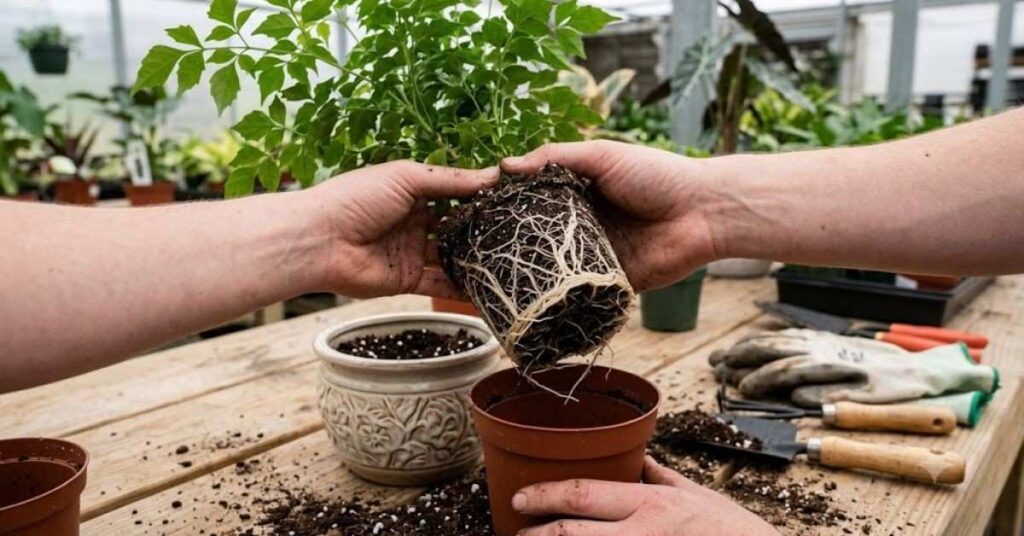
Unlike some fast-growing houseplants, China doll plants don’t enjoy frequent repotting. They actually perform better when slightly root-bound.
Report only when the plant clearly needs more space.
Signs It’s Time to Repot
Watch for these signs:
- Roots growing through drainage holes
- Water running straight through the pot
- Soil drying unusually fast
- Slower growth despite proper care
- Roots circling tightly inside the pot
If you don’t see these symptoms, your plant probably isn’t ready for a larger container.
Choosing the Right Pot
One of the biggest beginner mistakes is selecting a pot that’s much larger than the current one.
Instead, choose a container that’s only 1–2 inches wider than the existing pot. This provides room for new roots without leaving large amounts of unused soil that stay wet for too long.
Always use a pot with drainage holes.
Step-by-Step Repotting
- Water the plant a day before repotting.
- Gently remove it from its current pot.
- Loosen tightly circling roots with your fingers.
- Trim only dead or damaged roots.
- Add fresh, well-draining potting mix.
- When replanting, don’t bury the stem any deeper or shallower than it was growing before.
- Water thoroughly after repotting.
Hold the fertilizer for the first month in a new pot. Fresh potting soil already has plenty of plant food built in, plus the roots need a breather to settle in without burning.
How to Propagate a China Doll Plant
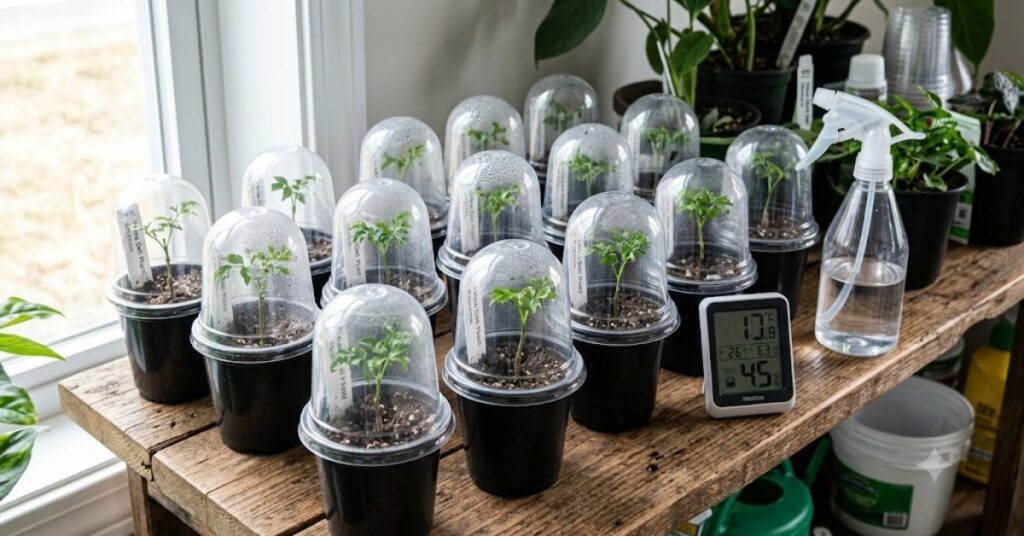
Propagating a China doll plant takes patience, but it’s a rewarding way to grow new plants from a healthy parent.
Stem cuttings offer the highest success rate.
Best Time to Propagate
Spring and early summer are ideal because the plant is actively growing. Stem cuttings establish new roots in a fraction of the time compared to dormant winter months.
How to Propagate Using Stem Cuttings
- Choose a healthy stem with several leaves.
- Take a cutting about four to six inches long, making your cut right under the spot where a leaf meets the stem.
- Remove the lower leaves.
- Dust the freshly sliced bottom with a little rooting hormone. It’s optional, but it gives new roots a nice head start.
- Place your cutting into a pre-moistened dirt blend that drains well so the roots don’t rot.
- Trap moisture around the plant by placing a clear plastic bag or propagation dome over the pot without sealing it tight.
- Place it in bright, indirect light.
Aim for soil that feels like a wrung-out sponge consistently damp to the touch, but never swampy.
Under ideal conditions, roots usually develop within 4 to 8 weeks.
Common Propagation Mistakes
Success often depends on avoiding a few simple mistakes.
Don’t:
- Take cuttings from weak or unhealthy stems.
- Place cuttings in direct sunlight.
- Let the soil become waterlogged.
- Tug on the cutting repeatedly to check for roots.
A gentle resistance after several weeks usually indicates that new roots have formed.
With proper feeding, thoughtful pruning, careful repotting, and patient propagation, your China doll plant will stay healthier, fuller, and easier to manage for many years.
Why Is My China Doll Plant Dropping Leaves?
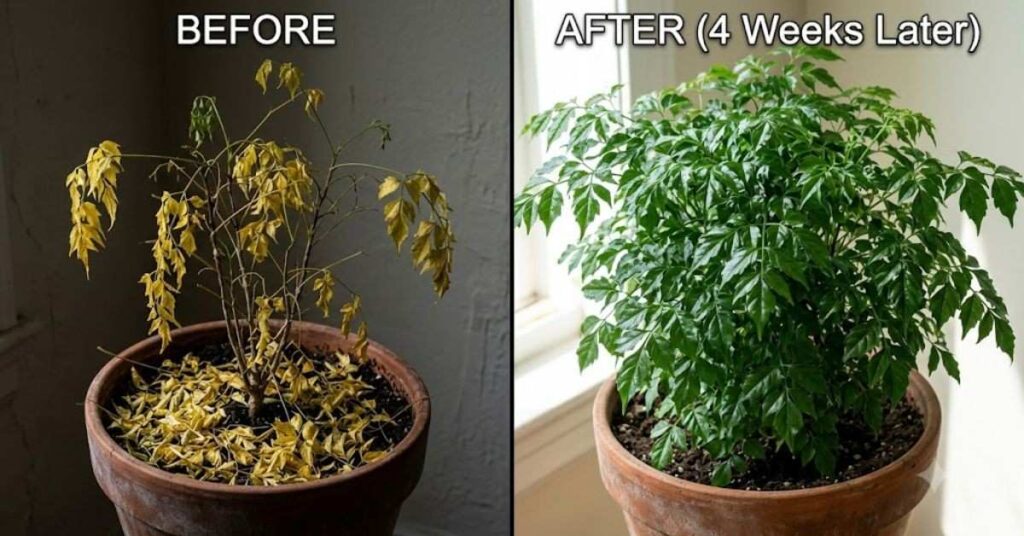
Leaf drop is the number one reason people think their China doll plant is dying. The truth is, this plant reacts quickly to stress. Losing leaves doesn’t always mean it’s beyond saving. In most cases, once you identify the cause and correct it, healthy new growth will appear over the following weeks.
1. Sudden Environmental Changes
China doll plants love consistency. Moving the plant from one room to another, bringing it home from the nursery, or changing its position frequently can trigger leaf drop.
If you need to relocate your plant, choose its new spot carefully and leave it there. Give it several weeks to adjust before expecting new growth.
2. Water Stress
Whether you’re giving it too much hydration or letting it dry out, improper watering usually leads to shedding leaves.
If the soil stays constantly wet, roots struggle to absorb oxygen, eventually leading to root rot. On the other hand, letting the soil become bone dry for extended periods stresses the plant and causes it to shed foliage to conserve energy.
Aim for evenly moist soil instead of following a rigid watering schedule.
3. Poor Lighting
Too little light slows photosynthesis and weakens the plant, often resulting in leaf loss and sparse growth.
Boost its light exposure by sliding it closer to a sunny window or setting up a grow light to fill the gap.
4. Low Humidity
Dry indoor air, especially during winter, can lead to crispy edges followed by leaf drop.
Keeping humidity between 50% and 70% helps reduce stress and supports healthy foliage.
5. Temperature Fluctuations
Cold drafts, heating vents, and air conditioners can all shock a China doll plant.
Keep it away from doors, drafty windows, fireplaces, and HVAC vents to maintain a stable growing environment.
How Long Does Recovery Take?
Recovery isn’t instant. After correcting the problem, most healthy plants begin producing new leaves within 3 to 8 weeks during the growing season.
Avoid making several changes at once. Fix one issue, then allow the plant time to respond.
Common Problems and Solutions
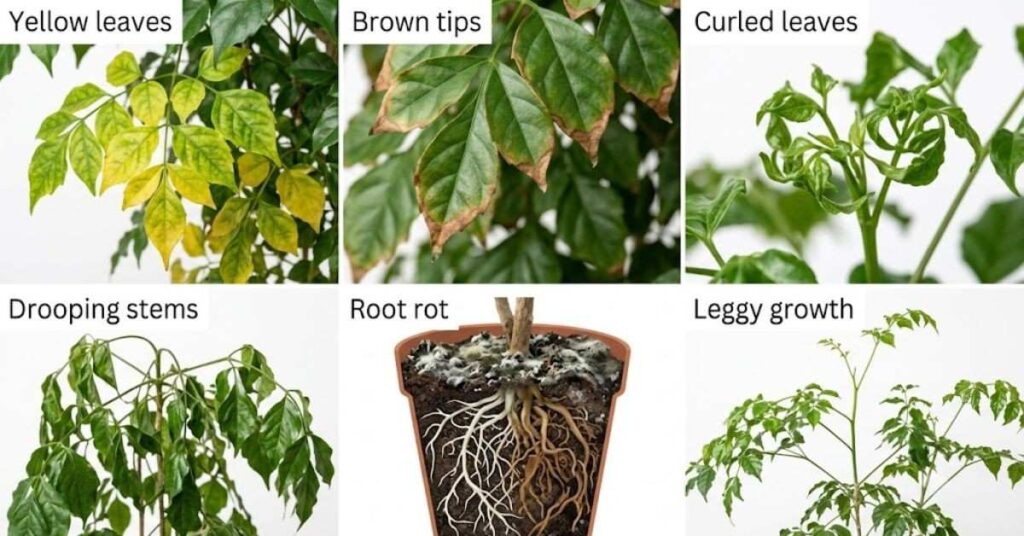
Even experienced plant owners occasionally run into problems. The key is identifying symptoms early before they become serious.
Yellow Leaves
Possible causes:
- Overwatering
- Poor drainage
- Lack of nutrients
- Natural aging of older leaves
Solution:
Hold off on watering until the first inch of dirt has dried out completely. Check that the pot drains freely and remove any yellow leaves.
Brown Leaf Tips
Possible causes:
- Low humidity
- Dry soil
- Excess fertilizer
Solution:
Increase humidity, water consistently, and flush the soil occasionally to remove excess fertilizer salts.
Curling Leaves
Possible causes:
- Underwatering
- Heat stress
- Low humidity
Solution:
Check soil moisture and move the plant away from intense afternoon sun or heat sources.
Leggy Growth
Possible causes:
- Insufficient light
- Lack of pruning
Solution:
Provide brighter indirect light and prune stems above leaf nodes to encourage branching.
Slow Growth
Possible causes:
- Winter dormancy
- Low light
- Root-bound plant
- Nutrient deficiency
Solution:
Review growing conditions before assuming something is wrong. Don’t worry if it barely grows during the colder months; plants naturally hit the brakes this time of year.
Root Rot
Symptoms:
- Yellow leaves
- Soft stems
- Foul-smelling soil
- Black or mushy roots
Solution:]
Take the plant out of the pot, trim off any unhealthy roots, and give it a fresh start in a well-aerated soil mix..Reduce watering until new growth appears.
Common Pests and Diseases
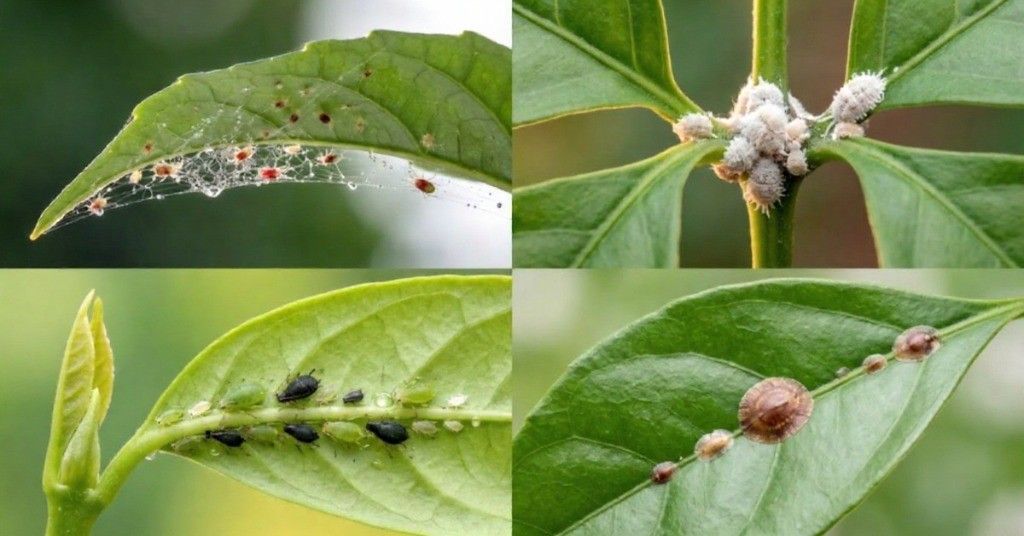
Although generally resilient, China doll plants can occasionally attract pests, particularly when grown indoors.
Spider Mites
These tiny pests thrive in dry conditions and feed on plant sap.
Signs include:
- Fine webbing
- Tiny yellow spots
- Leaf drop
Increase humidity and wipe the leaves regularly. Tackling a bug problem? Spray the plant down with organic insecticidal soap or neem oil to clear them up.
Mealybugs
Mealybugs appear as small white, cotton-like clusters along stems and leaves.
Remove individual insects with a cotton swab dipped in rubbing alcohol, then monitor the plant closely for new activity.
Aphids
Aphids gather on fresh shoots and feed on tender new growth.
Wash them away with a gentle stream of water or use insecticidal soap if necessary.
Scale Insects
Scale insects attach themselves firmly to stems and leaves, making them easy to overlook.
Scrape them off carefully before applying horticultural oil according to the product instructions.
Beginner Mistakes to Avoid
Many China doll plant problems are preventable.Sidestep these beginner errors early on so your plant gets the best possible start.
- Moving the plant every few weeks.
- Repotting immediately after bringing it home.
- Reaching for heavy outdoor soil from the yard instead of a fast-draining potting mix.
- Pouring on water just because it’s “watering day,” without sticking your finger in the dirt first.
- Fertilizing a stressed or newly repotted plant.
- Placing the plant next to heating or cooling vents.
- Ignoring early warning signs such as yellow leaves or drooping stems.
Small adjustments made early are much easier than trying to revive a severely stressed plant later.
Frequently Asked Questions
Q1:How often should I water a China doll plant?
Ans:Water whenever the top 1–2 inches of soil feel dry. How frequently your plant gets thirsty varies sunlight, temperature, humidity, and seasonal changes all play a role.
Q2:Why does my China doll plant keep dropping leaves?
Ans:Leaf drop is usually caused by sudden environmental changes, watering problems, poor lighting, low humidity, or temperature stress.
Q3:Can a China doll plant tolerate direct sunlight?
Ans:Morning sun is usually fine, but prolonged afternoon sunlight can scorch the leaves. Bright, indirect light is the safest option.
Q4:Is a China doll plant safe for pets?
Ans:The China doll plant is generally regarded as non-toxic to cats and dogs. Even so, it’s best to discourage pets from chewing any houseplant to avoid stomach irritation.
Q5:How fast does a China doll plant grow?
Ans:Under ideal conditions, it grows moderately to quickly during spring and summer while slowing significantly during autumn and winter.
Q6:Can I grow a China doll plant outdoors?
Ans:Yes, but only in warm, frost-free climates. In cooler regions, it’s best grown indoors as a houseplant.
Final Thoughts
The China doll plant has a reputation for being fussy, but it’s really a plant that values consistency. Give it bright indirect light, well-draining soil, steady moisture, and avoid moving it around too often. Those simple habits make the biggest difference.
If your plant drops a few leaves, don’t panic. Check its growing conditions one step at a time instead of changing everything at once. With a little patience and regular care, your Radermachera sinica can reward you with lush, glossy foliage and years of healthy indoor growth.