
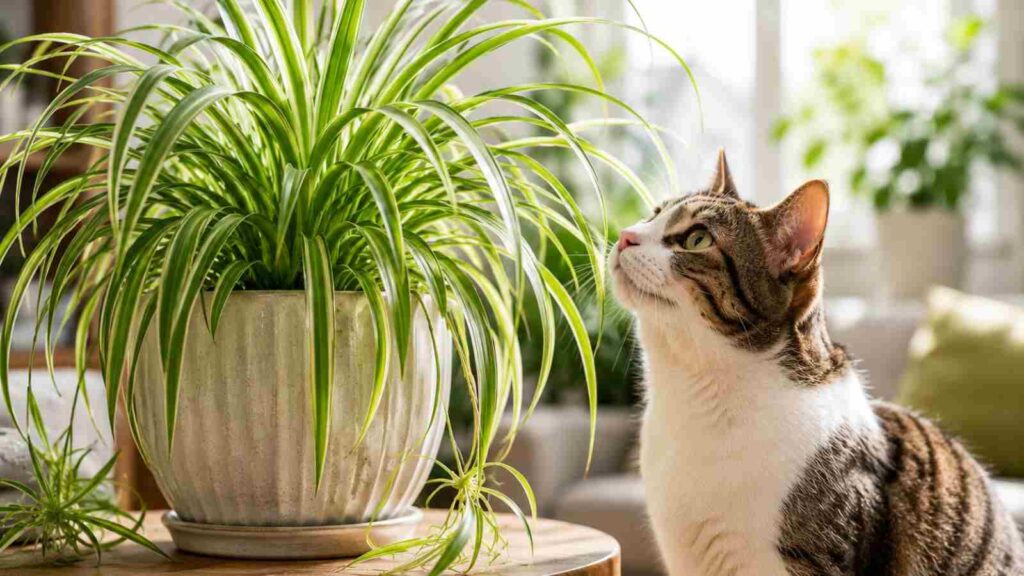
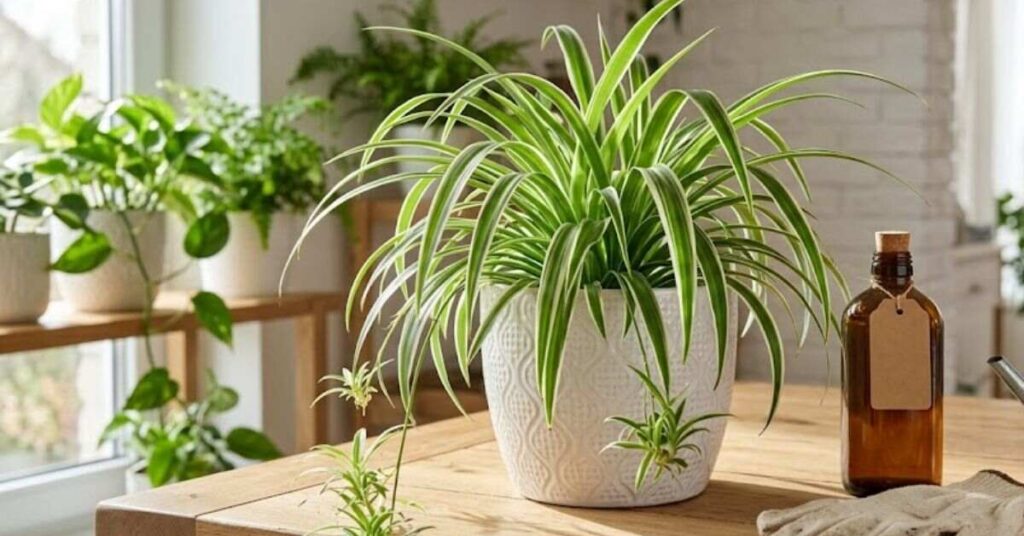
No, spider plants (Chlorophytum comosum) are not toxic to cats according to ASPCA guidelines. However, they contain mild chemical saponins and natural compounds that can cause mild gastrointestinal upset, such as vomiting or diarrhea, if consumed in large quantities. Always monitor ingestion and keep plants out of reach.
Are Spider Plants Toxic to Cats? What the ASPCA Science Says
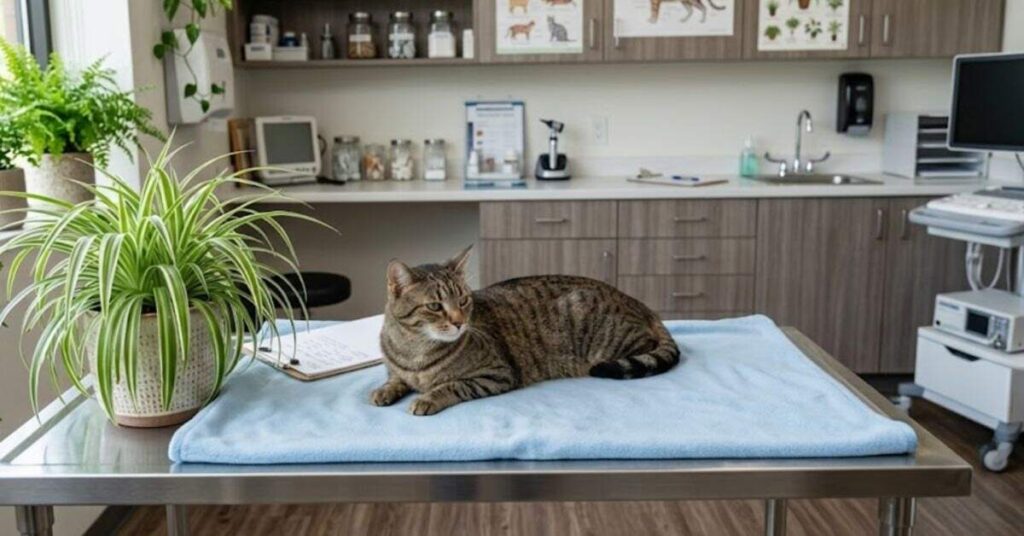
If you caught your cat nibbling on a trailing spider plant blade five minutes ago, take a deep breath.
The short answer is a reassuring no. According to the American Society for the Prevention of Cruelty to Animals (ASPCA), the standard spider plant (Chlorophytum comosum) is non-toxic to cats, dogs, and horses.
However, “non-toxic” does not mean your living room hanging basket should become your cat’s daily salad bar. In fact, eating large quantities of spider plant leaves almost always leads to messy carpet cleanups.
Chlorophytum Comosum Chemical Breakdown: Are Compounds Toxic to Cats?
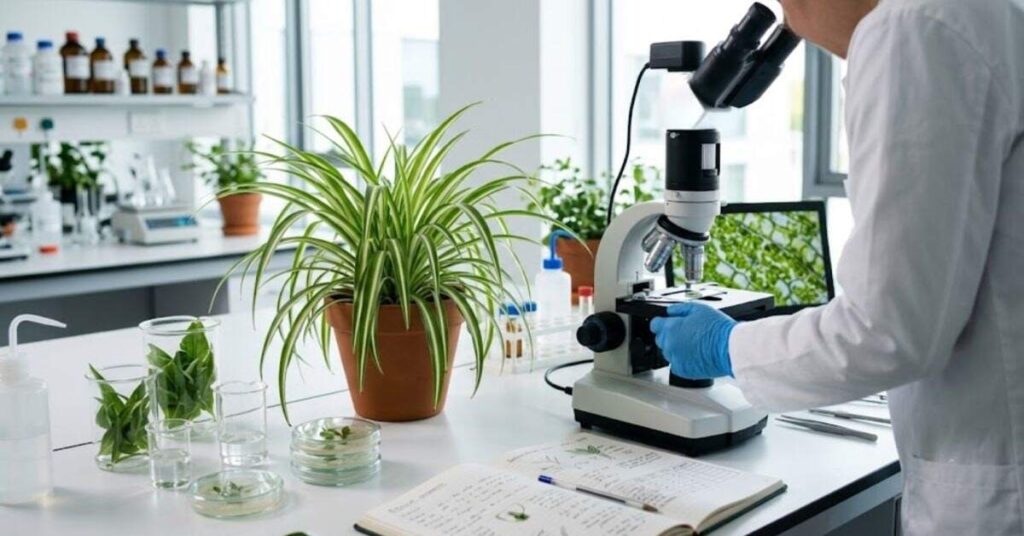
To understand what happens inside your cat’s stomach, we have to look closely at plant biochemistry.
Spider plants produce mild naturally occurring chemical compounds, primarily saponins. While these compounds are entirely non-lethal, they can irritate a feline’s sensitive digestive tract.
When your cat chews through those arching variegated leaves, they ingest mild natural irritants alongside tough plant cellulose. While your cat is not absorbing fatal toxins, their body may react by purging the indigestible plant fiber.
Mild Indigestion vs. Systemic Spider Plant Cat Toxicity
It is vital to distinguish between minor stomach distress and true systemic poisoning.
- Systemic Toxicity (e.g., Lilies or Dieffenbachia): Damages internal organs like the kidneys or liver, causing continuous retching, severe lethargy, or seizures.
- Mild Indigestion (Spider Plants): Exposure remains strictly localized to the digestive tract. Symptoms include occasional vomiting, light drooling, loose stool, or temporary loss of appetite that resolves within 12 to 24 hours.
If your pet shows minor tummy upset after chewing a leaf, their body is simply reacting to tough plant fiber and mild saponins.
Why Are Cats Obsessed with Eating Spider Plants?
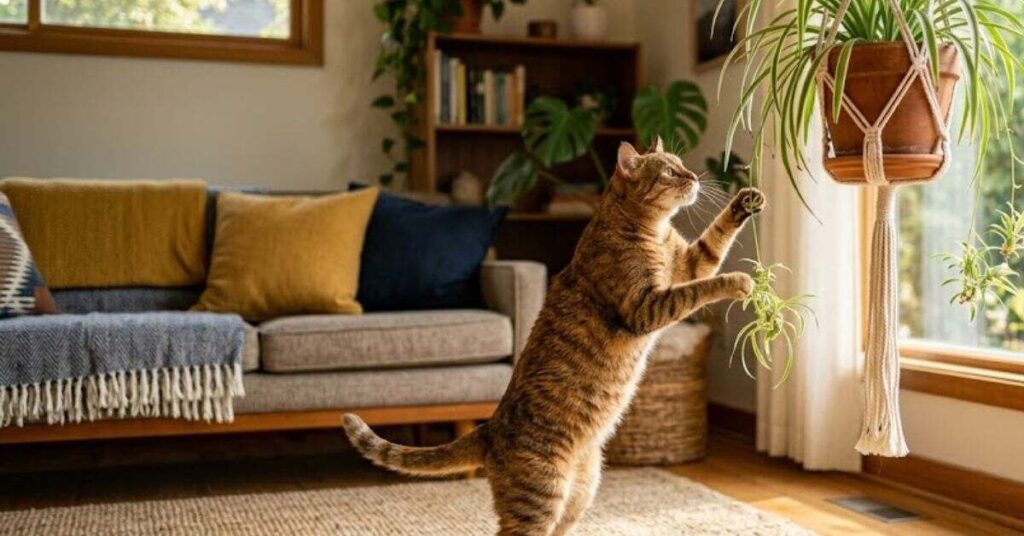
Have you ever wondered why your feline ignores expensive toys just to target your hanging planters? Cats do not attack spider plants by accident; they find them genuinely irresistible for physical, sensory, and behavioral reasons.
1. The Playful Motion & Sensory Attraction
Spider plants produce dangling offshoots (spiderettes) that sway with the slightest breeze. This gentle motion triggers your cat’s natural predatory drive. Batting at a dangling leaf blade feels just like hunting prey, making the plant double as an interactive toy.
2. Instinctual Green Foliage Cravings
In nature, wild felines eat grass to add bulk to their diet, which aids digestion and helps them vomit up indigestible hairballs or bone fragments. Your indoor housecat relies on the long, grass-like leaves of your spider plant to satisfy that exact same biological urge.
Hidden Hazards: Are Spider Plants Poisonous When Fertilized?
The plant itself might be non-toxic, but environmental factors like synthetic sprays or moldy soil can make it surprisingly dangerous for your cat.
Pesticide and Chemical Fertilizer Residue Risks
Chemical fertilizers and leaf-shining sprays contain concentrated synthetic nitrogen, phosphorus, and systemic pesticides. Swallowing these synthetic compounds can cause mouth irritation or gastrointestinal distress.
Tip: Always use organic fertilizers, such as liquid kelp or fish emulsion, if you share your home with pets.
Mechanical Intestinal Blockage and Choking Hazards
Spider plant leaves feature tough, fibrous parallel veins that do not break down easily. If a kitten swallows a long leaf whole without chewing, the blade can wrap around the base of the tongue or lodge in the digestive tract, creating a choking hazard or bowel obstruction.
What to Do If Your Cat Eats a Spider Plant (Step-by-Step Triage)
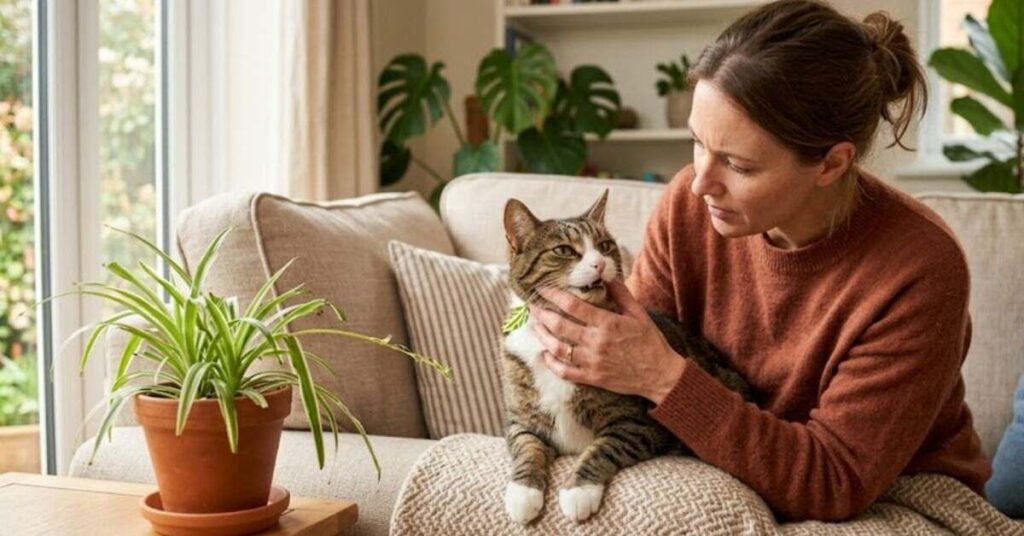
- Check for Immediate Distress: Remove any loose plant material from your cat’s mouth.
- Identify Symptoms:
- Mild Reactions (Normal): Single episode of vomiting, slight drooling, or minor loss of appetite.
- Moderate Reactions: Repeated retching over two hours or soft stools containing green leaf fragments.
- Severe Symptoms (Requires Immediate Vet Visit): Persistent unyielding vomiting, inability to keep water down, facial swelling, or extreme lethargy.
- Monitor Hydration: Ensure your cat has access to fresh water. Most cats recover fully within 12 to 24 hours.
How to Stop Cats from Eating Spider Plants
Smart Indoor Plant Positioning
- Elevate Plants: Use ceiling-mounted macramé hangers or floating shelves far out of your cat’s jumping range.
- Maintain Clearance: Ensure the plant is hung at least three feet away from nearby bookshelves or windowsills.
Safe Alternatives and Deterrents
- Offer Cat Grass: Grow fresh pots of organic oat, barley, or wheatgrass nearby to satisfy their urge for live greens safely.
- Apply Pet-Safe Sprays: Lightly mist the lower leaves with pet-safe bitter apple spray.
- Use Citrus Deterrents: Place fresh orange or lemon peels near the base of your planters, as cats naturally dislike citrus scents.
Diagnostic Guide: Ingestion Symptoms & Solutions
| Issue / Symptom | Botanical & Feline Cause | Actionable Fix |
| Frequent Leaf Chewing | Natural urge for digestive fiber; attracted to dangling leaves. | Move the plant to a ceiling hanger; provide fresh organic cat grass at ground level. |
| Sudden Vomiting After Ingestion | Indigestible leaf cellulose and chemical saponins irritate the gastric lining. | Withhold food for 2 hours, offer fresh water, and monitor for recovery within 12 to 24 hours. |
| Chemical Toxicity Symptoms | Synthetic fertilizer accumulation or pesticide residues on leaf surfaces. | Flush plant soil with pure water, switch to organic fertilizers, and contact a vet if severe. |
| Choking or Gagging | Long, fibrous leaf blade lodged in the throat or palate. | Gently open the mouth to inspect for visible leaves, remove carefully, or seek immediate vet aid. |
Frequently Asked Questions (FAQs)
Q1:Can Spider Plants Kill Cats?
Ans:No, spider plants are not fatal to cats. The plant tissue contains no systemic toxins that cause kidney failure or organ damage.
Q2:Are Spider Plant Babies (Spiderettes) Toxic to Cats?
Ans:Spiderettes contain the exact same mild chemical compounds as the mother plant. Because these small offshoots dangle at cat eye level, cats target them frequently. While non-toxic, eating multiple spiderettes will likely cause minor stomach upset.
Q3:What Are the Best Cat-Safe Plant Alternatives?
Ans:If you want a worry-free indoor jungle, choose houseplant varieties certified safe by pet health authorities, such as Boston Ferns (Nephrolepis exaltata), Peperomia species, and Areca Palms (Dypsis lutescens).
Quick Action Summary for Pet Parents
- Non-Toxic Status: Spider plants (Chlorophytum comosum) are officially non-toxic to cats according to ASPCA standards.
- Natural Attraction: Long, swaying leaves trigger a cat’s natural playfulness and biological craving for plant fiber.
- Gastrointestinal Effects: Overeating can lead to temporary stomach upset due to high fiber and saponin content.
- Prevention Strategy: Elevate plants using ceiling hangers, apply safe deterrents, and offer fresh cat grass alternatives.
Final Thoughts
At the end of the day, you do not have to choose between being a devoted cat parent and growing a lush indoor garden. Spider plants (Chlorophytum comosum) are officially safe and non-toxic additions to any pet-friendly home. While their dangling leaves and natural fibrous texture might entice your feline friend into a quick chew, the worst outcome is usually just minor tummy distress. By elevating your planters, opting for organic fertilizers, and offering safe cat grass alternatives, you can enjoy vibrant greenery while keeping your curious cat completely safe.
Pingback: Is Lavender Safe for Cats? What Cat Owners Need to Know