
Lily plant care depends on which “lily” you actually own. True lilies (Lilium) are perennial bulb plants that usually belong outdoors in sun and sharply draining soil, while peace lilies (Spathiphyllum) are tropical aroids grown mainly as houseplants. Once you identify the plant correctly, its watering, light, soil, and seasonal routine become much easier to manage.
A common mistake is treating every plant with “lily” in its name as though it follows the same rulebook. It doesn’t. A garden lily can want several hours of sun, while a peace lily can scorch in that same position.
Before You Care for It, Identify Your Lily
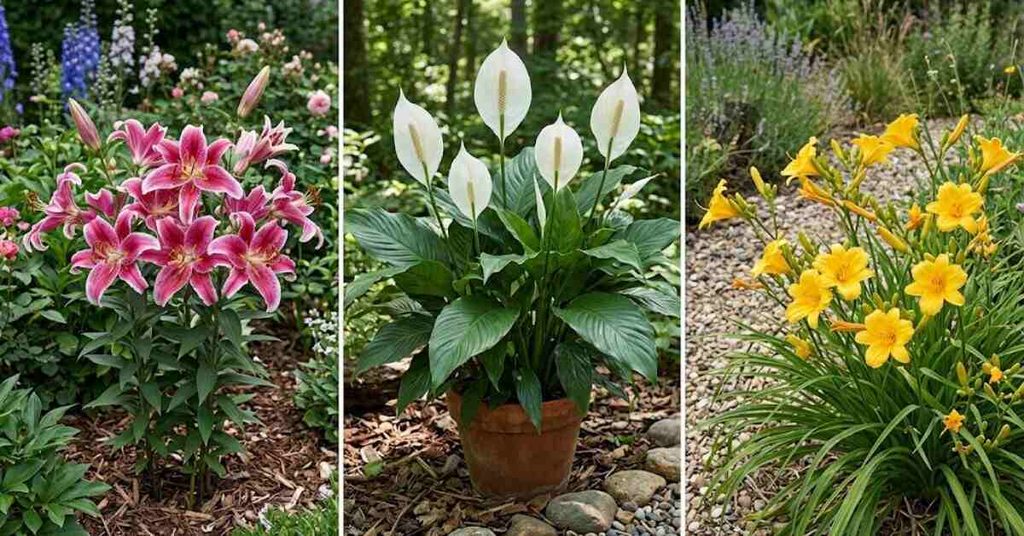
Start with the plant itself rather than the label on the garden-center shelf.
| Plant | Scientific group | Typical setting | Main light preference |
| True lily | Lilium | Outdoor garden or container | Sun to partial shade |
| Peace lily | Spathiphyllum | Indoor houseplant | Bright, indirect light |
| Daylily | Hemerocallis | Outdoor garden | Sun to partial shade |
| Calla lily | Zantedeschia | Garden/container | Sun to partial shade depending on climate |
| Canna lily | Canna | Outdoor garden | Strong sunlight |
For this guide, lily plant care primarily means true lilies in the genus Lilium because these are the classic bulb-forming garden lilies. A separate section later explains peace lilies so you don’t accidentally apply outdoor advice to an indoor plant.
Quick Lily Plant Care Specs
For true Lilium lilies, use this as your starting point:
| Care factor | Practical target |
| Light | Full sun is ideal for many varieties; partial shade can suit some types |
| Water | Even moisture during active growth without permanently wet soil |
| Soil | Fertile, loose, well-drained soil |
| Temperature | Depends strongly on the cultivar and local climate |
| Humidity | Normal outdoor humidity is generally adequate |
| Feeding | Moderate feeding during active growth |
| Difficulty | Beginner-friendly with good drainage |
| Toxicity | Dangerous to cats; keep pets away |
RHS lists true lilies as poisonous to cats and notes that the bulbs can also pose risks to other pets. If cats live in your home, garden lilies deserve the same level of caution as cut lilies brought indoors.
Start With the Planting Site
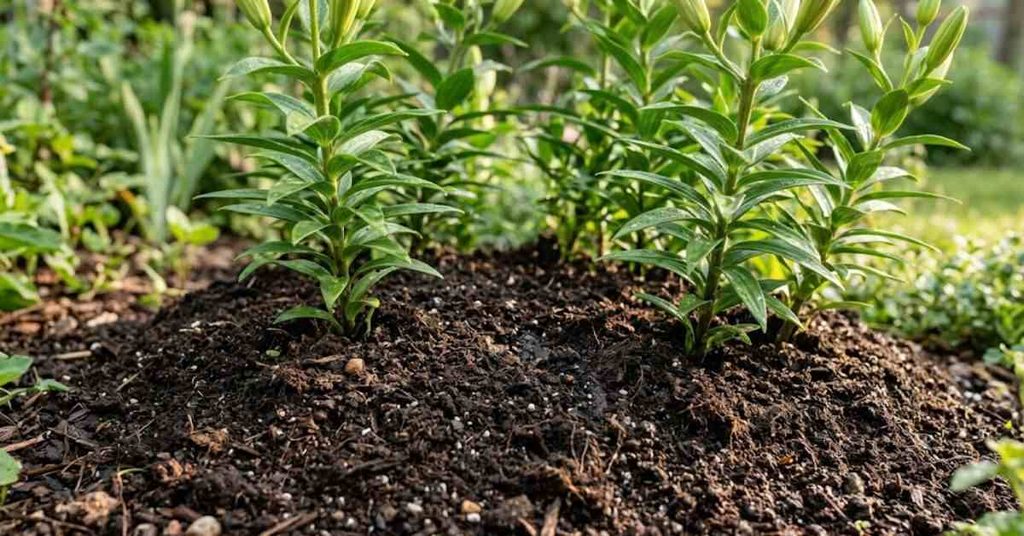
The easiest way to make lily plant care difficult is to put the bulbs somewhere that stays wet.
Choose a bed where water disappears rather than collecting after rain. If the soil becomes sticky and saturated for days, improve the drainage before planting or choose a raised bed or container.
Lilies appreciate fertile soil, but fertility is only half the equation. Their roots and bulbs need access to air as well as moisture. A rich bed that remains waterlogged can cause more trouble than a slightly less fertile bed that drains properly.
A simple site test
Dig a small planting hole and fill it with water. Allow the water to drain out fully, then repeat the process. If water continues sitting in the hole for a long period, the site deserves drainage improvement before you commit valuable bulbs to it.
This small test can prevent an entire season of disappointment.
Choose the Right Lily for the Space
Not all true lilies behave identically.
Asiatic lilies are valued for strong color and generally earlier flowering, while Oriental lilies are famous for larger, often strongly scented flowers and later-season displays. Trumpets and other hybrid groups bring different combinations of height, fragrance, flower shape, and flowering time.
That difference matters when planning a garden.
If you want a succession of blooms, combine varieties with different flowering periods rather than planting ten bulbs that all peak at the same time. You can also place shorter varieties toward the front and taller types farther back where their stems are easier to support.
Light Requirements
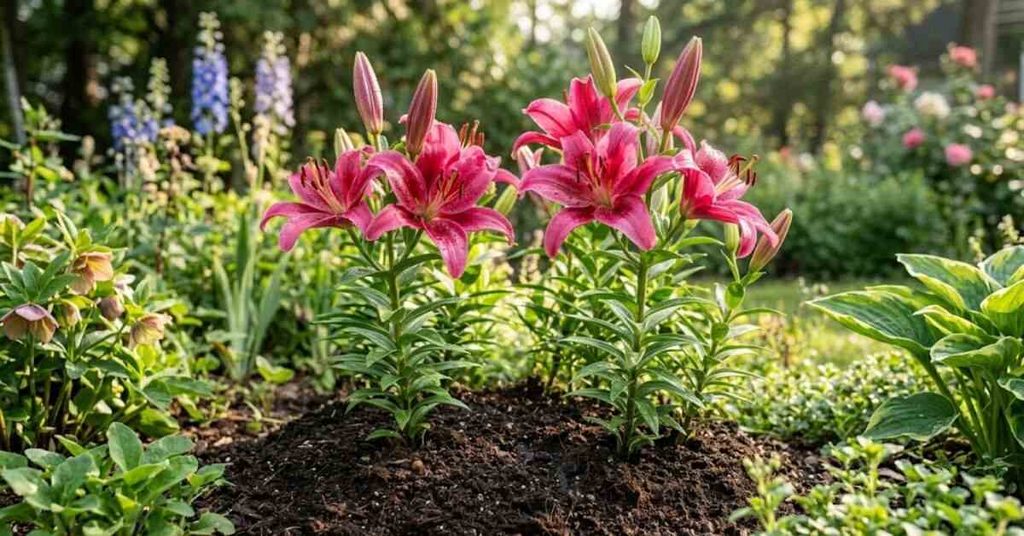
Most garden lilies perform best with substantial sunlight, although the ideal exposure varies by type.
A sunny position helps produce sturdy stems and abundant flowers. However, intense heat reflected from walls or paving can create a very different environment from ordinary garden sun.
Watch the plant rather than treating “full sun” as a magic number.
If stems become unusually thin and lean toward one direction, the plant may be chasing light. If foliage develops scorched patches during extreme heat, the combination of intense sun and reflected heat may be too aggressive.
For Oriental and woodland-tolerant types, a little afternoon protection can sometimes work better than placing them in the hottest exposed part of the garden.
Planting Lily Bulbs Correctly

Lily bulbs are not the same as dry, papery bulbs such as onions. Their scales are exposed and can dry or deteriorate if stored carelessly.
Plant healthy bulbs soon after purchase and handle them gently.
The exact planting depth depends on the lily and the bulb, so follow the cultivar’s instructions when available. As a general approach, the planting hole should provide enough soil above the bulb to keep it cool and stable while allowing the emerging stem to reach the surface without difficulty.
Place the bulb with its growing point facing upward and its roots positioned downward. If you cannot clearly identify the orientation, examine the bulb carefully rather than forcing it into the soil.
After planting, water the area thoroughly once to settle the soil around the roots.
Watering Established Lilies
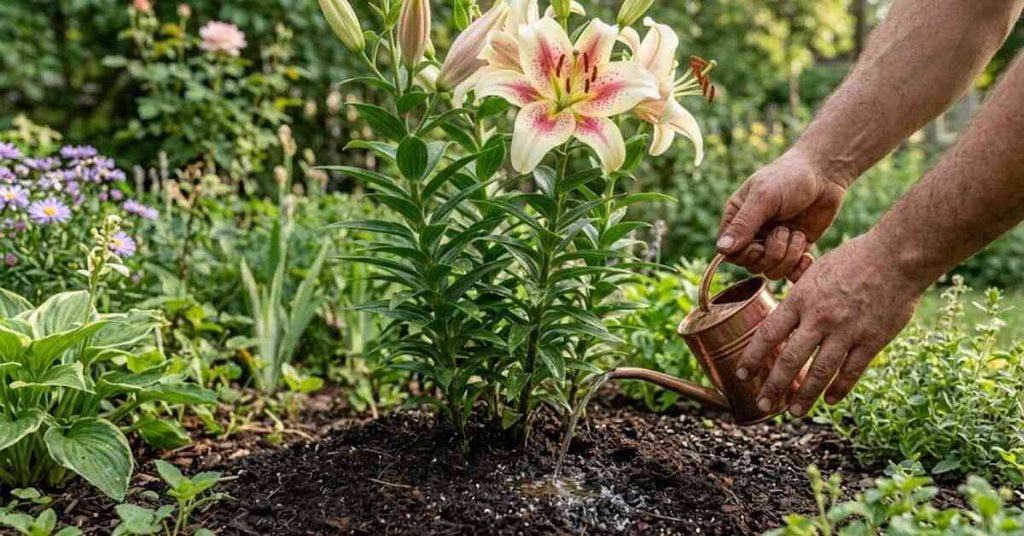
Good lily plant care means moist soil with oxygen around the roots, not permanently wet soil.
During active growth, check the planting area before watering. If the upper soil is drying but deeper soil still feels reasonably moist, you may not need to add more water immediately.
During hot, dry weather, lilies can require more frequent irrigation. During rainy periods, however, adding extra water can do more harm than good.
Container-grown lilies deserve closer attention because pots can lose moisture much faster than garden beds.
A useful watering clue
Look at the whole plant, not just the surface of the soil.
A lily that is repeatedly wilting despite regular watering may not simply be thirsty. Poor drainage, damaged roots, extreme heat, or a cramped container can all create symptoms that resemble drought.
Keep the Roots Cool
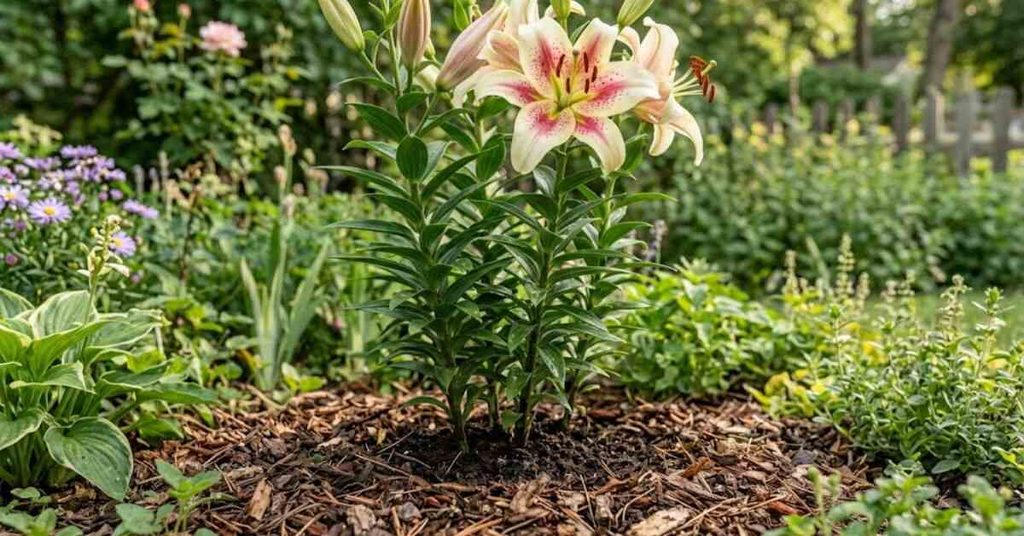
Lily flowers may steal the attention, but the underground portion of the plant benefits from cooler conditions.
A layer of organic mulch around the planting area can reduce rapid moisture loss and buffer soil temperatures. Keep mulch slightly away from the stems instead of building a wet mound directly against them.
This is especially useful in hot climates where the upper layer of soil can become dramatically warmer during the afternoon.
Feeding Lilies for Strong Growth
Lilies are not plants that need constant feeding.
Begin with reasonably fertile soil and provide moderate nutrition during active growth. A balanced slow-release fertilizer can be useful in spring, while excessive nitrogen should be avoided.
Too much nitrogen can encourage a mass of soft green growth when what you actually want is sturdy stems and flowers.
If the foliage looks healthy and the plant produces normal flowers, there is no prize for adding more fertilizer. Overfeeding can create salt accumulation and unnecessary stress.
Supporting Tall Lily Stems

Tall lilies sometimes need help, particularly when large flowers catch wind or rain.
Install a discreet support before the plant becomes top-heavy. Placing the support early is preferable to pushing a stake through an established root zone later.
For a garden display, thin stakes or decorative supports can be positioned behind the foliage so they disappear visually.
If several stems repeatedly flop in the same location, treat that as information about the site. A little more light, better spacing, or protection from prevailing wind may solve the underlying problem.
Deadheading Without Weakening Next Year’s Flowers
Once a lily flower fades, remove the spent bloom if you want a cleaner appearance and want to prevent unnecessary seed production.
However, do not remove healthy green foliage simply because flowering has finished.
The leaves continue capturing energy and sending resources back toward the bulb. Cutting the foliage while it is still green can reduce the plant’s ability to prepare for the following season.
Wait until the foliage naturally turns yellow or brown before cutting it back.
This is one of the easiest lily-care rules to overlook because the garden can look untidy for a short period after flowering.
Dividing and Propagating Lilies
Established lily clumps can gradually produce additional bulbs and bulblets.
Division is most practical when the plant is entering dormancy and the structure underground can be handled without damaging active growth.
Lift the clump carefully, separate suitable offsets, and replant healthy material promptly. Do not leave exposed lily bulbs lying around in direct sun or drying wind.
Seed propagation is possible for some lilies, but it is a much longer project and is not the fastest route to a flowering garden display.
For beginners, multiplying healthy bulbs is usually the more practical approach.
Growing Lilies in Containers
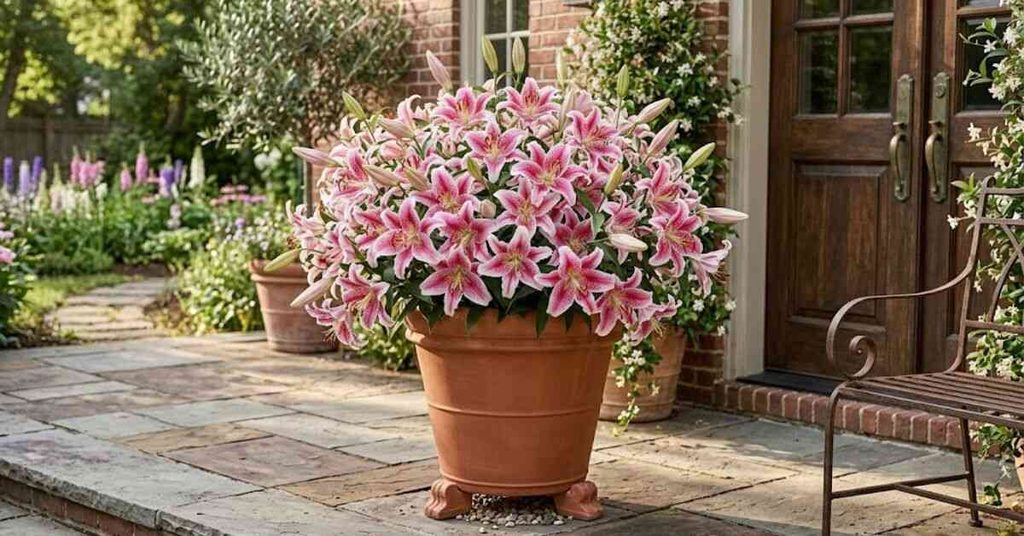
Container-grown lilies can look spectacular on patios, balconies, and entrances, but the container needs to be deep and stable enough for the plant.
Choose a pot with drainage holes and use a loose growing medium rather than dense garden soil.
The container should also be heavy enough to resist tipping once the stems rise and the flowers open.
Check moisture more frequently than you would for lilies planted in the ground. A warm, windy patio can turn a previously moist container into a surprisingly dry root zone.
During winter, remember that roots in containers experience temperature changes more quickly than roots protected by surrounding garden soil.
Winter Care
Many true lilies are perennial and can return for years when planted in suitable conditions.
After the foliage has finished its seasonal work, remove the dead material according to your local climate and gardening conditions. In colder regions, a protective mulch layer can help buffer the soil around overwintering bulbs.
Avoid digging bulbs simply because winter has arrived unless your particular variety or climate requires it.
In areas with suitable winter conditions, leaving healthy bulbs undisturbed is often the simpler approach.
The Peace Lily Is a Completely Different Plant
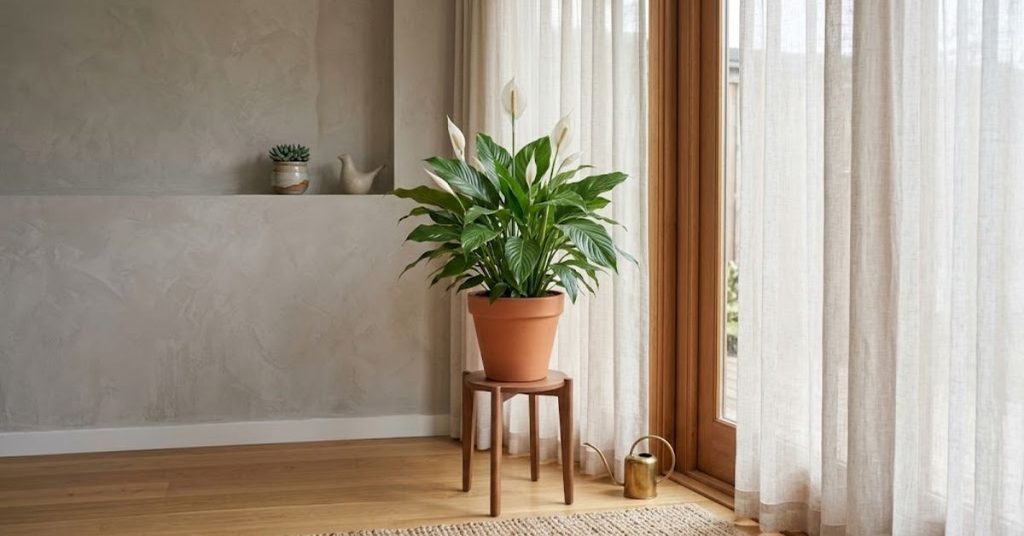
This distinction deserves its own section because it prevents one of the biggest “lily plant care” mistakes.
Peace lilies belong to Araceae, not Liliaceae. Its scientific name is Spathiphyllum, and it belongs to the Araceae family rather than the lily family.
Instead of growing from a typical Lilium bulb, peace lilies form clumps of tropical foliage and produce a distinctive white spathe surrounding a central spadix.
That means their care looks completely different.
Peace lily light
Use bright, indirect light rather than harsh direct afternoon sunlight.
A darker room may keep a peace lily alive, but flowering usually becomes less reliable. Move it closer to a bright window if healthy foliage is present but flowers remain absent.
Peace lily watering
Keep the growing medium moderately moist while allowing some drying between waterings.
The dramatic drooping that peace lilies display when thirsty is useful as a warning signal, but repeatedly waiting until the entire plant collapses is unnecessary stress.
At the other extreme, constantly wet soil can damage the roots.
Peace lily humidity
Moderate humidity suits peace lilies, while very dry indoor air can contribute to brown leaf edges.
If your plant sits beside a heater, air conditioner, or drafty window, changing its location may help more than simply increasing the watering frequency.
Peace lily toxicity
Peace lilies contain insoluble calcium oxalates. The ASPCA lists them as toxic to cats and dogs, with signs including oral irritation, drooling, vomiting, and difficulty swallowing.
True Lilium lilies present a different and particularly serious danger to cats, so knowing the scientific name of the plant matters.
Common Problems & Fixes
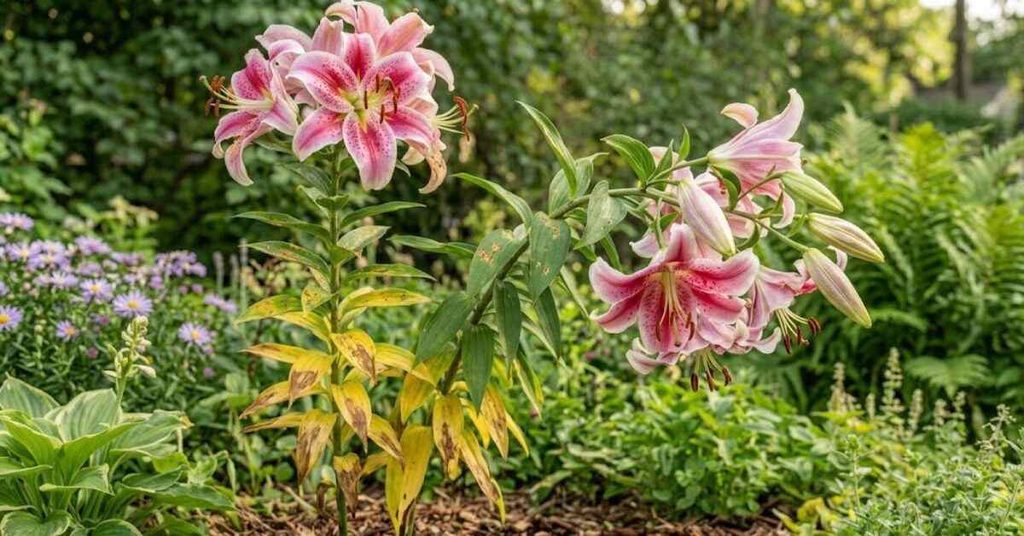
Yellowing leaves:
First check the root zone. If the soil remains wet for long periods, reduce watering and investigate drainage before adding fertilizer.
Floppy stems:
Tall varieties can lean when light is uneven, stems are overloaded with flowers, or wind repeatedly pushes them. Add support and assess the planting location.
Few or no flowers:
Insufficient light, overcrowding, immature bulbs, unsuitable conditions, or excessive nitrogen can all contribute. Look at the entire growing environment rather than immediately adding bloom fertilizer.
Brown leaf edges on a peace lily:
Check watering consistency, humidity, fertilizer buildup, and water quality. Do not assume every brown tip means the plant needs more water.
Bulb rot:
Persistent wet soil is a major warning sign. Improve drainage and avoid repeatedly watering a bed that has not dried appropriately.
Leaves yellow after flowering:
Do not automatically treat this as disease. Seasonal yellowing after flowering can be part of the plant’s natural transition, particularly when the rest of the plant is declining normally toward dormancy.
Lily beetles or chewing damage:
Inspect foliage regularly during the growing season. Remove visible pests promptly and use a control method appropriate for the specific pest and your garden.
Peace lily suddenly collapses:
Check moisture before panicking. A thirsty peace lily can droop dramatically and may recover after proper watering, while a plant sitting in saturated soil needs a completely different response.
Lily Plant Care by Season

Spring
Spring is the main preparation period for active growth.
Check drainage, inspect emerging shoots, provide appropriate nutrition, and watch for early pest activity. If you are planting bulbs in spring, avoid leaving them exposed for long periods after purchase.
Summer
Flowering becomes the main focus.
Maintain steady moisture, support tall stems, remove spent flowers, and protect the root zone from extreme heat. Most importantly, allow green foliage to remain functional after flowering.
Fall
Fall is a transition period.
Depending on your climate and lily type, this can be an appropriate time for planting or dividing. Let naturally declining foliage finish its job before cutting it back.
Winter
Avoid unnecessary disturbance.
Protect outdoor containers and bulbs according to local conditions, and remember that excessive winter moisture can be as troublesome as extreme cold in poorly drained soil.
Lily Plant Care: The Simple Rule to Remember
If you want one principle to guide your routine, start with plant identity and drainage.
A true lily wants outdoor conditions suited to its cultivar, plenty of light, fertile soil, and moisture that never turns the root zone into a swamp. A peace lily needs a completely different indoor environment built around indirect light, moderate moisture, warmth, and humidity.
Once you stop treating every “lily” as the same plant, lily plant care becomes much more predictable and your chances of getting another season of healthy flowers improve dramatically.
Frequently Asked Questions
Q1: How much sun do lilies need?
Ans: Most true lilies perform well with substantial sunlight, although some varieties tolerate partial shade better than others. If stems become weak and lean toward a brighter area, the plant may need more light.
Q2: How often should I water lilies?
Ans: There is no reliable calendar that works for every garden. Check soil moisture and rainfall first, then water deeply when the root zone begins drying rather than keeping the bed continuously saturated.
Q3: Do lilies come back every year?
Ans: Many true lilies are perennial and can return from their bulbs for several seasons. Their long-term performance depends on the variety, climate, drainage, and how well the foliage is allowed to recharge the bulb after flowering.
Q4: Should I cut lily leaves after flowering?
Ans: No, not while the foliage is still green and healthy. Those leaves are still producing energy for the bulb, so wait until they naturally yellow or die back before removing them.
Q5: Are lilies toxic to cats?
Ans: True lilies in the Lilium group are especially dangerous to cats, and suspected exposure should be treated seriously. Peace lilies are different plants, but they are also toxic to cats and dogs because of insoluble calcium oxalates.
Q6: Why are my lilies not flowering?
Ans: Start by checking sunlight, overcrowding, bulb maturity, soil drainage, and nutrition. Excessive nitrogen can produce vigorous foliage without giving you the flower display you expected.
Q7: Can I grow lilies in pots?
Ans: Yes. Use a sufficiently deep container with drainage holes, a free-draining growing medium, and a stable location where tall stems will not easily topple the pot.
Q8: Are peace lilies and true lilies the same?
Ans: No. Peace lilies belong to Spathiphyllum in the Araceae family, whereas true lilies belong to Lilium. Their appearance, growing conditions, and toxicity profiles are different.
Final Takeaway
Successful lily plant care starts before you water, fertilize, or prune anything: identify the lily first.
For true Lilium, prioritize good drainage, strong light, healthy bulbs, moderate feeding, and intact foliage after flowering. For peace lilies, think tropical houseplant instead of bright indirect light, controlled moisture, moderate humidity, and careful attention to brown tips and drooping.
That small identification step prevents many of the biggest lily-growing mistakes.