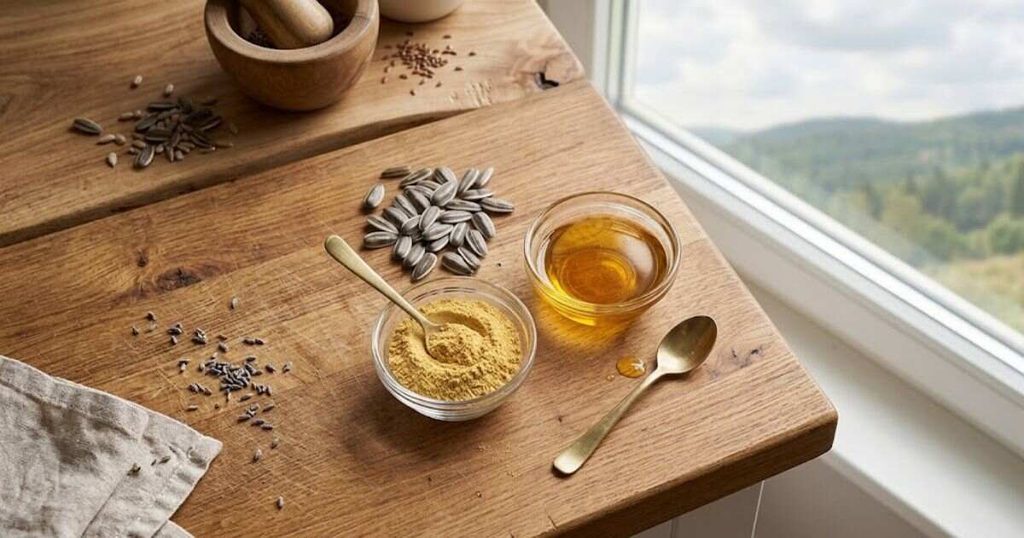
Sunflower lecithin is a mixture of phospholipids obtained from sunflower seeds and is used both as a food emulsifier and as a dietary supplement. It can help ingredients such as oil and water stay blended, while its phospholipids provide compounds such as phosphatidylcholine and choline.
The important distinction is that sunflower lecithin is well established as a food ingredient, while many of its advertised health benefits still have limited or mixed human evidence.
A practical way to think about sunflower lecithin
Imagine making a homemade salad dressing with oil and vinegar. Shake the bottle and the two liquids briefly combine, but they naturally want to separate again. An emulsifier helps slow that separation.
That is essentially where lecithin becomes interesting. Its chemistry allows it to interact with both fat-loving and water-loving components, making it useful in foods ranging from chocolate to sauces.
For someone buying it as a supplement, however, the question changes. The goal isn’t simply to make food smoother; the person may be looking for phospholipids, choline, breastfeeding support, or another potential health benefit.
That difference matters throughout this guide.
Quick Facts About Sunflower Lecithin
| Feature | What to know |
| Source | Sunflower seeds |
| Main compounds | Phospholipids including phosphatidylcholine |
| Common forms | Liquid, powder, granules, softgels |
| Main food function | Emulsifier and dispersing agent |
| Common supplement reason | Phospholipid/choline intake |
| Soy-free option | Yes, when the label confirms sunflower-only sourcing |
| Non-GMO option | Widely available |
| Calories | Vary considerably by serving and formulation |
| Evidence for medical treatment | Limited for many specific claims |
FDA records describe sunflower lecithin as an emulsifier, dispersing agent and source of choline in specified food applications.
What Sunflower Lecithin Actually Contains
The word lecithin can be misleading because it sounds like one specific nutrient. In reality, lecithin is a mixture containing several phospholipids and related fats.
Sunflower lecithin commonly contains phosphatidylcholine, phosphatidylinositol and phosphatidylethanolamine, although the exact proportions depend on the product and processing method. A food-science review found substantially different phosphatidylcholine levels between liquid and deoiled sunflower lecithin.
Phosphatidylcholine is especially interesting because it contains choline. The NIH notes that choline supplements can be supplied in forms including phosphatidylcholine and lecithin.
That doesn’t mean every spoonful of sunflower lecithin provides the same amount of usable choline. Instead, check the actual product label if choline intake is your reason for using it.
Why People Choose Sunflower Instead of Soy Lecithin
Sunflower lecithin and soy lecithin perform similar jobs in food, but their sources are different.
Sunflower lecithin comes from sunflower seeds, whereas soy lecithin comes from soybeans. Both can function as emulsifiers, and both are available in forms such as liquid and powder.
Sunflower lecithin is particularly attractive to people who:
- Want a soy-free ingredient
- Prefer sunflower-derived products
- Want a readily available non-GMO option
- Are experimenting with plant-based food formulations
- Prefer certain mechanical or solvent-free extraction methods
However, don’t assume that every sunflower product is automatically organic, raw, cold-pressed or solvent-free.
Those are processing claims, not synonyms for “sunflower lecithin.”
Sunflower vs. Soy Lecithin

| Feature | Sunflower Lecithin | Soy Lecithin |
| Plant source | Sunflower | Soybean |
| Contains phospholipids | Yes | Yes |
| Works as food emulsifier | Yes | Yes |
| Soy-free | Yes | No |
| Available as powder | Yes | Yes |
| Available as liquid | Yes | Yes |
| Available in supplements | Yes | Yes |
| Non-GMO versions | Common | Available, but label matters |
| Extraction method | Varies | Varies |
| Nutritional profile | Varies by product | Varies by product |
The biggest practical difference isn’t that one is universally “better.” It is usually source preference, allergen considerations, processing and the particular product formulation.
A 2025 dietitian-authored comparison likewise concluded that both lecithins have similar food functionality while differing in sourcing and processing.
Food and Culinary Uses
This is where sunflower lecithin has one of its clearest roles.
Chocolate making
Chocolate contains several components that need to flow together smoothly. Small amounts of lecithin can change how the mixture behaves, helping manufacturers and home cooks work with a more manageable texture.
Sunflower lecithin is therefore commonly used in chocolate and confectionery applications.
Baking
In baked foods, lecithin can help distribute fats and liquids more evenly. It can also improve how powdered ingredients interact with liquids.
For a home baker, the practical value is less about “adding a superfood” and more about controlling texture and mixing behavior.
Salad dressings
Oil and vinegar naturally separate. An emulsifier can make the mixture more stable after shaking or blending.
Sunflower lecithin can therefore be useful in homemade dressings, sauces and dips where you want a smoother mixture.
Protein shakes
Powdered ingredients sometimes float, clump or stick to the sides of a shaker.
Lecithin can improve wetting and dispersion, which is why it appears in some protein and powdered-food formulations.
Bread and dough
Lecithin can also be used as a dough-conditioning ingredient. The goal is primarily functional: improving mixing and handling rather than supplying a therapeutic dose of a nutrient.
Choosing Between Liquid, Powder, Granules, and Softgels
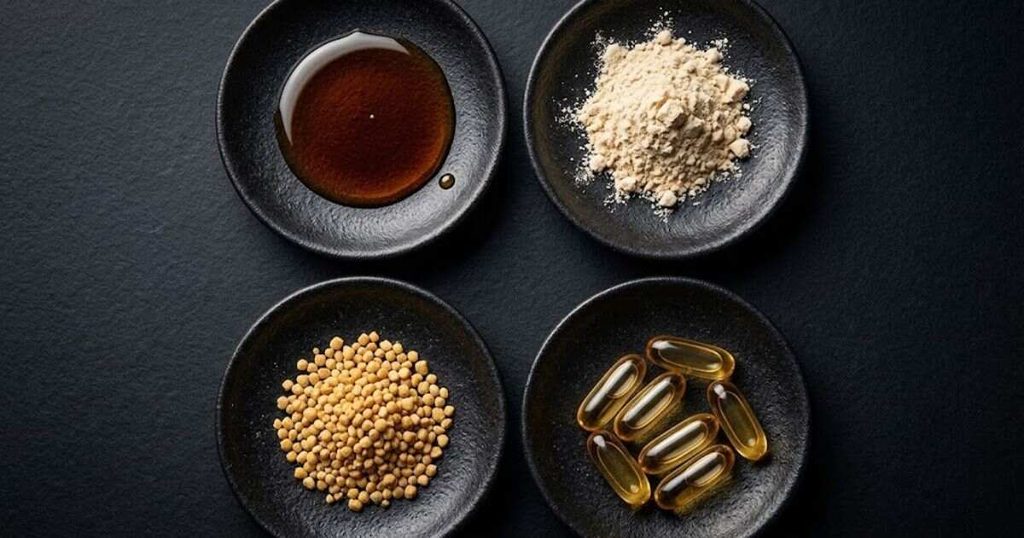
Your intended use should determine the form.
Liquid sunflower lecithin:
Best suited to dressings, sauces, smoothies and recipes where you want rapid mixing. Liquid products can be sticky and usually need to be shaken before use.
Deoiled powder:
Convenient for dry mixtures, shakes and recipes where adding an oil-rich liquid isn’t desirable. Deoiled products can also contain a relatively higher phospholipid concentration by weight.
Granules:
Useful when you want a less sticky format that can be sprinkled into food.
Softgels:
Convenient when your main goal is supplementation rather than cooking. The label may provide the amount of sunflower lecithin per serving without requiring you to measure a spoonful.
Product labels demonstrate how dramatically serving formats can differ. For example, one NOW softgel product lists 2.4 g of sunflower lecithin per two-softgel serving, while its liquid and powder products use substantially different serving measurements.
Potential Health Benefits of Sunflower Lecithin

The health section needs a little more caution than many online lists give it.
Sunflower lecithin contains compounds involved in normal biological functions, but that doesn’t automatically prove that taking additional lecithin will prevent or treat disease.
Choline and cell-membrane nutrition
Choline is an essential nutrient involved in normal physiological functions, and phosphatidylcholine is one form in which choline occurs.
The NIH lists lecithin and phosphatidylcholine among supplemental forms of choline.
Therefore, sunflower lecithin can contribute to dietary phospholipid and choline intake. However, the amount depends on the product’s composition.
Cholesterol support
Lecithin is frequently marketed for cholesterol management.
Some research suggests lecithin may influence lipid profiles, but the evidence doesn’t establish sunflower lecithin as a replacement for proven cholesterol-lowering treatment. Healthline similarly notes that it remains unclear whether sunflower lecithin provides a specific advantage over other lecithin sources for cholesterol.
If your LDL cholesterol is high, don’t replace prescribed treatment with a lecithin supplement.
Digestive health
Phosphatidylcholine has been investigated in digestive conditions, including ulcerative colitis.
However, research involving lecithin or phosphatidylcholine formulations shouldn’t automatically be interpreted as proof that an ordinary sunflower lecithin supplement treats ulcerative colitis.
That distinction is especially important because the formulation, phosphatidylcholine concentration and study design may differ from a commercial supplement.
Brain function
Because phosphatidylcholine supplies choline and phospholipids participate in cell membranes, brain-related claims are biologically plausible.
But “contains nutrients used by the brain” is not the same as “improves memory.” Evidence for using lecithin supplements specifically to enhance cognition remains insufficient for strong promises. WebMD likewise notes that some historical medical uses of lecithin remain inadequately substantiated.
Breastfeeding and Clogged Milk Ducts
This is one of the most searched practical uses of sunflower lecithin.
Some lactating people use lecithin when dealing with recurrent plugged ducts or inflammation. Cleveland Clinic includes sunflower lecithin among approaches that may help with inflammation associated with milk blebs.
However, supplementation should not be treated as the only response to worsening breast inflammation, fever, severe pain or suspected mastitis.
In those situations, professional medical or lactation support is more important than simply increasing a supplement dose.
Also, don’t copy a high-dose breastfeeding regimen from another product’s label. Different capsules can contain very different amounts, and breastfeeding-related use deserves individualized guidance.
The Evidence Is Not Equal: A Better Way to Read Health Claims
One of the biggest problems with online sunflower lecithin content is that five completely different claims can appear under the heading “benefits.”
A better framework is:
Strongest established role:
Food emulsification and functional food use.
Reasonable nutritional role:
Providing phospholipids and contributing choline.
Potential but not definitive health applications:
Cholesterol, digestive health, cardiovascular markers and other wellness claims.
Specialized use requiring context:
Breastfeeding-related supplementation and medical conditions.
Claims requiring particular caution:
Disease treatment, dramatic cognitive enhancement, major weight loss, or replacing prescribed medication.
This approach is more useful than simply calling sunflower lecithin a “miracle supplement.”
The Unique Angle: Match the Form to the Job
Here’s the practical decision most guides don’t explain clearly enough.
If you’re buying sunflower lecithin for cooking, don’t choose the product primarily because its marketing claims mention brain or heart health. Choose based on texture, concentration, ingredients and how easily it mixes.
If you’re buying it for supplementation, examine the serving size and phosphatidylcholine information rather than assuming that “1,200 mg lecithin” means 1,200 mg of phosphatidylcholine.
If you’re choosing it because you want a soy-free alternative, inspect the entire ingredient list and allergen statement.
If you’re considering it for breastfeeding, don’t judge a product solely by capsule strength. The reason you’re taking it and your individual situation matter more than a generic internet dosage.
This simple distinction prevents one of the most common mistakes: comparing products using the front-label number alone.
How to Read a Sunflower Lecithin Label
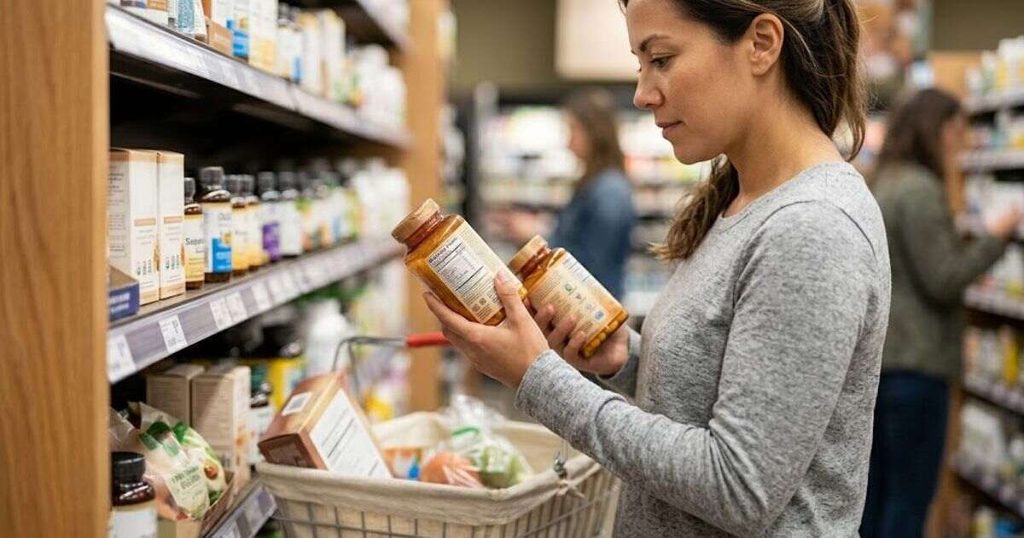
Before buying a product, check five things.
1. Source:
Look for sunflower-derived lecithin rather than assuming “lecithin” means sunflower.
2. Serving size:
A tablespoon, teaspoon, gram measurement and capsule serving aren’t interchangeable.
3. Phospholipid information:
If phosphatidylcholine matters to you, see whether the manufacturer actually discloses it.
4. Added ingredients:
Capsules can contain gelatin, glycerin or oils, while powders may contain additional ingredients.
5. Quality claims:
“Labels like “organic,” “non-GMO,” “soy-free,” and “solvent-free” are distinct, independent claims. Verifying one does not automatically guarantee the others.
For example, current product labels show that sunflower lecithin products can differ significantly in serving size, calories and phosphatidylcholine content.
Is Sunflower Lecithin Safe?
For normal food use, sunflower lecithin has an established safety history. The FDA has issued “no questions” responses to GRAS notices concerning sunflower lecithin for specified food uses.
This does not mean all supplements are suitable for everyone. Products can vary significantly in their potency, formulation additives, and targeted health purposes.
WebMD recommends discussing lecithin supplementation with a healthcare professional when pregnancy, breastfeeding, medical conditions or medications are involved.
Possible digestive effects can include symptoms such as loose stools, nausea or abdominal discomfort, particularly when someone introduces a concentrated supplement.
Anyone with a known sunflower allergy should also avoid assuming that a sunflower-derived supplement is automatically appropriate.
Common Problems & Fixes

Digestive discomfort:
Start by checking whether you introduced a large serving suddenly. A concentrated fat-containing supplement can feel very different from the tiny amount of lecithin encountered naturally in ordinary foods.
Product tastes or smells strong:
Liquid sunflower lecithin can have a noticeable flavor and aroma. Try a powder or capsule if you’re using it as a supplement rather than a recipe ingredient.
Powder refuses to mix:
Add it gradually while blending rather than dumping a large amount onto cold liquid. A shaker or blender usually disperses it more effectively than stirring with a spoon.
Oil separates from your dressing:
Lecithin can improve emulsion stability, but it won’t make every oil-and-water mixture permanently stable. Blending technique, ingredient ratios and other emulsifiers also affect the final result.
Confusion about dosage:
Don’t compare products by the large number printed on the front of the package. Compare the actual serving size and the amount of phosphatidylcholine or other declared components.
Breast inflammation gets worse:
Do not keep increasing supplements while ignoring worsening symptoms. Fever, significant pain, spreading redness or suspected mastitis deserves professional medical attention
FAQ: Sunflower Lecithin
Q1: What is sunflower lecithin used for?
Ans: Sunflower lecithin is primarily used as a food emulsifier and as an ingredient in dietary supplements. It supplies phospholipids, including phosphatidylcholine, and can also contribute choline.
Q2: Is sunflower lecithin better than soy lecithin?
Ans: Not universally. Both can perform similar emulsifying functions, while sunflower lecithin may be preferable for people specifically seeking a soy-free source or a particular processing method.
Q3: Does sunflower lecithin lower LDL cholesterol?
Ans: Lecithin has been studied for cholesterol effects, but evidence specifically proving that sunflower lecithin reliably lowers LDL is limited. It should not replace established cholesterol-management strategies or prescribed treatment.
Q4: Can sunflower lecithin help with clogged milk ducts?
Ans: It is used by some breastfeeding people for recurrent duct-related inflammation, and Cleveland Clinic lists sunflower lecithin as one possible supportive approach for milk blebs. However, persistent or worsening breast symptoms require appropriate medical or lactation care.
Q5: Does sunflower lecithin contain choline?
Ans: Yes. Sunflower lecithin contains phospholipids such as phosphatidylcholine, and lecithin is recognized as one supplemental form of choline. The exact amount varies between products.
Q6: Can you use sunflower lecithin in chocolate?
Ans: Yes. It can function as an emulsifier and influence the texture and flow of chocolate. It is also useful in other recipes where fat and water need help staying distributed.
Q7: Is sunflower lecithin safe during pregnancy?
Ans: Food-use safety and supplement safety are different questions. If you are pregnant, planning pregnancy or taking a concentrated sunflower lecithin supplement, discuss the specific product with your healthcare professional rather than assuming that food-use safety establishes supplement safety.
Q8: What is the best form of sunflower lecithin?
Ans: There isn’t one best form for everyone. Liquid works well for recipes, powder is convenient for dry mixes and smoothies, while softgels are easier when the goal is straightforward supplementation.
Final Takeaway
Sunflower lecithin is best understood as a versatile phospholipid-rich ingredient rather than a cure-all supplement.
Its clearest role is as a natural emulsifier in foods, while its nutritional value comes from compounds such as phosphatidylcholine and related phospholipids. FDA records recognize sunflower lecithin for specified food applications, and current nutritional references recognize lecithin and phosphatidylcholine as sources of choline.
For health purposes, keep expectations realistic. Some areas including cholesterol, digestive health and breastfeeding-related use are interesting, but the evidence isn’t strong enough to turn every potential benefit into a medical promise.
The smartest approach is simple: choose the form according to your purpose, read the actual label, and separate proven food functionality from health claims that still need more research.
Pingback: Rubber Plant care: Complete Ficus elastica Guide