
Pampas grass is a large ornamental perennial grass recognized by its arching leaves and large, feathery flower plumes that create a bold focal point in gardens. With plenty of sunlight, well-drained soil, and appropriate seasonal pruning, it can thrive for years; however, gardeners should check local invasive-plant guidance before planting it.
Pampas Grass at a Glance
Pampas grass (Cortaderia selloana) is native to South America and forms large, dense clumps topped with silver-white or sometimes pink-tinged plumes. It works as a garden focal point and provides dried stems for home styling, but its mature size, sharp leaf edges, and ability to spread by seed require thoughtful placement.
Quick-Reference Care Guide
| Care factor | Growing guidance |
| Light | Position the plant in full sun, making sure it gets at least 6 hours of direct light each day. |
| Water | Keep newly planted roots evenly moist; established plants tolerate dry spells |
| Soil | Well-drained loam, sand, or other suitable garden soil |
| Temperature | Best suited to climates compatible with the chosen cultivar; frost tolerance varies |
| Humidity | Ordinary outdoor humidity is generally suitable |
| Toxicity | ASPCA lists pampas grass as non-toxic to dogs, cats, and horses |
| Difficulty | Moderate; plant size and sharp foliage make maintenance demanding |
| Mature size | Often several feet tall and wide; some plants reach approximately 10 feet or more in flower |
Choosing the Right Pampas Grass
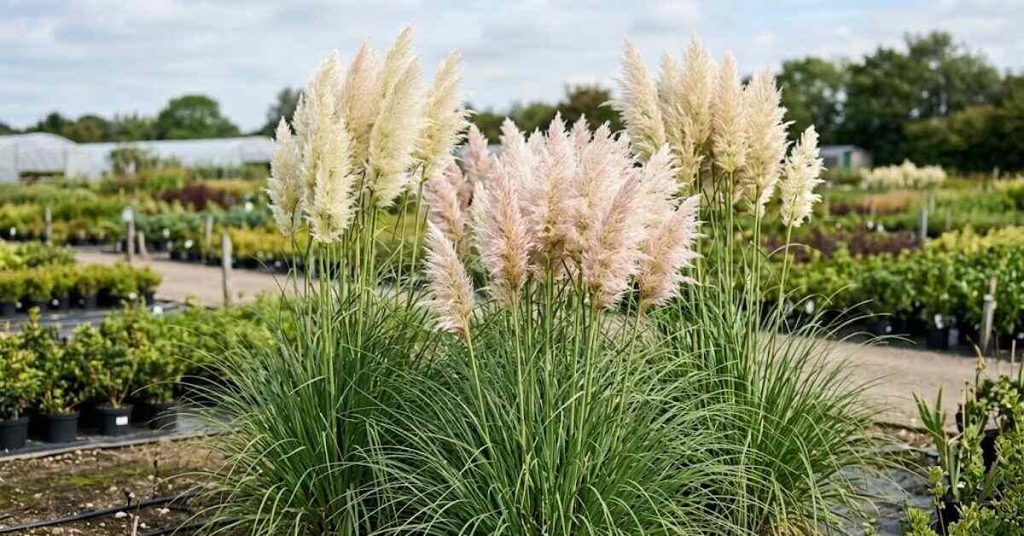
Before buying pampas grass, consider how much room you can give it and whether the species is appropriate for your region. A small nursery plant may eventually become a broad clump that blocks a path or crowds nearby shrubs.
Common Pampas Grass and Its Varieties
The species Cortaderia selloana produces narrow, arching leaves and tall plume-bearing stems. Flower colour varies by cultivar, and some selections have pinkish tones or more compact growth.
A few selection tips:
- White or silver plumes: Suitable for a simple, neutral garden palette.
- Pink-tinged cultivars: Add a softer colour accent, although the shade may differ from nursery photographs.
- Compact cultivars: May suit smaller gardens better, but verify the mature dimensions before buying.
- Seed-grown plants: Can vary in appearance, so do not assume every seedling will produce the same plume colour or fullness.
Pampas Grass vs. Jubata Grass
Pampas grass is often confused with jubata grass, another South American species. Cortaderia jubata is also called pink pampas grass in some regions and is considered invasive in several countries.
Colour alone is not a reliable identification method. If a plant has unusually drooping pink or purple plumes, ask a qualified nursery or local plant authority to identify it before planting, particularly where either species is regulated.
Planting Location and Soil Preparation
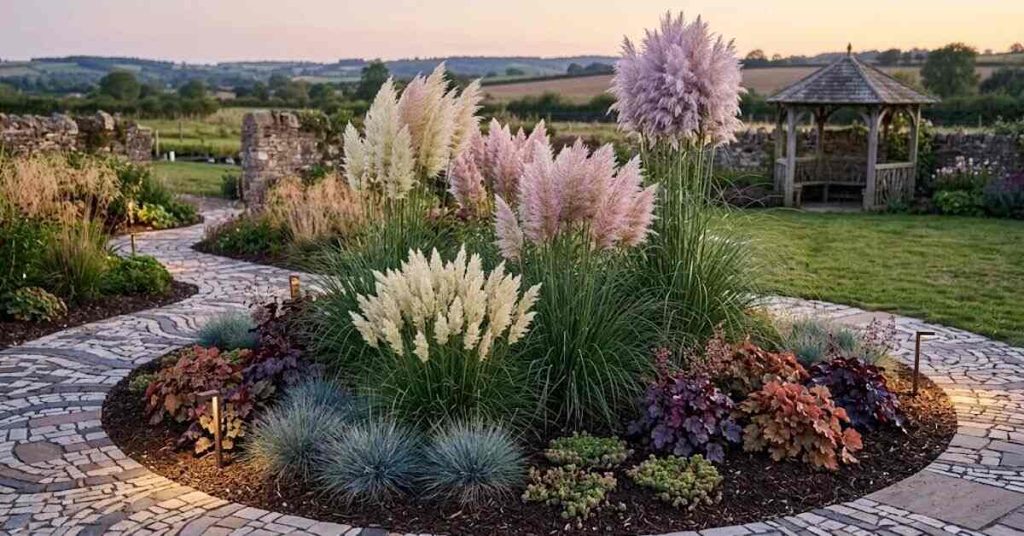
Choose an open position where mature foliage will not obstruct entrances, narrow walkways, or frequently used seating areas. Because leaf margins can cut skin, keep the clump away from children’s play areas and places where people brush past plants.
Pampas grass generally grows best in full sun and soil that drains freely. Sandy or loamy ground is often suitable, while persistently waterlogged soil increases the chance of root and crown problems.
Prepare the planting area by removing weeds and loosening compacted soil. If water regularly collects there after rain, improve drainage or choose a different location rather than trying to compensate with extra fertilizer.
Spacing and Landscape Design
Mature plants spread significantly; ensure sufficient space for outward foliage growth and safe annual pruning. Use the cultivar’s expected mature width to guide spacing instead of judging by the size of the plant in its nursery pot.
Pampas grass can serve as a standalone focal point, a visual screen, or a backdrop for lower ornamental plants. However, it should not be treated as a low-growing ground cover: its height and dense tussock growth make it better suited to larger landscape areas.
Watering and Seasonal Growth
Newly planted pampas grass needs more attention than an established clump because its roots are still spreading through the surrounding soil. Water deeply when the root zone begins to dry, then allow excess moisture to drain away.
Once established, the plant can tolerate periods of limited rainfall. Nevertheless, extended heat and dry weather may reduce growth or make the foliage look stressed, especially in sandy soil.
Avoid keeping the crown constantly wet. Yellowing foliage combined with soft, darkened growth near the base may indicate drainage trouble rather than a need for additional feeding.
Fertilizer Requirements
Pampas grass usually needs little fertilizer in reasonably fertile garden soil. If growth is weak, first inspect sunlight, drainage, and root health instead of automatically applying a high-nitrogen product.
Excessive nitrogen can encourage abundant leafy growth without solving the underlying problem. A soil test is a better starting point when poor growth persists despite suitable growing conditions.
Pruning Pampas Grass Safely
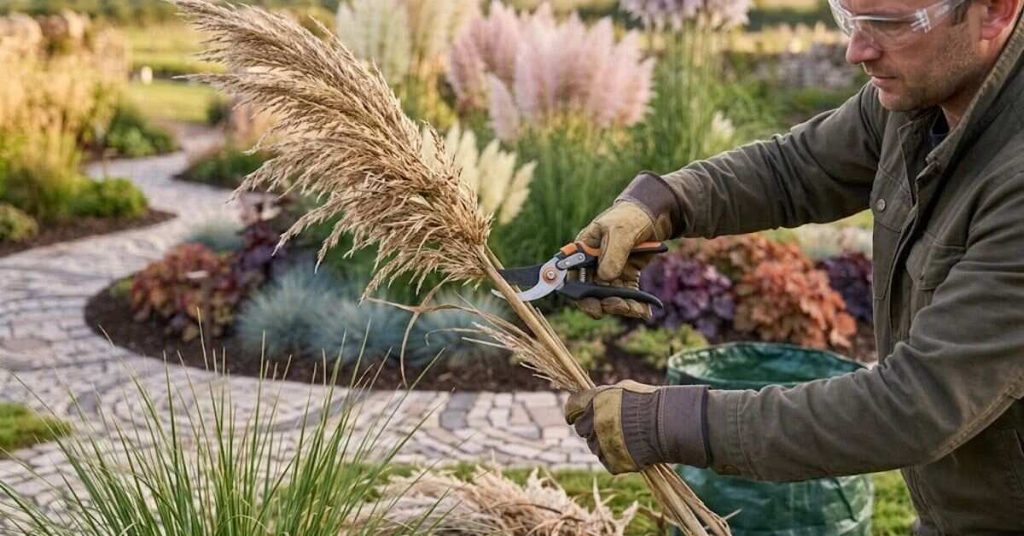
Pruning eliminates aged leaves and dry stems, opening up the crown to stimulate healthy seasonal shoots.Late winter or early spring is generally suitable in climates where new shoots have not yet emerged; adjust the timing to local weather and the cultivar’s growth cycle.
Tools and Protective Equipment
Pampas grass features tough, rigid leaves with razor-sharp, serrated edges that require careful handling.
Before working on a mature plant, prepare:
- Thick gardening gloves and long sleeves.
- Eye protection.
- Sharp loppers or suitable hedge-cutting tools.
- Strong footwear and a clear working area.
For a large, dense clump, consider professional help if you cannot reach the centre safely.
Cutting Back Old Growth
Tie or gather the outer foliage carefully if doing so makes the clump easier to manage.Clear away the previous season’s dead leaves and spent flower stalks, taking care not to damage any new green shoots at the base.
Cut to a height appropriate for the plant and local pruning guidance rather than blindly cutting every clump to the soil surface. Check for new growth before each cut, and remove loose dead material from the centre.
Do not burn the clump to clear away old foliage; use mechanical pruning methods instead.Excessive heat can damage the crown, while dry foliage itself can present a fire hazard.
Growing Pampas Grass Responsibly
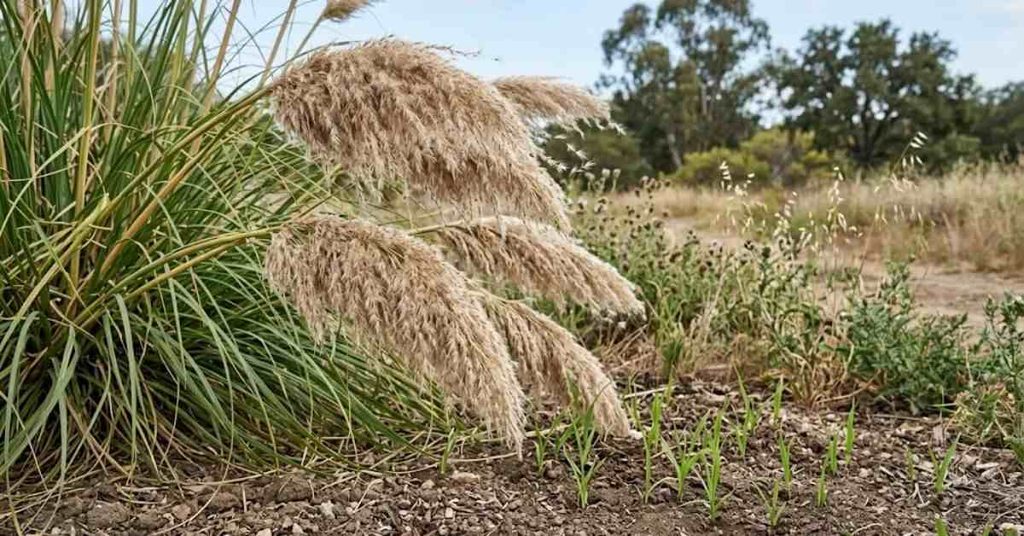
Pampas grass can become an environmental problem where it escapes gardens and establishes outside cultivation. Wind can carry its seeds into open ground, disturbed areas, and natural habitats, allowing new plants to develop beyond the original planting site.
The level of risk depends on the species and region. Some jurisdictions restrict or discourage particular Cortaderia species, so check current local rules before buying, planting, or moving them.
Managing Seed Spread
Where growing the plant is permitted, inspect flower heads as they mature and remove unwanted seed-bearing stems before seed dispersal, provided this can be done safely. Do not dump discarded plumes or seed heads in natural areas or ordinary garden compost if viable seeds could survive.
If seedlings appear outside the main clump, remove them while they are small and dispose of them according to local green-waste or invasive-plant guidance. Large established infestations may require a specialist.
Is Sterile Pampas Grass a Better Choice?
Some ornamental plants are marketed as sterile or low-seeding selections. Do not rely on a sales label alone: verify the cultivar’s identity and evidence of sterility, and check whether the plant is permitted locally.
Even sterile cultivars still feature sharp, cut-prone leaves, cover a large area, and generate high volumes of dry biomass. In areas prone to fire or ecological disruption, replacing them with a locally native ornamental grass is often the superior choice.
Drying Pampas Grass for Home Decor
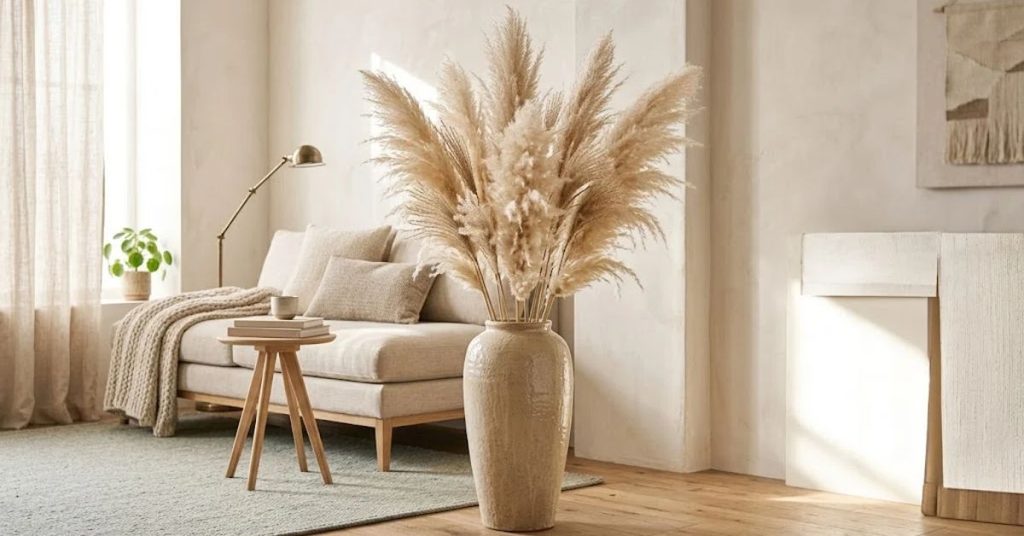
Dried pampas grass is popular in neutral interiors because its feathery texture adds height without the colour of fresh flowers. It can complement boho rooms, modern minimalism, wedding displays, wreaths, and tall floor vases.
Harvesting and Drying Plumes
Select attractive stems when their plumes have opened but before they begin shedding heavily.
Always put on puncture-resistant gloves and safety goggles before cutting, and confirm local forage or harvest laws before taking specimens off your private land.
Suspend harvested stems upside down in a shaded, warm room with active airflow until thoroughly dried.
Give the plumes enough room that they do not become crushed against one another during drying.
Once dry, arrange them in a clean vase and handle them gently. A light application of suitable floral finishing spray may help reduce shedding, but use it according to its label and keep the product away from flames and ignition sources.
Styling Dried Pampas Grass
- Tall floor vase: Use a few long stems to create a vertical accent beside a console or in an open corner.
- Boho wedding arrangements: Combine dried plumes with other dried botanicals for texture.
- Minimalist interiors: Pair cream or natural-coloured plumes with simple ceramics and uncluttered surfaces.
- Wreaths and centrepieces: Use shorter sections to add softness without overwhelming the arrangement.
- Pink pampas grass stems: Mix subtle pink tones with neutral foliage for a gentle colour contrast.
Keep dried arrangements away from candles, fireplaces, heaters, and other ignition sources. Do not place loose stems where they can obstruct exits or fall onto hot equipment.
A Practical Decision Guide: Plant It, Keep It, or Replace It?
Pampas grass is most rewarding when its size and maintenance needs match the space available. Use the following checklist before committing to a new plant.
Plant it when local rules permit it, the site receives plenty of sun, drainage is suitable, and enough space remains around the mature clump.
Keep and manage it when an existing plant is healthy and legal to grow, but needs dead foliage removed, seedlings monitored, or its position reassessed.
Consider replacing it when the species is invasive or restricted in your area, the clump threatens a walkway, or dry foliage creates an unacceptable fire risk. Ask a local nursery or extension service about a suitable native or non-invasive alternative.
This decision is more useful than selecting a plant for plume colour alone: it accounts for the work required after the first attractive flowering season.
Common Problems & Fixes
Brown leaf tips: Dry weather, damaged leaves, or environmental stress may be responsible. Always check that the soil is moist and ensure the plant is free of mechanical or structural damage prior to fertilization.
Yellowing foliage: Older leaves naturally age, but widespread yellowing may point to waterlogged soil or root stress. Check drainage and the condition of the crown.
Few or no plumes: Insufficient sunlight, a young plant, seasonal conditions, or cultivar differences may explain weak flowering. Review the growing position and avoid assuming fertilizer will solve the issue.
Dead material in the centre: Old leaves can accumulate within a dense clump. Remove accumulated leaf debris during seasonal maintenance while preserving the integrity of the crown and new basal growth.
Excessive shedding indoors: Plumes may have been harvested too late or handled roughly. Try younger, fully opened flower heads next time and move the arrangement away from fans and strong air currents.
Unwanted seedlings: Inspect nearby open soil during the growing season and remove seedlings promptly. Safely contain and dispose of reproductive plant material to protect local ecosystems, particularly in high-risk zones.
Leaf cuts during maintenance: Stop work, clean and cover minor cuts, and seek appropriate medical care for deep wounds. Use protective equipment and keep other people away from the work area.
Fire concerns: Remove dry debris when safe, keep plumes away from ignition sources, and follow local fire restrictions. Avoid burning the plant as a pruning method.
Frequently Asked Questions
Q1: Is pampas grass easy to grow?
Ans: Pampas grass can be straightforward in a sunny location with freely draining soil. However, its mature size, sharp leaves, and potential to spread make it less suitable for gardeners who need a low-maintenance plant in a confined space.
Q2: How fast does pampas grass grow?
Ans: Growth depends on the cultivar, climate, soil, and age of the plant. A young plant may take several growing seasons to develop its full landscape presence, so check mature dimensions instead of estimating its eventual size from nursery stock.
Q3: When should pampas grass be pruned?
Ans: Prune back dead growth in late winter or early spring just before new seasonal shoots begin to emerge. Wear thick gloves, long sleeves, and eye protection because the leaf edges can cut skin.
Q4: Is pampas grass invasive?
Ans: It can be invasive in some regions, including areas where Cortaderia selloana or Cortaderia jubata has escaped cultivation. Consult local invasive species registries prior to planting, and never assume pink-flowered cultivars are non-invasive ornamentals.
Q5: Is pampas grass safe for cats and dogs?
Ans: The ASPCA lists pampas grass as non-toxic to cats, dogs, and horses. Nevertheless, its sharp leaves can cause physical injury, and dried plumes should be kept out of reach if a pet chews or plays with them.
Q6: Can pampas grass grow in a pot?
Ans: Compact cultivars can be grown in pots or containers, provided they have adequate drainage holes and sufficient root space. Large varieties can quickly outgrow a typical patio pot, and container growing does not remove the need to check invasive-plant rules.
Q7: How do you stop dried pampas grass from shedding?
Ans: Harvest the plumes before they become overly mature, dry them in a well-ventilated area, and handle them gently. A suitable floral finishing spray may reduce shedding, but it will not prevent every loose floret.
Q8: Is pink pampas grass a separate species?
Ans: Pinkish plumes appear in certain cultivated varieties of common pampas grass (Cortaderia selloana), though Cortaderia jubata is also commonly referred to as pink pampas grass.
Flower colour by itself is not enough to identify the plant reliably.
Final Thoughts
Pampas grass offers striking texture in gardens and beautiful material for dried arrangements, but the best results begin with careful plant selection. Give it suitable light, well-drained soil, adequate room, and safe seasonal pruning; then monitor its spread and follow local invasive-species guidance.
For smaller gardens or environmentally sensitive locations, a suitable alternative ornamental grass may deliver a similar soft, architectural effect with fewer management concerns.
Pingback: Air Plant Care: Watering, Light & Growing Tips