
There’s something incredibly satisfying about digging into the soil and pulling out fresh, homegrown potatoes. I still remember the first time I grew them. I planted too early because the calendar said spring had arrived. The weather had other plans. A late frost hit, the soil stayed cold, and my seed potatoes struggled before they ever had a chance to grow.
That experience taught me an important lesson: potatoes don’t care what the calendar says. They care about soil temperature, moisture, and the weather around them.
If you’ve been asking, “When can you plant potatoes?”, you’re asking the right question. The timing of planting can mean the difference between a healthy crop that fills your harvest basket and one that produces only a handful of small tubers.
The good news is that potatoes are surprisingly forgiving when you understand their growing conditions. Whether you live in a cold northern climate, a warm southern region, or somewhere in between, there’s a planting window that gives your crop the best chance to thrive.
In this guide, I’ll walk you through everything you need to know, from choosing the right planting time to understanding soil temperatures, frost dates, seasonal calendars, and regional differences. By the end, you’ll know exactly when to plant potatoes with confidence.
When can you plant potatoes?
Plant potatoes when the soil temperature consistently reaches 45–50°F (7–10°C) and the ground is workable. In most regions, this is about 2–4 weeks before the last expected spring frost. Gardeners in mild climates can also plant potatoes in late fall or winter. The ideal planting time depends on your local climate, soil conditions, and potato variety rather than the calendar alone.
The Best Time to Plant Potatoes at a Glance
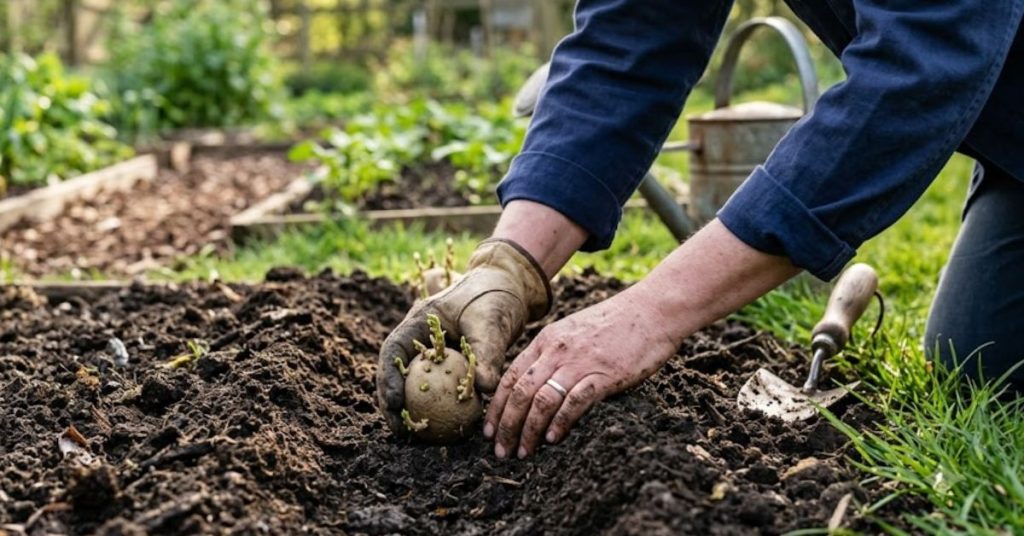
The simplest answer is this: plant potatoes when the soil is warm enough, not just when spring arrives.
Many beginners make the mistake of planting on the first warm weekend of the year. Unfortunately, warm air doesn’t always mean warm soil. Potato roots develop underground, and cold, waterlogged soil can slow growth or even cause seed potatoes to rot before they sprout.
The Four Factors That Determine the Best Planting Time
Instead of relying on dates alone, I recommend paying attention to these four factors.
1. Soil Temperature
This is the most important factor.
Potatoes grow best when the soil temperature stays between 45°F and 50°F (7–10°C) or higher. Below this range, growth slows dramatically, and the risk of rot increases.
2. Frost Risk
Potatoes can tolerate cool weather, but young green shoots are vulnerable to hard frosts. While the seed potatoes underground usually survive, exposed foliage can suffer damage if temperatures drop below freezing.
3. Soil Condition
Even if temperatures are perfect, avoid planting in muddy or waterlogged soil.
Healthy potato roots need oxygen. Wet, compacted soil limits airflow and encourages fungal diseases that can destroy young plants before they become established.
4. Your Local Climate
Gardeners in northern regions often wait until April or May to plant. In warmer climates, potatoes may be planted as early as January or February, while some frost-free areas even support fall and winter crops.
The calendar is helpful, but your local weather always has the final say.
Why Planting Too Early Can Be a Problem
Commencing the agricultural cycle ahead of schedule is an appealing prospect for many.. I understand the excitement. After a long winter, most gardeners can’t wait to get outside.
However, planting too early often creates more problems than benefits.
Cold soil delays sprouting, leaving seed potatoes underground for weeks. During this time, excess moisture can encourage rot, bacterial infections, and fungal diseases. Even if the potatoes eventually sprout, weak early growth may reduce the final harvest.
Another risk is late spring frost. New potato shoots grow quickly once they emerge, but freezing temperatures can damage or kill the tender leaves. Although established plants often recover, repeated frost injury can delay development and reduce yields.
Why Planting Too Late Can Also Reduce Your Harvest
Waiting too long isn’t ideal either.
As temperatures climb, potato plants begin to experience heat stress. Tubers develop best in cool soil. Once soil temperatures remain consistently high, plants produce fewer and smaller potatoes.
Late planting also shortens the growing season. Instead of producing large, well-developed tubers, plants spend less time building energy before hot weather or the end of the season arrives.
Finding the balance between cold spring soil and summer heat is the key to growing a productive potato crop.
Understanding Potato Growing Seasons
One of the biggest misconceptions is that potatoes are only a spring crop. IUltimately, geographic location dictates the optimal timing for cultivation.
Potatoes are cool-season vegetables, but they can be grown successfully during different times of the year in different climates. Understanding these growing seasons will help you choose the perfect planting window instead of following a one-size-fits-all schedule.
Spring Planting
Spring is the most common planting season for home gardeners.
In regions with cold winters, seed potatoes are usually planted two to four weeks before the last expected frost, once the soil has warmed enough to support healthy root growth.
Spring planting gives potatoes plenty of time to develop before summer temperatures become too high.
Summer Planting
In cooler northern climates with short summers, gardeners may continue planting into early summer.
The longer daylight hours encourage vigorous growth, while relatively cool temperatures still support healthy tuber development.
Fall Planting
If you live in a region with long, mild autumns, fall planting may be an excellent option. In many warm climates, gardeners plant potatoes in late summer or early fall for a winter harvest.
The biggest challenge during fall planting is the lingering heat. Potatoes dislike hot soil, so it’s best to wait until daytime temperatures begin to cool. Consistent watering also becomes more important because late summer soil dries out quickly.
Fall-grown potatoes often produce smooth, high-quality tubers because they mature during cooler weather.
Winter Planting
Most gardeners assume potatoes can’t be planted in winter, but that’s only true in cold climates.
In frost-free or subtropical regions, winter is actually one of the best growing seasons. Mild temperatures allow steady growth without exposing plants to extreme summer heat.
Gardeners in parts of southern California, Florida, Pakistan, India, Australia, and similar climates often grow potatoes successfully during winter.
Which Season Is Best?
There isn’t one perfect answer for everyone.
If your winters are cold, spring is usually the safest choice. If your climate stays mild year-round, you may have two planting seasons or even more than one harvest each year.
Instead of asking, “What month should I plant potatoes?”, ask yourself:
- Is my soil warm enough?
- Is the ground workable?
- Is severe frost unlikely?
- Will my potatoes mature before extreme heat arrives?
Those four questions will almost always lead you to the right planting time.
Best Soil Temperature for Planting Potatoes
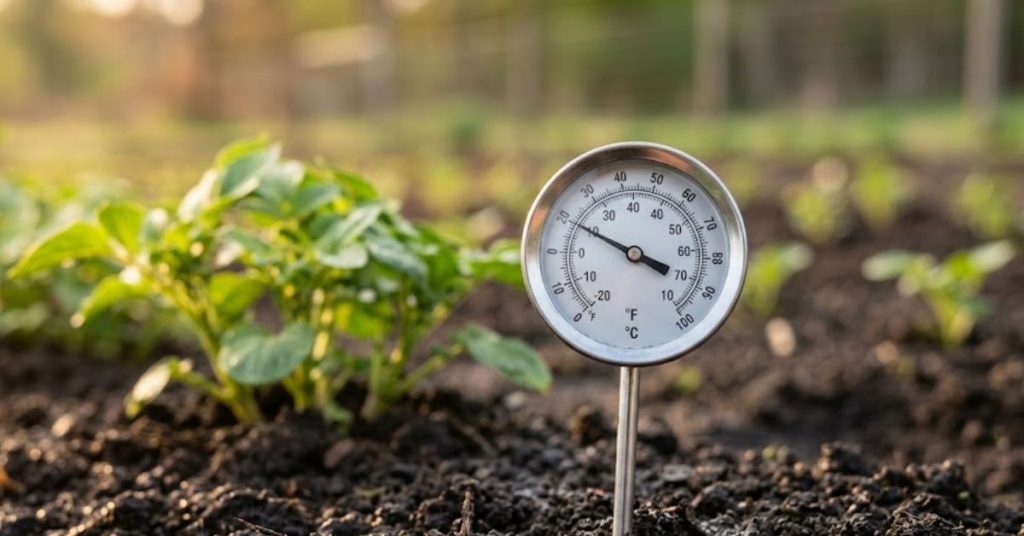
If I had to choose only one factor that determines potato planting success, it would be soil temperature.
Many new gardeners watch the weather forecast, but experienced growers pay closer attention to the soil. Air temperatures can rise quickly during the day and drop again at night. Soil warms much more slowly, and that’s what your seed potatoes actually experience.
Why 45–50°F (7–10°C) Is the Ideal Range
Potatoes begin active root growth when soil temperatures consistently reach 45–50°F (7–10°C).
At this point:
- Roots develop faster.
- Sprouts emerge more evenly.
- The risk of seed rot decreases.
- Plants establish themselves before summer heat arrives.
Cool soil also encourages healthy tuber formation later in the season.
What Happens If the Soil Is Too Cold?
Putting plants into dirt that is colder than 45°F (7°C) is usually asking for trouble.
Seed potatoes remain dormant for longer than expected. Instead of growing, they sit in cold, damp soil where bacteria and fungi have more time to attack them.
Common issues include:
- Slow or uneven sprouting
- Seed potato rot
- Weak early growth
- Poor stand establishment
- Reduced harvest
Many gardeners think the seed potatoes were poor quality when, in reality, the soil was simply too cold.
What Happens If the Soil Is Too Warm?
Extremely warm soil isn’t ideal either.
Once soil temperatures rise well above 70°F (21°C), potato plants begin to struggle. Heat reduces tuber production and often results in fewer, smaller potatoes.
This is why gardeners in hot climates aim to plant earlier in the season or during cooler months.
How to Measure Soil Temperature
The easiest method is to use a soil thermometer.
Insert it about 4 inches (10 cm) into the ground early in the morning for several consecutive days. Morning readings provide the most accurate average because the soil hasn’t yet been warmed by the afternoon sun.
If temperatures consistently remain above 45°F (7°C), you’re ready to plant.
Soil Moisture Matters Too
Temperature isn’t the only thing to check.
Test the consistency by grabbing some dirt and giving it a light squeeze.
- If water drips out, it’s too wet.
- You’ll hit the sweet spot if the earth holds a temporary shape but disintegrates the moment you disturb it.
- If it’s rock hard and dusty, water the area lightly before planting.
Healthy soil should feel moist, not soggy.
Pro Tip: Don’t Rush the Season
One week of patience can make a huge difference.
Many experienced gardeners deliberately wait until the soil reaches the ideal temperature rather than planting at the first sign of spring. That small delay often leads to faster emergence, healthier plants, and a much larger harvest.
How Frost Dates Affect Potato Planting
One of the biggest mistakes new gardeners make is planting potatoes based only on the calendar. While dates can provide a helpful guideline, frost dates are far more reliable.
A frost date isn’t a guarantee that freezing weather will stop or start on a particular day. Instead, it’s an estimate based on historical weather patterns. Understanding how these dates work helps you avoid planting too early or waiting longer than necessary.
What Is the Last Frost Date?
The last frost date is the average date when your area experiences its final spring frost.
Most gardeners use this date as a starting point rather than a strict rule. Potatoes are usually planted 2 to 4 weeks before the last expected frost because the seed potatoes remain safely underground while the soil begins to warm.
By the time the shoots reach the surface, the danger of severe frost has often passed.
Can Potatoes Survive Frost?
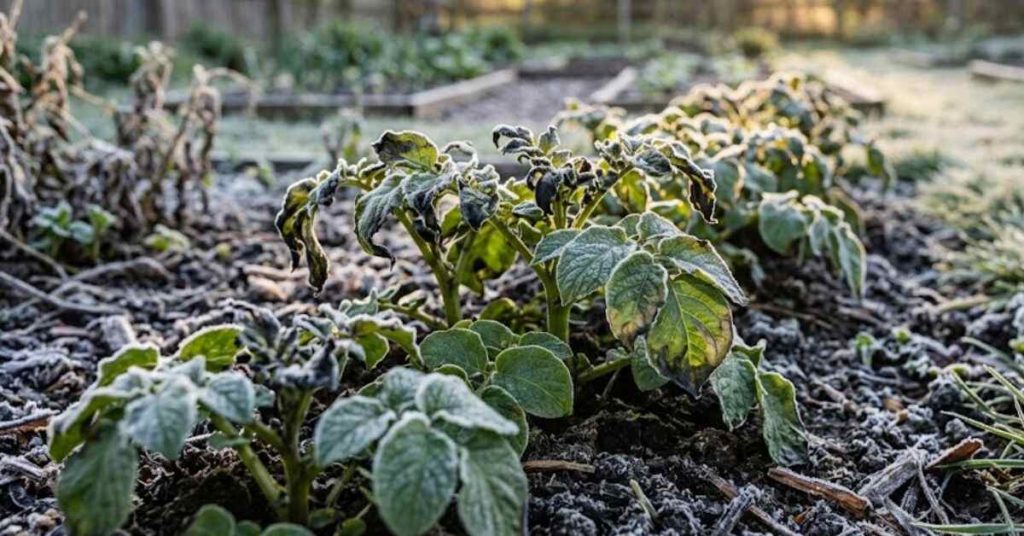
Yes but only to a certain extent.
The seed potatoes underground are generally protected from light frost. However, once green shoots emerge above the soil, they become much more vulnerable.
A light frost may only burn the leaves, and healthy plants often recover within a few weeks. A hard freeze, however, can kill young shoots and delay growth.
How to Protect Young Potato Plants
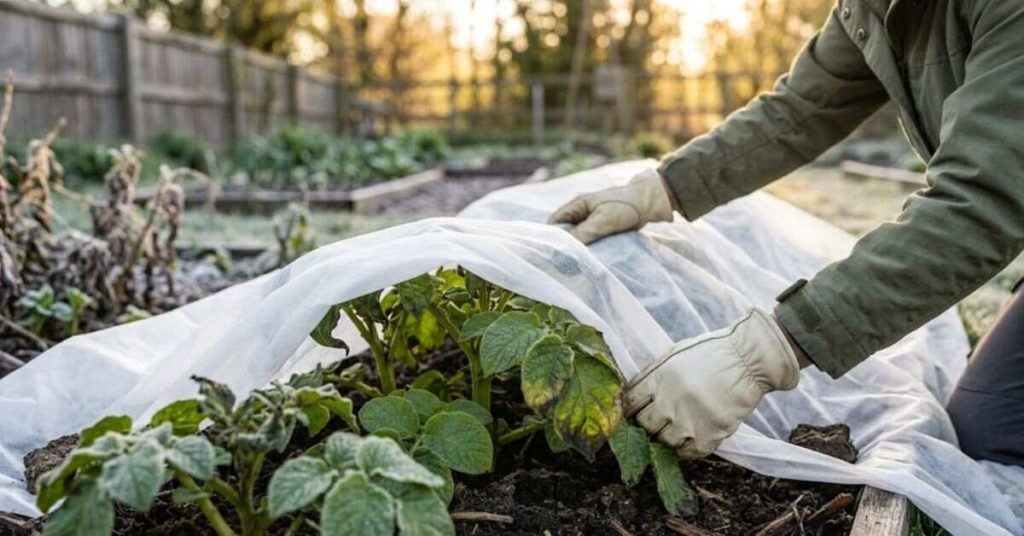
Spring weather can be unpredictable, but protecting your crop is easier than many gardeners think.
If frost is expected after your potatoes have sprouted:
- Cover plants overnight with frost cloth or garden fabric.
- Use straw or loose mulch to insulate young shoots.
- Hill extra soil around emerging stems.
- Once things start heating up the next morning, you can go ahead and pull those covers off.
These simple steps can save your crop from unnecessary damage.
Should You Delay Planting Because of Frost?
Not always.
If your soil has reached the ideal temperature and the ground is workable, planting a few weeks before the last frost is usually safe. The seed potatoes spend much of their early development below ground, where temperatures remain more stable.
The key is to monitor the weather once shoots begin to emerge.
Month-by-Month Potato Planting Calendar
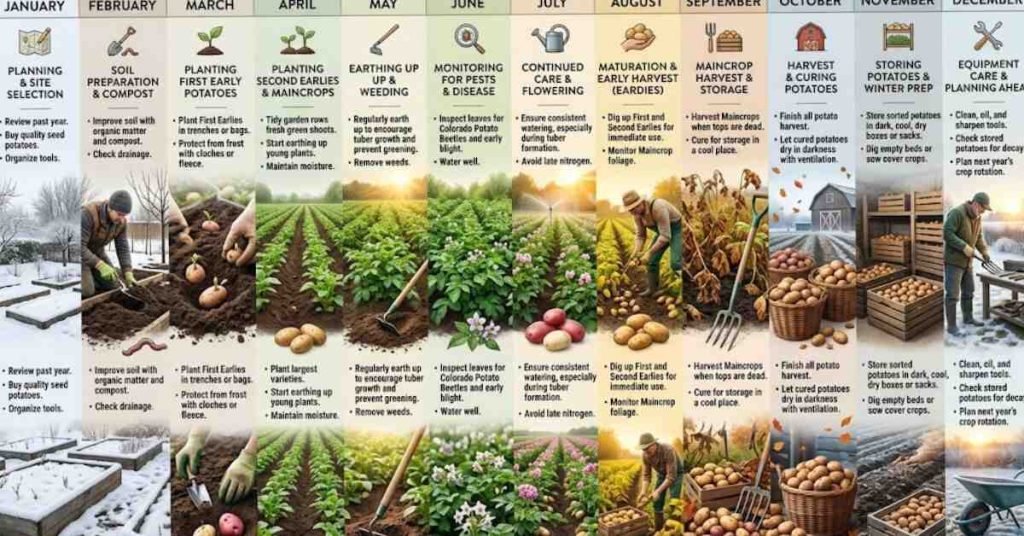
A question that pops up all the time among growers is:
“What month should I plant potatoes?”
The answer depends on where you live. Instead of following one universal calendar, use this monthly guide alongside your local climate and soil conditions.
January
In cold regions, January is usually too early for outdoor planting. Frozen ground and cold soil prevent healthy growth.
Gardeners in frost-free or subtropical climates may begin planting during this month for an early spring harvest.
February
February marks the beginning of the planting season in many mild regions.
If your soil temperature consistently reaches 45°F (7°C) or higher, it’s a great time to start planting.
In colder climates, use this month to purchase certified seed potatoes and begin chitting (pre-sprouting).
March
March is one of the busiest months for potato planting.
Many temperate regions experience warming soil and decreasing frost risk, making this an excellent planting window.
Keep an eye on soil moisture, especially after heavy spring rains.
April
For much of the United States, Canada, and Europe, April is considered the ideal month to plant potatoes.
Cool weather encourages strong root development while giving plants plenty of time to mature before summer heat arrives.
May
May is often the final opportunity for spring planting in colder climates.
Gardeners living at higher elevations or in northern regions may still enjoy excellent harvests from potatoes planted this month.
Conversely, May often proves too advanced in the season for spring cultivation within warmer geographical regions.
June
June planting works best in areas with short, cool summers.
If temperatures remain moderate, potatoes can still produce a healthy crop. In hot regions, however, high soil temperatures may reduce tuber production.
July
July is generally too hot for planting in many parts of the world.
However, gardeners planning a fall crop in mild climates may begin preparing seed potatoes during this month.
Avoid planting if daytime temperatures remain extremely high.
August
August is the beginning of the second planting season in many warm regions.
As temperatures slowly decrease, gardeners can prepare for a fall or winter harvest.
Ensure the soil receives adequate moisture during establishment.
September
September offers excellent conditions for planting potatoes in frost-free climates.
Warm soil combined with cooler air temperatures creates favorable growing conditions.
This is also a good month for container-grown potatoes.
October
In mild climates, October remains an excellent planting month.
Plants establish themselves during cool autumn weather and continue growing through winter where frost is minimal.
In colder regions, focus on harvesting and storing potatoes instead of planting.
November
Outdoor planting is generally limited to warm regions without severe winter freezes.
Elsewhere, use this time to improve garden soil with compost and organic matter for next season.
December
Most gardeners spend December planning for the coming year.
However, frost-free regions may continue planting winter potato crops successfully.
Quick Planting Calendar
| Month | Best Action |
| January | Plant only in frost-free climates |
| February | Begin planting in mild regions |
| March | Peak planting season for many gardeners |
| April | Ideal month in cool and temperate climates |
| May | Final spring planting in colder regions |
| June | Suitable only in cool summer climates |
| July | Prepare for fall planting |
| August | Begin fall planting in warm regions |
| September | Excellent for fall crops |
| October | Continue planting in mild climates |
| November | Plant only in frost-free areas |
| December | Winter planting in warm regions or prepare for spring |
Potato Planting Time by Climate
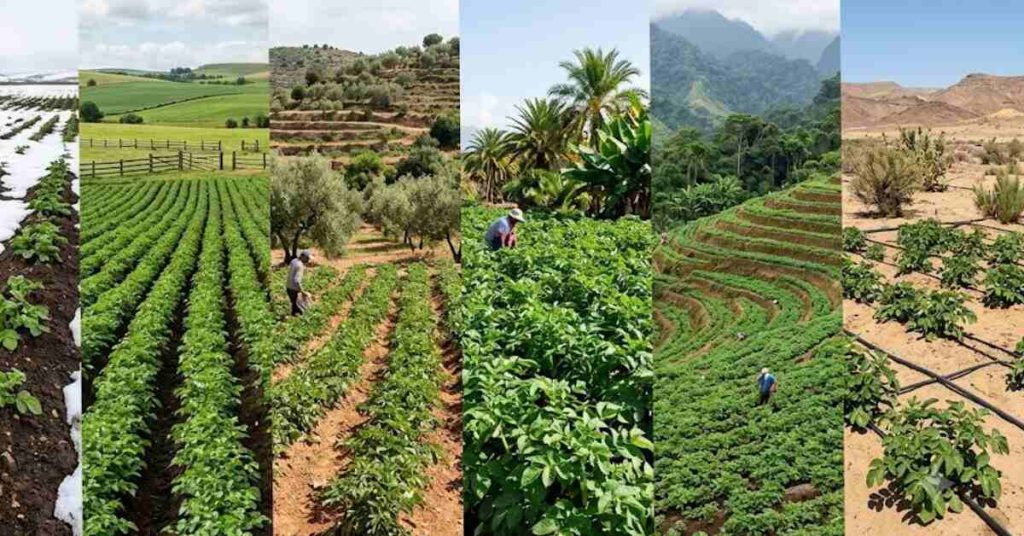
If there’s one piece of advice I give every new gardener, it’s this: follow your climate, not someone else’s calendar. A planting date that works perfectly in one region may completely fail in another.
Potatoes are incredibly adaptable, but they perform best when planted at the right time for your local weather. Understanding your climate is more valuable than memorizing a specific month.
Cold Climates
Areas with long, snowy winters and short growing seasons require patience. Planting too early usually means frozen soil and poor germination.
Wait until the ground has thawed completely and the soil temperature reaches at least 45°F (7°C). In many cold regions, this happens between late April and May.
Choose early or mid-season potato varieties if your growing season is short. They mature faster and reduce the risk of frost before harvest.
Cool Temperate Climates
Cool temperate regions offer some of the best conditions for growing potatoes.
Planting usually begins in March or April, depending on local weather. Cool spring temperatures encourage strong root development, while moderate summer weather supports healthy tuber growth.
This climate often produces the highest yields with the least amount of stress on the plants.
Mediterranean Climates
Mediterranean regions have mild winters and hot, dry summers.
Instead of waiting until spring, gardeners often plant during late winter or early spring so the crop matures before intense summer heat arrives.
Adequate irrigation becomes essential as temperatures rise.
Subtropical Climates
Subtropical areas experience warm temperatures for much of the year.
Around here, folks usually get their potatoes in the ground starting in late autumn and through the winter months.
Cooler seasonal temperatures provide ideal growing conditions without exposing plants to excessive heat.
Avoid planting during the hottest months, as warm soil can reduce tuber production.
Tropical Climates
Growing potatoes in tropical regions requires careful timing.
Because temperatures remain warm throughout the year, gardeners usually plant during the coolest months or at higher elevations where temperatures are lower.
Good drainage is especially important because heavy rainfall can encourage diseases and seed rot.
Desert Climates
Desert gardeners face a different challenge: extreme heat and low humidity.
The best planting window is during late winter, allowing potatoes to mature before summer temperatures become excessive.
Mulching helps conserve soil moisture and keeps the root zone cooler.
Potato Planting Calendar by Country
Although local weather always matters most, these general planting windows provide a useful starting point.
United States
The United States covers many climate zones, so planting dates vary widely.
- Southern states: January–February
- Central states: March–April
- Northern states: April–May
Always adjust based on soil temperature rather than the calendar.
Canada
Most Canadian gardeners plant between late April and May after the soil has warmed and the danger of severe frost begins to decline.
Northern provinces may require even later planting.
United Kingdom
Potatoes are one of the UK’s favorite home-grown vegetables.
- First earlies: Late February to March
- Second earlies: March to April
- Maincrop potatoes: April
The UK’s cool climate is well suited to potato production.
Ireland
Ireland’s mild climate provides excellent growing conditions.
Most gardeners begin planting between March and April, depending on regional weather.
Australia
Australia’s seasons are opposite those of the Northern Hemisphere.
- Southern Australia: August–October
- Northern Australia: April–June
Local rainfall and temperature patterns should always guide final planting decisions.
New Zealand
Most gardeners plant potatoes from August through November.
Cool spring weather supports strong early growth before summer temperatures increase.
Pakistan
Potatoes are grown in several seasons across Pakistan.
- Punjab: September–October (Autumn crop) and January–February (Spring crop)
- Khyber Pakhtunkhwa: February–March
- Balochistan: March–April
- Northern mountainous regions: April–May
Because Pakistan has diverse climates, planting dates vary significantly by region.
India
India also grows potatoes in multiple seasons.
The main planting period falls between October and December, although cooler hill regions may plant later.
Farmers often select planting dates based on monsoon patterns and regional temperatures.
South Africa
South Africa’s varied climate allows potato production throughout much of the year.
Most home gardeners plant during the cooler months to avoid excessive summer heat.
Europe
Across Europe, the majority of gardeners plant potatoes from March through May.
Northern Europe generally plants later than southern regions because soil warms more slowly.
USDA Hardiness Zones Explained
Many gardening guides mention USDA Hardiness Zones, but they often fail to explain what they actually mean.
These classifications illustrate the typical cold-weather lows for various geographic areas.. While they help estimate planting windows, they should never replace checking soil temperature and local weather.
Zones 3–4
Very cold winters with short growing seasons.
Typical planting period:
- Late April to May
Choose early-maturing varieties whenever possible.
Zones 5–6
These zones offer excellent potato-growing conditions.
Typical planting period:
- March to April
Most potato varieties perform well here.
Zones 7–8
Gardeners can usually begin planting earlier.
Typical planting period:
- February to March
Some regions may even support a second fall crop.
Zones 9–10
Hot summers make early planting essential.
Typical planting period:
- January to February
Fall planting is also possible in many areas.
Zone 11+
In frost-free climates, potatoes are often grown during the coolest months of the year.
Avoid planting during periods of extreme heat.
Different Potato Types, Containers, Planting Guide & Common Mistakes
When to Plant Different Types of Potatoes
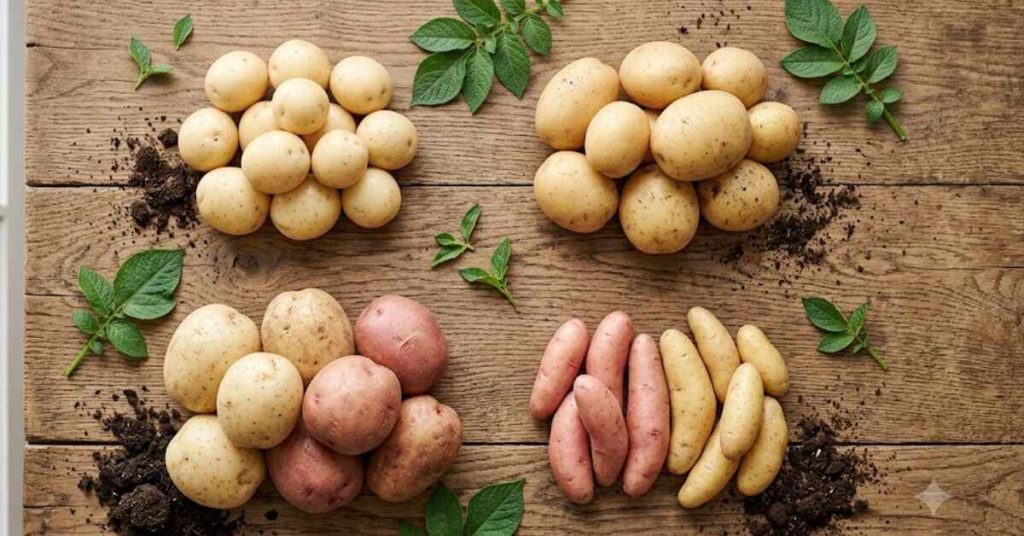
One question I hear quite often is, “Do all potatoes need to be planted at the same time?”
The short answer is no.
Although most potato varieties prefer similar soil temperatures, their maturity dates are different. Choosing the right type helps you harvest potatoes over a longer period instead of digging them all at once.
First Early Potatoes
First early potatoes are the fastest-growing varieties. They usually mature within 70 to 90 days, making them perfect for gardeners with short growing seasons.
Plant them as soon as the soil reaches 45–50°F (7–10°C). Because they mature quickly, they are often harvested before many pests and diseases become serious.
Best for:
- Small gardens
- Cool climates
- Early summer harvests
- New potatoes
Second Early Potatoes
Second early potatoes grow slightly longer than first earlies and generally produce a larger harvest.
Plant them at the same time as first earlies or about one to two weeks later.
Most varieties mature within 90–110 days.
Maincrop Potatoes
Maincrop potatoes take the longest to mature but reward gardeners with the largest harvest.
These varieties usually require 110–140 days before harvest.
Because they remain in the ground longer, they benefit from consistent watering, regular hilling, and fertile soil.
Maincrop potatoes are also the best choice for long-term storage.
Fingerling Potatoes
Fingerling potatoes are known for their unique shape and rich flavor.
Plant them during the normal potato planting season, but avoid harvesting too early. They develop their best texture after reaching full maturity.
Baby Potatoes
Many people think baby potatoes are a separate variety.
In reality, they’re simply potatoes harvested before reaching full size.
Almost any potato variety can be harvested early to produce tender baby potatoes.
Can You Plant Potatoes in Containers or Grow Bags?
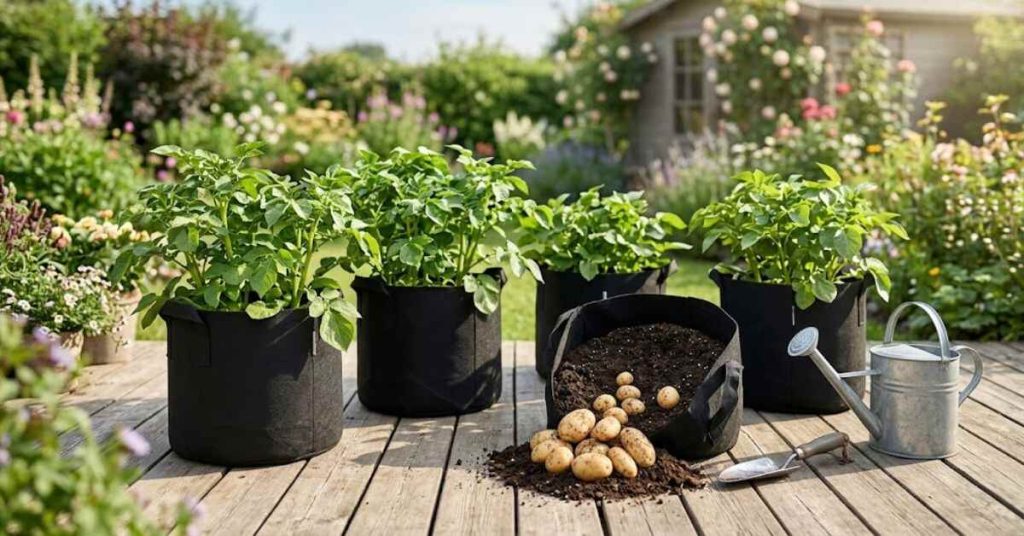
Absolutely.
In fact, many gardeners now prefer containers because they provide excellent drainage and make harvesting much easier.
Grow bags, fabric containers, raised beds, and large pots all work well.
Benefits of Container Growing
Container gardening offers several advantages:
- Better drainage
- Warmer soil in spring
- Easier pest management
- Less soil compaction
- Simple harvesting
- Ideal for patios and balconies
If your garden has heavy clay soil, containers may actually produce better potatoes than planting directly in the ground.
Best Time to Plant in Containers
Containers warm up faster than garden soil.
That means you can often plant one to two weeks earlier than traditional in-ground gardens.
However, don’t rush.
The potting mix should still reach at least 45°F (7°C) before planting.
Choosing the Right Container
A container should be:
- At least 15–20 inches (38–50 cm) deep
- Wide enough for root development
- Equipped with drainage holes
- Filled with loose, fertile potting mix
Avoid using ordinary garden soil in containers because it compacts easily.
How to Know If It’s Too Early or Too Late
Timing isn’t always obvious.
Instead of looking only at the calendar, observe your growing conditions.
Signs It’s Too Early
You should wait if:
- The soil is still frozen.
- The ground is muddy.
- Soil temperature remains below 45°F (7°C).
- Heavy frosts are expected immediately after planting.
Waiting another week or two often produces healthier plants.
Signs It’s the Perfect Time
You’re ready to plant when:
- Soil crumbles easily.
- Soil temperature remains above 45°F (7°C).
- The garden drains well after rain.
- Long-range forecasts show improving weather.
These conditions encourage rapid root development.
Signs You’ve Waited Too Long
Late planting becomes risky when:
- Soil temperatures stay above 70°F (21°C).
- Summer heat has already arrived.
- Your growing season is becoming too short.
Although potatoes may still grow, harvests are often smaller.
Step-by-Step Guide to Planting Potatoes
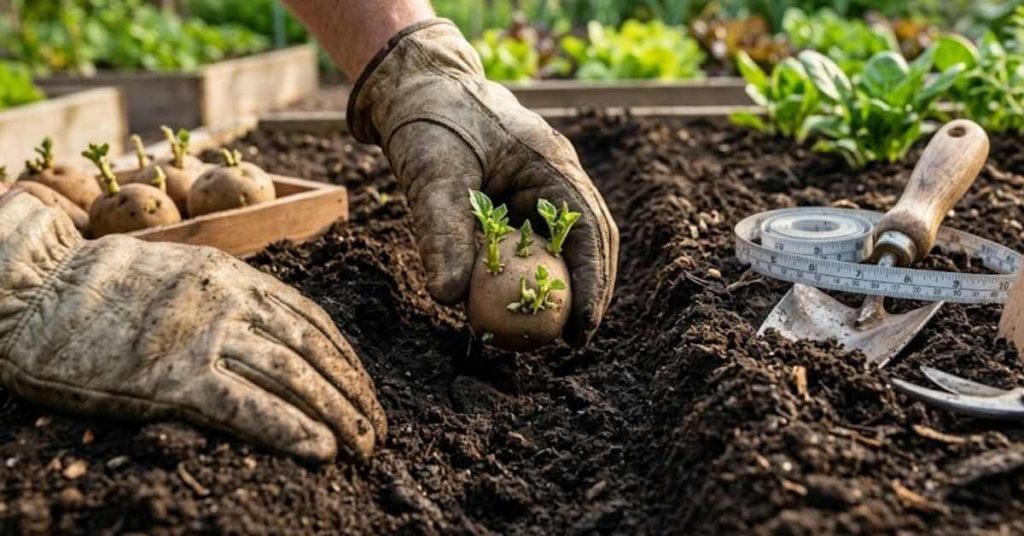
Growing potatoes isn’t difficult once you understand the basics.
Step 1: Choose Certified Seed Potatoes
Always purchase certified seed potatoes from a reputable supplier.
Unlike grocery store potatoes, certified seed potatoes are inspected for diseases and produce healthier plants.
Step 2: Prepare the Soil
Potatoes grow best in:
- Loose soil
- Well-drained soil
- Compost-rich soil
- Slightly acidic soil (pH 5.5–6.5)
Remove rocks and weeds before planting.
Step 3: Cut Large Seed Potatoes
If the seed potatoes are large, cut them into pieces.
Each piece should contain at least two healthy eyes.
Allow cut surfaces to dry for 24–48 hours before planting.
This helps reduce the chance of rot.
Step 4: Plant at the Correct Depth
Place seed potatoes 4–6 inches deep with the sprouts facing upward.
Cover them with loose soil.
Avoid planting too deeply because shoots will take longer to emerge.
Step 5: Space Plants Properly
Proper spacing improves airflow and reduces disease.
Recommended spacing:
- 12 inches (30 cm) between plants
- 30–36 inches (75–90 cm) between rows
Step 6: Water Carefully
Water immediately after planting.
Afterward, keep the soil consistently moist but never waterlogged.
Overwatering is one of the most common causes of poor potato growth.
Step 7: Hill the Plants
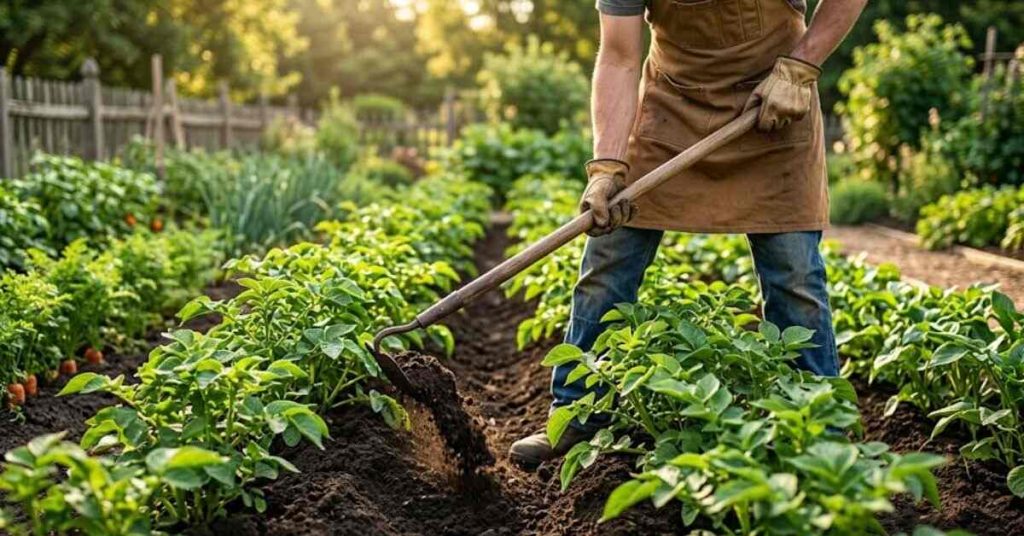
When stems reach about 6–8 inches (15–20 cm) tall, pull loose soil around the base of the plants.
Repeat hilling every few weeks.
This encourages more tubers to form and prevents sunlight from turning potatoes green.
Common Mistakes Gardeners Make
Even experienced gardeners occasionally make mistakes.
Fortunately, most are easy to avoid.
Planting in Cold Soil
Cold soil slows sprouting and increases the risk of seed rot.
Always check soil temperature before planting.
Using Grocery Store Potatoes
Store-bought potatoes are often treated with sprout inhibitors and may carry diseases.
Certified seed potatoes are a much safer choice.
Overwatering
Potatoes like moist soil, not soggy soil.
Too much water encourages fungal diseases and poor root growth.
Forgetting to Hill
Without hilling, developing potatoes may become exposed to sunlight.
Sunlight causes potatoes to turn green and produce solanine, a naturally occurring compound that makes them unsuitable for eating.
Frequently Asked Questions (FAQs)
Q:Can potatoes survive frost after planting?
Ans:Yes. Seed potatoes buried underground are usually protected from light frost. However, once green shoots emerge above the soil, they can be damaged by freezing temperatures. If frost is forecast, cover young plants with frost cloth, straw, or loose soil overnight.
Q:Should seed potatoes have sprouts before planting?
Ans:Small sprouts are actually a good sign. This process, known as chitting, helps potatoes grow faster after planting.
Ideally, sprouts should be short, thick, and green rather than long and weak.
Q:Can I plant grocery store potatoes?
Ans:Technically, yes but it isn’t recommended.
Many grocery store potatoes are treated to delay sprouting and may carry diseases that can spread into your garden. Certified seed potatoes are healthier and usually produce a much better harvest.
Q:How late is too late to plant potatoes?
Ans:It depends on your climate.As a general rule, potatoes need enough time to mature before extremely hot weather or hard autumn frosts arrive. If your variety requires 100 days to mature, make sure your growing season is long enough.
Q:Can I plant potatoes in July?
Ans:In hot climates, July is generally too late for a spring crop.
However, gardeners in cool northern regions or areas planning a fall harvest may still plant potatoes successfully.
Q:Can potatoes grow in containers?
Ans:Absolutely.Containers, grow bags, and raised beds are excellent options, especially if your garden soil is heavy or poorly drained. Just make sure the container is deep enough and has proper drainage holes.
Q:How long do potatoes take to grow?
Ans:The answer depends on the variety.
- First Early: 70–90 days
- Second Early: 90–110 days
- Maincrop: 110–140 days
Harvest new potatoes earlier if you prefer smaller, tender tubers.
Q:Do potatoes need full sun?
Ans:Yes.Potatoes grow best with 6–8 hours of direct sunlight each day. Too much shade results in weak plants and smaller harvests.
Final Thoughts
Learning when to plant potatoes is about much more than picking a date on the calendar. Successful gardeners pay attention to soil temperature, frost risk, local climate, and the needs of the variety they’re growing.
If you remember just one thing from this guide, let it be this: healthy potatoes start with healthy timing. Waiting until the soil is warm, well-drained, and ready for growth gives your plants the strongest possible start.
Whether you’re planting in a backyard garden, raised bed, or grow bag, following these simple principles will reward you with healthier plants, higher yields, and a harvest that’s well worth the wait.
Happy gardening, and may your next potato harvest be your best one yet!
Pingback: China Doll Plant Care: Complete Indoor Growing Guide
Pingback: Sunflower Lecithin: Benefits, Uses, Safety & How It Works