
Is lavender safe for cats? No. The ASPCA lists lavender (Lavandula angustifolia) as toxic to cats, with linalool and linalyl acetate identified as its toxic principles. The practical risk changes with the form of lavender and the way your cat encounters it, with concentrated essential oil deserving much more caution than simply having a plant nearby.
A useful way to picture the problem is this: a cat walking past a lavender plant is not experiencing the same exposure as a cat licking spilled essential oil from its fur. Concentration, route of exposure, and grooming behavior can all change the situation.
A realistic household scenario
Picture a cat owner who uses a lavender diffuser beside the sofa every evening. At first, the room simply smells pleasant. Then one evening the cat starts leaving the room, licking its lips repeatedly, and acting quieter than normal.
That situation matters because cats can encounter essential oils through more than one route. Airborne fragrance can irritate the respiratory system, while droplets from some active diffusers can settle on fur and later be swallowed during grooming. Veterinary toxicology guidance specifically warns that active diffusers can create this additional skin-and-grooming pathway.
Quick Lavender Safety Guide for Cat Owners
| Lavender exposure | Practical concern |
| Living lavender plant | Toxic according to ASPCA; chewing is more concerning than simply passing by |
| Dried lavender | Still contains plant compounds; prevent chewing or eating |
| Lavender essential oil | High concern because it is concentrated |
| Ultrasonic/nebulizing diffuser | Higher concern because oil-containing droplets can enter the air |
| Reed or passive diffuser | Respiratory irritation and spill/contact remain concerns |
| Lavender spray | Avoid direct exposure and prevent residue from reaching fur |
| Lavender candle | Fragrance and smoke can irritate; spilled scented material adds another route |
| Oil on skin or fur | Particularly concerning because grooming can turn skin contact into ingestion |
The exact severity cannot be predicted from the word “lavender” alone. Veterinary toxicology guidance emphasizes that essential-oil toxicity depends on the oil, concentration, amount, and route of exposure.
Why Lavender Can Be Toxic to Cats
Lavender produces key aromatic compounds, primarily linalool and linalyl acetate.The ASPCA specifically identifies those compounds in its lavender toxicity listing.
Cats are also unusually sensitive to many essential oils because their liver metabolism differs from that of many other mammals. In veterinary toxicology literature, cats are described as having deficient glucuronyl transferase activity, which contributes to their vulnerability to certain plant-derived chemicals and essential oils.
That does not mean every trace of lavender produces the same reaction. Instead, it means that concentrated exposure deserves a much more cautious response.
There is another feline-specific complication: grooming. A cat may step through a small spill, get residue on its coat, and later swallow that material while cleaning itself. So a product that was never deliberately “fed” to the cat can still become an oral exposure.
Fresh Lavender Plant vs. Dried Lavender
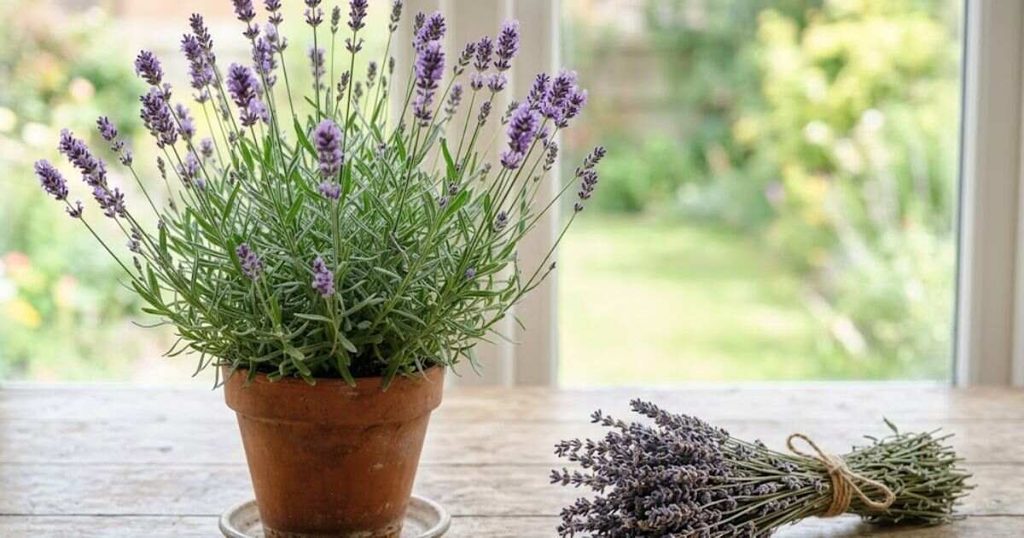
A living lavender plant is very different from a bottle of essential oil in terms of concentration, but that does not make the plant a cat-safe snack. ASPCA lists lavender as toxic to cats and reports nausea and vomiting among the clinical signs.
A curious cat that takes a quick sniff is not in the same situation as one that repeatedly chews the leaves and flowers. Nevertheless, if your cat is a plant-eater, keeping lavender inaccessible is the simpler household rule.
Dried lavender deserves the same basic caution. Removing water from the plant does not transform it into a non-toxic herb. Sachets, wreaths, potpourri and decorative bowls are especially easy for a playful cat to bat around, chew or pull apart.
Best practice: keep fresh and dried lavender where your cat cannot chew it, and never assume that a decorative dried arrangement is automatically harmless.
Lavender Essential Oil Requires Extra Caution
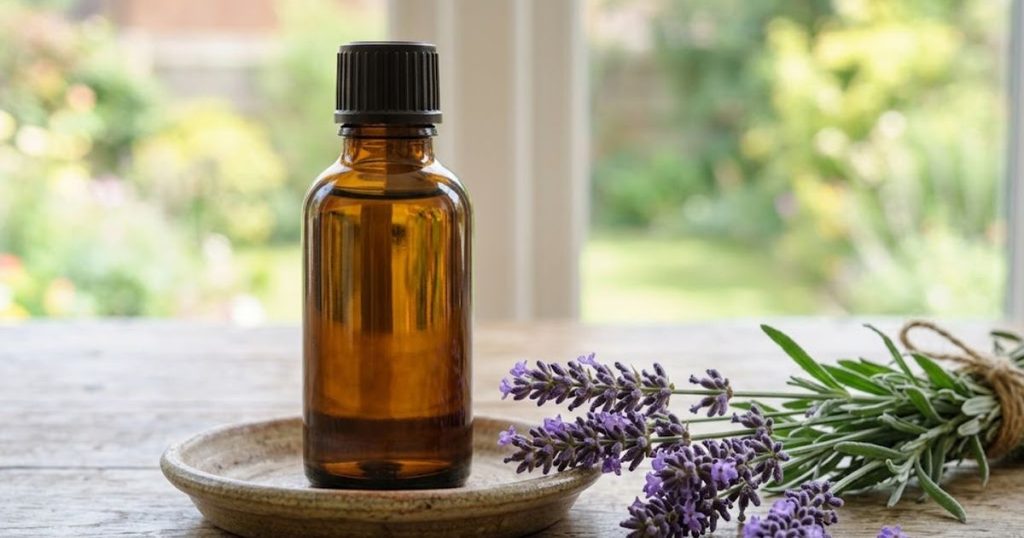
Essential oil is where the concentration problem becomes much more important.
A drop of concentrated oil contains far more aromatic material than the equivalent-looking amount of a whole plant. Veterinary toxicology guidance warns that concentrated essential oils should not be applied directly to pets and that cats can absorb oils through the gastrointestinal tract, skin and lungs.
Never put lavender essential oil directly on your cat’s fur, paws or skin. Cats groom themselves, so topical application can quickly become an ingestion problem.
The same caution applies to homemade “natural” flea treatments, massage oils, grooming mixtures or calming products that contain essential oils. Natural does not mean feline-safe.
Ingestion, Skin Contact and Inhalation Are Different Exposures
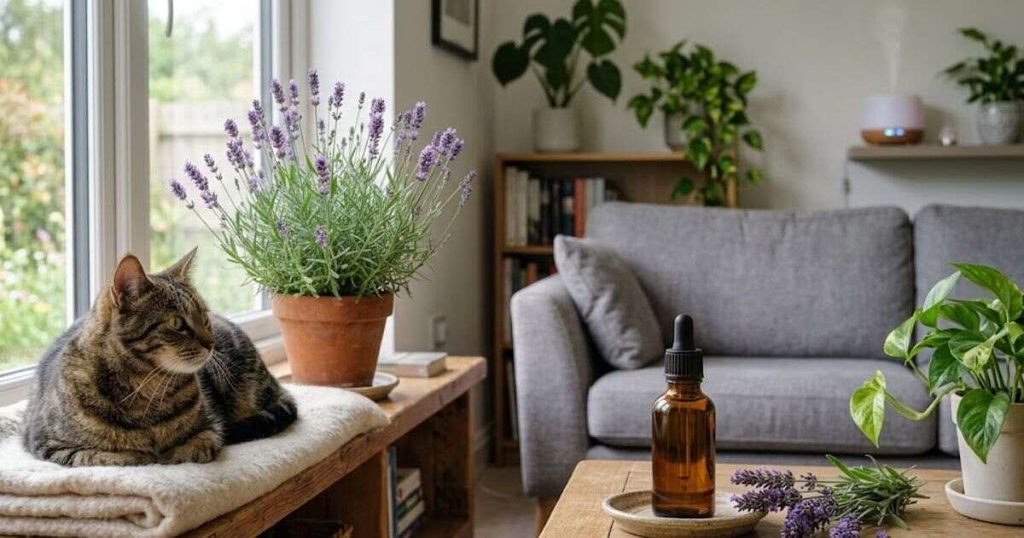
One of the easiest ways to misunderstand lavender toxicity is to treat every exposure as identical.
Ingestion
Swallowing lavender plant material may cause gastrointestinal upset. Swallowing concentrated essential oil is more concerning because the material is highly concentrated.
Possible signs include vomiting, drooling, reduced appetite, lethargy and poor coordination. With essential oils, more serious systemic effects can occur.
Skin contact
Oil on fur creates a double problem. The skin can be exposed directly, and the cat may later lick the contaminated area during grooming.
For that reason, an oil spill onto fur should not be treated like an ordinary fragrance smell. Remove the cat from the source and contact a veterinarian or animal poison service for exposure-specific instructions.
Inhalation
Strong fragrance can irritate a cat’s airways. Essential-oil toxicology guidance lists watery eyes, nasal discharge, coughing, wheezing and difficulty breathing among possible inhalation-related signs.
Active diffusers deserve particular caution because they can release tiny oil-containing droplets rather than simply allowing fragrance to evaporate. Those droplets can settle on a cat’s coat and later be swallowed during grooming.
Lavender Diffusers: What Changes the Risk?
Essential oil diffusers operate using different mechanisms and technologies.
A passive reed diffuser mainly releases fragrance into the surrounding air. A nebulizing or ultrasonic device can release oil-containing particles or droplets. That physical difference matters because active systems can create additional contact with fur and surfaces.
For a cat household, the simplest approach is to avoid lavender essential-oil diffusers in rooms your cat uses.
If a diffuser has already been running, turn it off, move your cat into fresh air, ventilate the room, and monitor for respiratory or neurological changes. If the cat shows breathing difficulty, tremors, severe weakness or collapse, treat the situation as urgent veterinary care.
Symptoms of Lavender Exposure in Cats
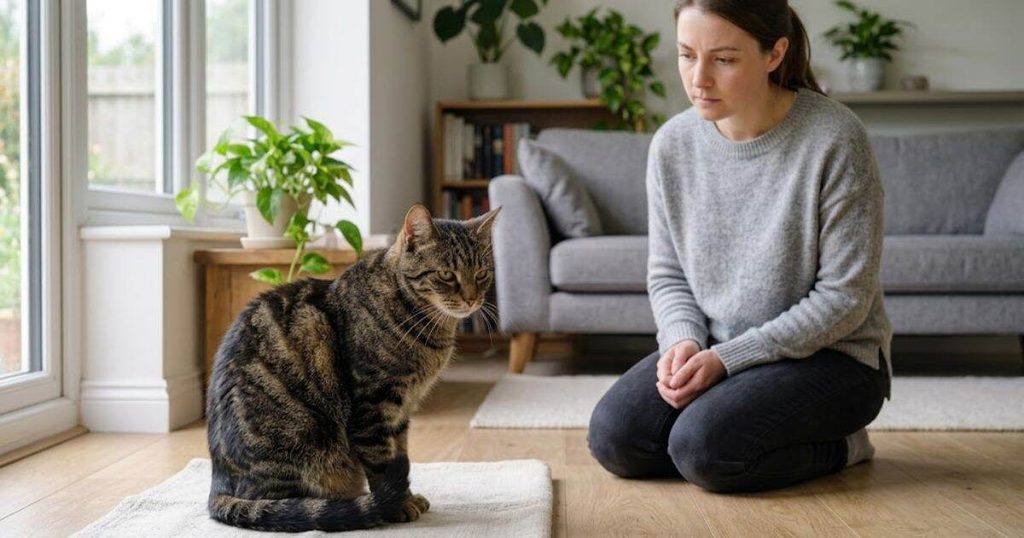
Clinical symptoms vary based on the specific substance involved and the level of exposure.
Gastrointestinal symptoms include vomiting, nausea, hypersalivation, loss of appetite, and general stomach distress.
Neurological signs: lethargy, weakness, wobbliness, poor coordination or tremors.
Respiratory signs: coughing, wheezing, rapid or difficult breathing, watery eyes or nasal irritation.
Skin-related signs: irritation after direct contact with oil.
ASPCA identifies nausea, vomiting and loss of appetite with lavender exposure, while veterinary toxicology references describe additional neurological, respiratory and systemic signs with essential-oil toxicosis.
Breathing problems deserve special attention
Cats should not routinely breathe with their mouth open. Therefore, open-mouth breathing, obvious respiratory effort, collapse or severe weakness should be treated as an emergency rather than something to watch casually at home.
A coughing cat can also be mistaken for a cat trying to produce a hairball. Veterinary poison guidance specifically notes that respiratory coughing may look different from ordinary vomiting behavior.
The 10-Minute Lavender Exposure Audit
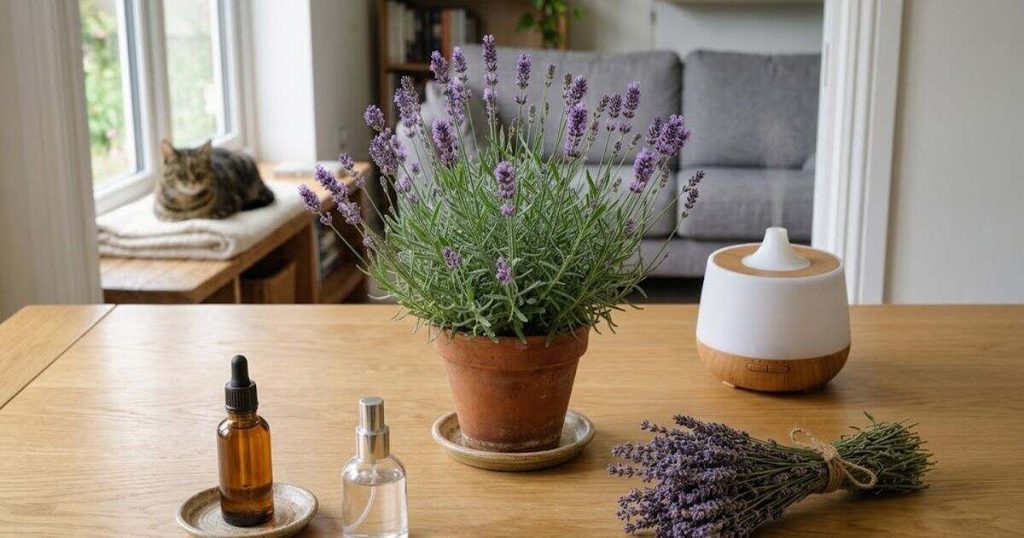
This is the simplest way to inspect your home.
1. Find the actual lavender source
Look beyond the potted plant. Check essential-oil bottles, diffusers, sprays, candles, potpourri, linen products, cosmetics and cleaning products.
2. Check concentration
A whole flower and a bottle of concentrated essential oil should not be treated as equivalent exposures. Concentrated oils require substantially more caution.
3. Look for direct-contact opportunities
Ask whether your cat can reach the plant, knock over a diffuser, rub against a sprayed surface or walk through spilled oil.
4. Think about grooming
This is the step people often miss. Anything that gets onto fur can become an ingestion route when the cat begins grooming.
5. Check ventilation
A strongly scented, poorly ventilated room creates a different environment from a large, well-ventilated space. If fragrance is irritating your cat, remove the source rather than trying to mask it with another scent.
This audit is intentionally simple: source → concentration → contact → grooming → ventilation. It gives you a practical household safety check without pretending that one numerical “safe dose” applies to every cat.
What to Do After Lavender Exposure
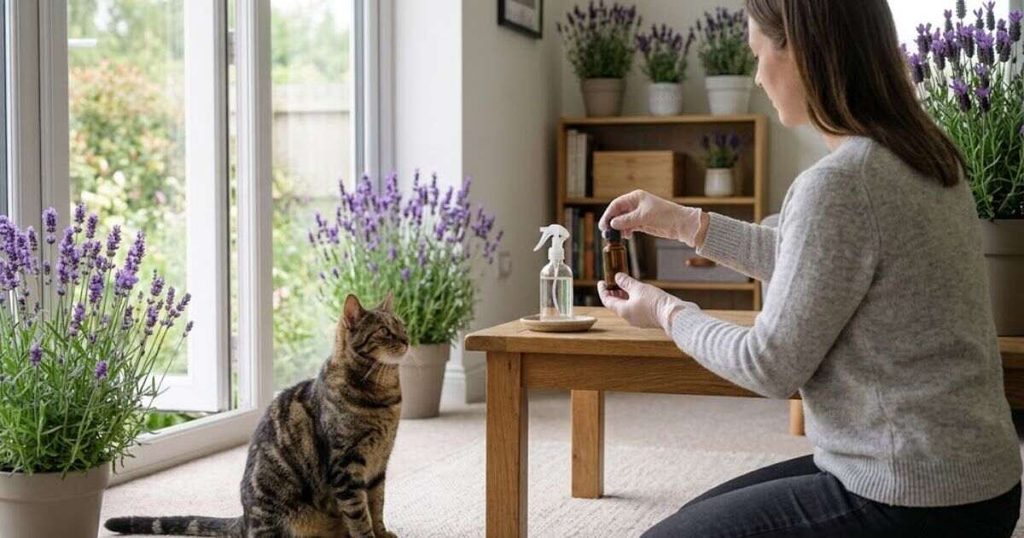
First, remove access to the lavender source.
If a diffuser is running, switch it off and provide fresh air. If oil has spilled on the cat, do not allow continued grooming while you seek veterinary instructions.
Never attempt to induce vomiting at home unless explicitly instructed to do so by a licensed veterinarian or poison control expert. Veterinary toxicology guidance warns against inducing emesis in essential-oil exposures because of aspiration risk.
Keep the original product container or ingredient label. The veterinarian needs to know whether the exposure involved a fresh plant, dried lavender, essential oil, a diffuser mixture or another scented product.
US residents can contact the ASPCA Animal Poison Control Center at (888) 426-4435; please note that a consultation fee may apply. Outside the U.S., contact your local emergency veterinarian or appropriate animal poison service.
Cat-Safer Alternatives for a Lavender-Loving Home
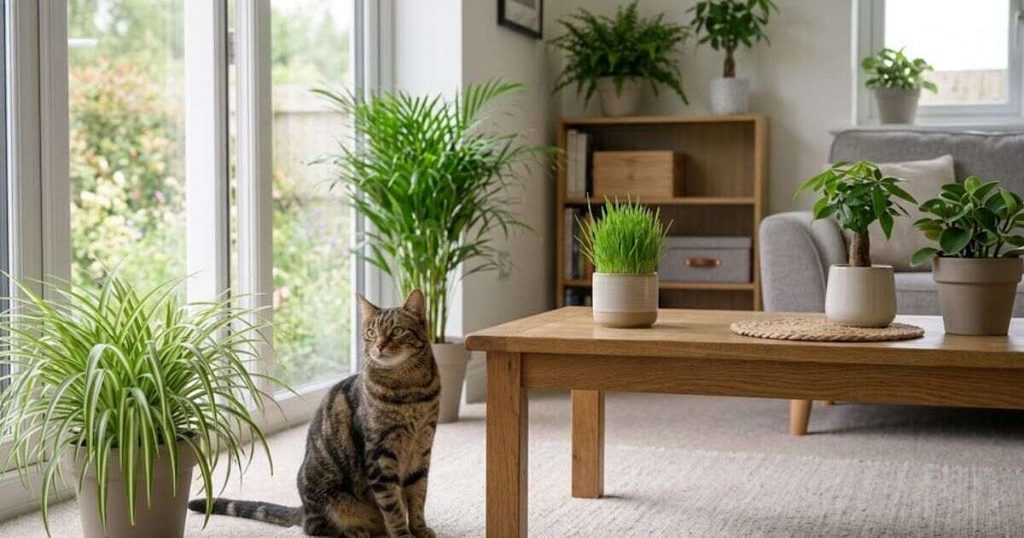
Creating a cat-conscious home does not require permanently eliminating all scents and fragrances.
For visual appeal, choose non-toxic decorative plants that your cat cannot easily chew, and verify the exact species rather than relying on a common name.
For feline enrichment, cat-specific options such as catnip, cat grass and valerian-root toys are more appropriate than experimenting with human aromatherapy products. Use products intended for cats and follow the label rather than making your own concentrated herbal preparations.
For room fragrance, an unscented home is the simplest choice when a cat is sensitive to smells. Airflow, open windows where appropriate, cleaning, and removing the source of an unwanted odor are preferable to covering it with another strong fragrance.
Common Problems & Fixes
My cat only sniffed a lavender plant: Do not panic, but prevent chewing and observe normally. The major concern is ingestion rather than assuming that a brief sniff automatically means poisoning.
My cat chewed the leaves: Remove the plant and contact your veterinarian for guidance if your cat swallowed plant material, especially if vomiting, drooling or appetite loss develops.
My cat licked lavender essential oil: Treat this as a more serious exposure.Contact a veterinarian or animal poison hotline immediately, and have the product label ready to share.
Lavender oil spilled on the fur: Prevent further grooming and seek veterinary instructions immediately. The exposure involves both skin contact and possible later ingestion.
My cat started coughing near a diffuser: Turn the diffuser off and move the cat to fresh air. Persistent or labored breathing is a medical emergency that requires immediate veterinary care.
My cat seems sleepy and unsteady: Lethargy and ataxia can occur with essential-oil toxicity. Because neurological signs can indicate more than simple fragrance irritation, contact a veterinarian promptly.
FAQ: Is Lavender Safe for Cats?
Q1: Is lavender safe for cats if the plant is growing in my garden?
Ans: Lavender is listed as toxic to cats by the ASPCA, so it should not be treated as a cat-safe edible plant. A brief encounter is different from chewing the plant, but cats that regularly eat vegetation should be prevented from accessing it.
Q2: Is lavender essential oil more dangerous than the plant?
Ans: Concentrated essential oil presents a greater concern because the aromatic compounds are much more concentrated. Skin, ingestion and inhalation exposures can all matter, and grooming can turn oil on fur into an ingestion exposure.
Q3: Can a lavender diffuser make my cat sick?
Ans: Yes, particularly when an essential-oil diffuser is used in a room the cat occupies. Strong fragrance can irritate the airways, while active diffusers can also place oil-containing droplets onto fur and surfaces.
Q4: What are the symptoms of lavender poisoning in cats?
Ans: Possible signs include vomiting, nausea, drooling, appetite loss, lethargy and poor coordination. Essential-oil exposure can also produce respiratory problems or more serious neurological and systemic effects.
Q5: What should I do if my cat ate lavender?
Ans: Remove the remaining lavender and contact your veterinarian for exposure-specific advice. Never attempt to make your pet vomit unless explicitly directed by a veterinary professional.
Q6: Is dried lavender safe for cats?
Ans: Dried lavender should not be considered a safe chewable material simply because it is no longer fresh. Keep dried lavender, potpourri and sachets away from cats that might chew or swallow them.
Q7: Can I put diluted lavender oil on my cat?
Ans: No. Concentrated essential oils should not be directly applied to cats, and dilution does not turn an inappropriate topical product into a veterinary treatment.
Q8: Is lavender safe for cats in candles and room sprays?
Ans: Treat these products cautiously, especially when they contain real essential oils. A cat can encounter the product through inhalation, surface residue, accidental spills or grooming, so an unscented option is the simpler choice.
Final Takeaway
Is lavender safe for cats? The safest practical answer is no, do not treat lavender as a cat-safe plant or fragrance ingredient, especially in concentrated essential-oil form. The ASPCA lists lavender as toxic to cats, while veterinary toxicology guidance shows why concentration and exposure route matter.
The biggest household mistake is looking only at the lavender plant and forgetting about everything made from it. Check the plant, dried bundles, essential oils, diffusers, sprays, candles and residues, then think about how a cat could touch, inhale or groom the material.
When exposure involves essential oil, breathing difficulty, tremors, marked weakness, repeated vomiting or other significant symptoms, involve a veterinarian promptly rather than relying on a home remedy.